
 Persly Medical Team
Based on PubMed | Can persistent back pain be a symptom of testicular cancer?
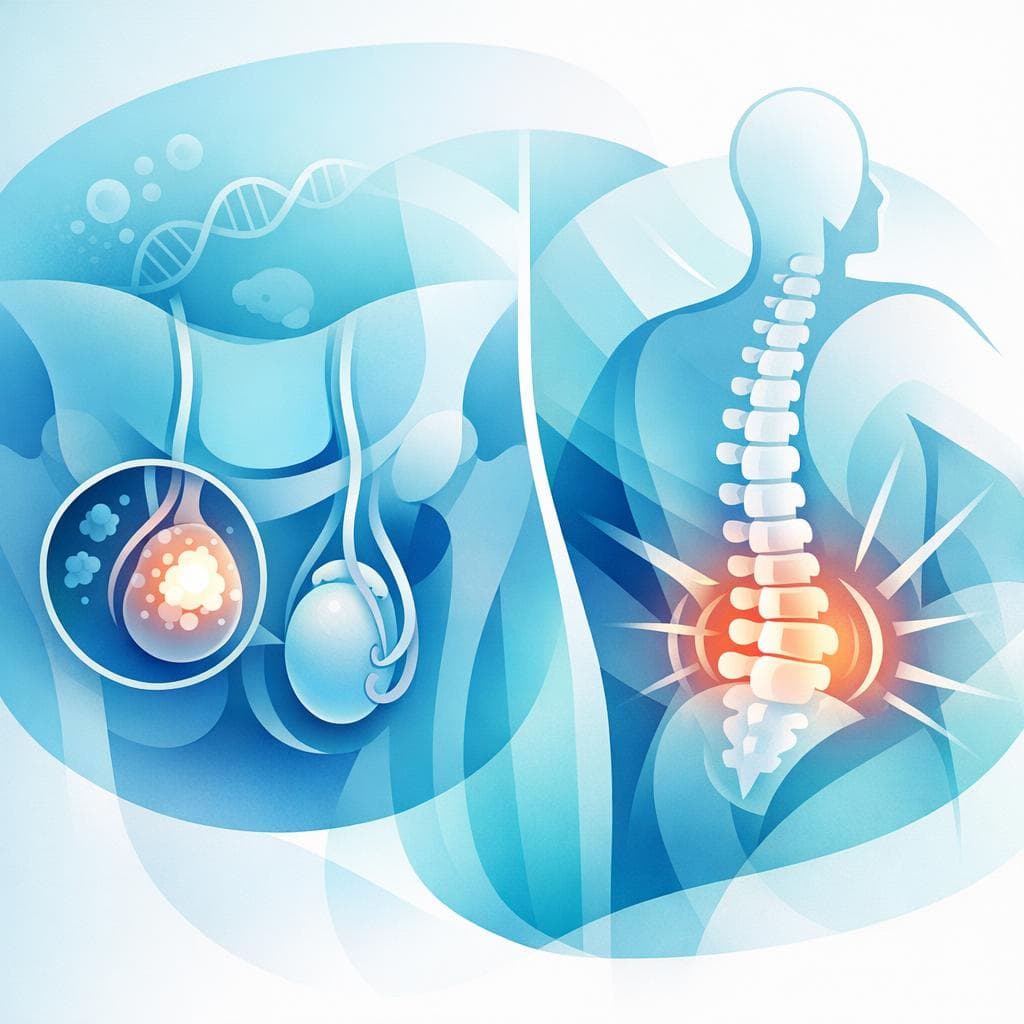
Yes. Persistent lower back pain can be a symptom of testicular cancer, typically when the disease has spread to retroperitoneal lymph nodes. The most common early sign is a testicular lump; men with persistent back pain, especially with any testicular change, should seek prompt evaluation with exam, scrotal ultrasound, tumor markers, and CT, as testicular cancer is highly curable with timely care.
Yes persistent back pain can be a symptom of testicular cancer, although it usually appears when the cancer has spread beyond the testicle. Most early testicular cancers present with a testicular lump or swelling, but back pain can occur when enlarged lymph nodes or metastases in the retroperitoneum (the area behind the abdomen) irritate nerves or structures in the lower back. [1] [2]
How back pain relates to testicular cancer
- Pattern of spread: Testicular cancers commonly spread first to lymph nodes in the back of the abdomen (para‑aortic/retroperitoneal nodes). When these nodes enlarge, they may cause a dull, persistent ache in the lower back. [1] [2]
- Advanced disease indicator: Back pain is more often associated with more advanced or metastatic disease rather than an early sign. [1] [3]
- Clinical observations: In clinical series, some young men with germ cell tumors presented primarily with back pain, and in those cases, para‑aortic nodal metastases were consistently present. [4] Two cases even lacked obvious testicular enlargement at first presentation, which delayed diagnosis. [4]
Common symptoms to watch for
- Typical early signs: A painless lump or swelling in one testicle, a feeling of heaviness in the scrotum, or a dull ache in the groin or lower abdomen. [1]
- Possible later signs: Back pain, abdominal or flank pain, breast tissue tenderness or enlargement, or sudden scrotal swelling. Back pain appears on authoritative symptom lists as a possible sign, especially when cancer has spread. [1] [3] [2]
How often does back pain present first?
- Not the most common first symptom: The classic presentation is a testicular mass. However, a minority of patients particularly with metastatic disease may initially report back pain before a testicular abnormality is noticed. [4]
- Importance of timely evaluation: Studies note that diagnosis takes longer when back pain is the lead complaint versus testicular symptoms, increasing the risk that disease is more advanced by the time it’s found. [4]
Why evaluation matters
- Highly curable cancer: Testicular cancer is highly treatable and often curable, even when it has spread, especially with modern surgery and chemotherapy. [5]
- Early detection improves care: Recognizing back pain as a potential sign in the right context (young male, persistent pain, associated groin/testicular changes) can speed diagnosis and treatment. [6]
Recommended next steps if you have persistent back pain
If a man especially between ages 15 and 45 has persistent, unexplained lower back pain, consider the following, particularly if any testicular change is present:
- Testicular self‑check and clinical exam: Look for a lump, asymmetry, change in firmness, or heaviness in a testicle and seek a prompt exam by a clinician. [1]
- Scrotal ultrasound: This imaging test can quickly determine if a mass is inside the testicle, and any intratesticular mass is treated as malignant until proven otherwise. [7] [6]
- Blood tests (tumor markers): Alpha‑fetoprotein (AFP), beta‑human chorionic gonadotropin (β‑hCG), and lactate dehydrogenase (LDH) help with diagnosis, staging, and treatment planning. [6]
- Staging scans if cancer is suspected: CT scans of the abdomen/pelvis (to assess retroperitoneal nodes) and chest are used to determine spread and guide therapy. [8]
- Urgency: Persistent back pain combined with any testicular symptom should be evaluated promptly to avoid delays that can occur when back pain is treated as purely musculoskeletal. [4]
Prognosis when back pain is present
- Overall outcomes remain excellent: Five‑year survival for metastatic testicular cancer is commonly greater than 90% with current multimodal therapy. [9]
- Markers and burden matter: Prognosis depends on tumor type, extent of metastases, and tumor marker levels; retroperitoneal lymph node spread alone is not necessarily an independent adverse factor. [8] [10]
Quick reference: Key points at a glance
- Can back pain be a symptom? Yes especially with retroperitoneal lymph node spread. [1] [2]
- Is it common as the first sign? Less common than a testicular lump; seen in a subset with metastatic disease. [4]
- What to do? Seek evaluation with a testicular exam, scrotal ultrasound, tumor markers, and staging CT if indicated. [7] [8] [6]
- Outlook: Highly treatable and often curable, even when metastatic, particularly with timely diagnosis. [9] [5]
Structured overview
| Topic | What to know | Why it matters |
|---|---|---|
| Symptom link | Back pain can occur due to retroperitoneal lymph node metastases from testicular cancer. [1] [2] | Explains why some men with testicular cancer feel persistent low back pain. |
| Usual first sign | Painless lump/swelling in one testicle; heaviness or groin ache. [1] | Helps prioritize self‑checks and early clinical evaluation. |
| When back pain presents first | Less common; diagnosis can be delayed; para‑aortic nodes typically involved. [4] | Highlights need to consider testicular evaluation in young men with unexplained back pain. |
| Diagnostic tests | Scrotal ultrasound; serum AFP, β‑hCG, LDH; CT for staging. [7] [8] [6] | Defines the standard, efficient workup. |
| Prognosis | Excellent with modern therapy; survival often >90% even with metastases. [9] | Encourages prompt evaluation due to high curability. |
Bottom line
Persistent lower back pain can be a symptom of testicular cancer, most often when the cancer has spread to lymph nodes in the back of the abdomen. While a testicular lump is the most common early sign, ongoing back pain especially in a young man should prompt a testicular exam and, if needed, ultrasound, tumor markers, and CT imaging, because testicular cancer remains highly curable with timely care. [1] [2] [7] [8] [9]
Related Questions
Related Articles


Sources
- 1.^abcdefghijTesticular cancer - Symptoms and causes(mayoclinic.org)
- 2.^abcdefTesticular cancer: MedlinePlus Medical Encyclopedia(medlineplus.gov)
- 3.^abTypes of Testicular Cancer(nyulangone.org)
- 4.^abcdefgBack pain--a presentation of metastatic testicular germ cell tumours.(pubmed.ncbi.nlm.nih.gov)
- 5.^abTesticular cancer - Symptoms and causes(mayoclinic.org)
- 6.^abcdeTesticular cancer.(pubmed.ncbi.nlm.nih.gov)
- 7.^abcdTesticular cancer - Diagnosis and treatment(mayoclinic.org)
- 8.^abcdeTesticular cancer - Diagnosis and treatment(mayoclinic.org)
- 9.^abcdSurgery Is Critical in Advanced Testicular Cancer(mskcc.org)
- 10.^↑Prognostic factors in metastatic testicular cancer.(pubmed.ncbi.nlm.nih.gov)
Important Notice: This information is provided for educational purposes only and is not intended to replace professional medical advice, diagnosis, or treatment. Always consult with a qualified healthcare provider before making any medical decisions.