

 Persly Medical Team
Based on NIH | Can advanced testicular cancer cause persistent lower back pain, what mechanisms typically lead to it, and which accompanying symptoms suggest metastatic spread?
Yes, advanced testicular cancer can cause persistent lower back pain, most often from enlarged retroperitoneal (para-aortic) lymph nodes and less commonly from bone metastases or abdominal mass effect. Signs suggesting metastatic spread include abdominal or supraclavicular lumps, new cough or shortness of breath, focal bone pain, neurological symptoms, unintentional weight loss or fatigue, and testicular changes.
Advanced testicular cancer and lower back pain
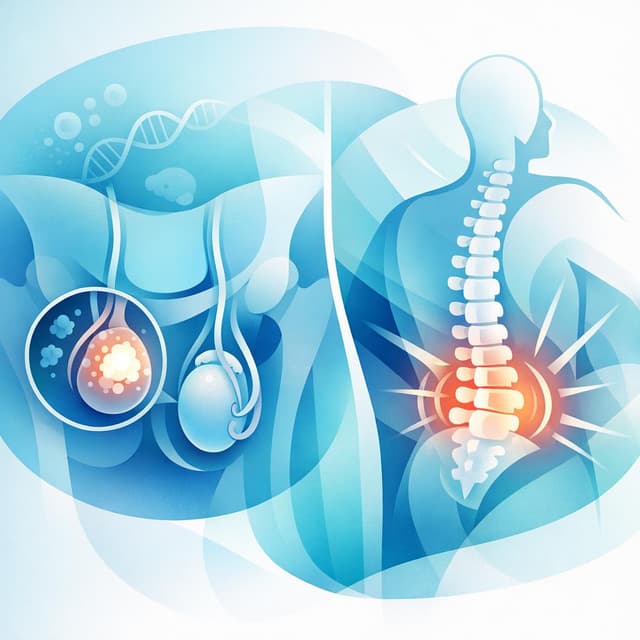
Yes, advanced testicular cancer can cause persistent lower back pain. [1] This often happens when cancer has spread beyond the testicle to the lymph nodes in the back of the abdomen (retroperitoneal lymph nodes) or to bones, creating pressure and inflammation that produce back pain. [2] Back pain is among the recognized symptoms of testicular cancer, especially when disease has spread. [3]
Why back pain occurs
-
Lymph node spread in the retroperitoneum: Testicular cancer commonly travels first to lymph nodes deep in the abdomen along the aorta and vena cava (para‑aortic nodes). [2] When these nodes enlarge, they can irritate surrounding tissues, stretch the lymph node capsule, or compress adjacent nerves and structures, causing a dull, persistent ache in the lower back. [4] In clinical series, young men presenting with back pain due to testicular germ cell tumors often had para‑aortic lymph node metastases. [4]
-
Bone metastases: Less commonly, tumor cells spread to bones, including the spine or pelvis, leading to bone pain that can be felt in the back and may worsen at night or with movement. [5] Bone involvement can also increase the risk of pathologic fractures and nerve compression, which can intensify back pain. [5]
-
Mass effect in the abdomen: Large retroperitoneal tumor masses can cause a sense of fullness or heaviness and referred pain to the back by stretching tissues and affecting surrounding organs. [5] This may coexist with abdominal or groin discomfort. [1]
Symptoms that suggest metastatic spread
When testicular cancer spreads, symptoms often reflect the involved sites. [2] The following accompanying signs and symptoms raise concern for metastasis:
-
Enlarged lymph nodes and back pain: A persistent backache with or without a palpable abdominal or supraclavicular (above the collarbone) lump may indicate lymph node spread. [5] Back pain as a prominent symptom has been linked with para‑aortic lymph node involvement in many cases. [4]
-
Lung involvement: New or worsening cough, chest pain, shortness of breath, or coughing up blood can indicate lung metastases. [2] [6]
-
Liver involvement: Right upper abdominal discomfort, jaundice, or abnormal liver tests may occur when cancer reaches the liver. [2] [6]
-
Bone involvement: Deep, focal bone pain (including spine, hips, or ribs), sometimes worse at night or with activity, suggests bone metastases. [5] This can accompany back pain if the spine or pelvis is affected. [5]
-
Brain or central nervous system involvement: Severe headaches, vision changes, neurological deficits, or seizures are uncommon but concerning signs of brain spread. [7]
-
General (systemic) symptoms: Unintentional weight loss, fatigue, night sweats, or loss of appetite may appear with advanced disease. [6]
-
Primary testicular or scrotal changes: A painless lump or swelling in one testicle, a feeling of scrotal heaviness, sudden fluid buildup, or testicular discomfort can be present even when back pain dominates, and sometimes a testicular mass is small or unnoticed. [1] Some people have breast tissue enlargement or tenderness (from hormone‑producing tumors), which can be a clue when looking for a source of metastatic symptoms. [3]
What this means and why prompt evaluation matters
Although back pain is common and most often due to noncancer causes, persistent lower back pain in a young or middle‑aged man especially when combined with any testicular changes, abdominal fullness, weight loss, chest symptoms, or swollen nodes should prompt evaluation for testicular cancer. [8] In reported cases, back pain as the main presenting symptom often corresponded to retroperitoneal lymph node metastases, and diagnosis was sometimes delayed when the testicles were not examined. [4] Testicular cancer remains highly treatable even when metastatic so earlier diagnosis generally leads to better outcomes. [9]
When to seek care and what testing involves
-
Seek care urgently if back pain is persistent (weeks), progressive, wakes you from sleep, or is accompanied by testicular swelling, a scrotal lump, unexplained weight loss, new cough or shortness of breath, or bone pain. [1] [3] [2]
-
Typical evaluation may include:
- Careful testicular and lymph node exam. [1]
- Scrotal ultrasound to identify a testicular mass. [1]
- Blood tests for tumor markers such as AFP (alpha‑fetoprotein), β‑hCG (beta‑human chorionic gonadotropin), and LDH (lactate dehydrogenase). These markers help with diagnosis and staging. [2]
- Imaging (CT scan of chest/abdomen/pelvis) to assess retroperitoneal nodes and other metastatic sites when cancer is suspected. [2]
Key takeaways
-
Persistent lower back pain can be caused by advanced testicular cancer, most often due to enlarged retroperitoneal lymph nodes and less commonly due to bone metastases. [3] [4] [5]
-
Red flags for metastatic spread include back pain with testicular changes, abdominal or supraclavicular lumps, respiratory symptoms, bone pain, neurologic symptoms, and unexplained weight loss or fatigue. [1] [5] [2] [6] [7]
-
Testicular cancer is highly treatable even when it has spread, so prompt evaluation of suspicious symptoms is important. [9]
Related Questions
Related Articles


Sources
- 1.^abcdefgTesticular cancer - Symptoms and causes(mayoclinic.org)
- 2.^abcdefghiTesticular cancer - Symptoms and causes(mayoclinic.org)
- 3.^abcdTesticular cancer - Symptoms and causes(mayoclinic.org)
- 4.^abcdeBack pain--a presentation of metastatic testicular germ cell tumours.(pubmed.ncbi.nlm.nih.gov)
- 5.^abcdefgh국가암정보센터(cancer.go.kr)
- 6.^abcdTesticular cancer: MedlinePlus Medical Encyclopedia(medlineplus.gov)
- 7.^abCáncer testicular: MedlinePlus enciclopedia médica(medlineplus.gov)
- 8.^↑Metastatic testicular cancer presenting as lower back pain in a pilot.(pubmed.ncbi.nlm.nih.gov)
- 9.^abTesticular cancer - Symptoms and causes(mayoclinic.org)
Important Notice: This information is provided for educational purposes only and is not intended to replace professional medical advice, diagnosis, or treatment. Always consult with a qualified healthcare provider before making any medical decisions.