

 Persly Medical Team
Based on NIH | Could back pain be a symptom of testicular cancer, and when should I see a doctor?
Back pain can be a symptom of testicular cancer, usually after spread to abdominal lymph nodes, but most back pain has non-cancer causes. See a clinician if you have persistent, unexplained back pain especially with testicular changes or any testicular lump, swelling, or pain lasting over two weeks; seek urgent care for neurologic red flags like leg weakness or bowel/bladder issues.
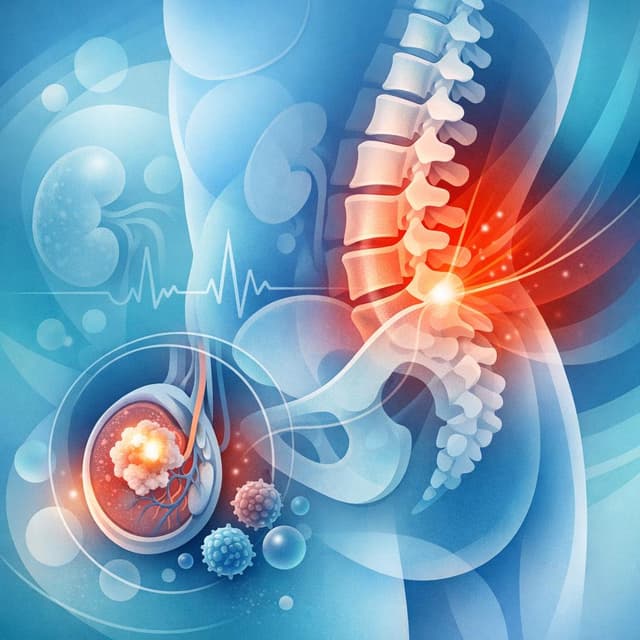
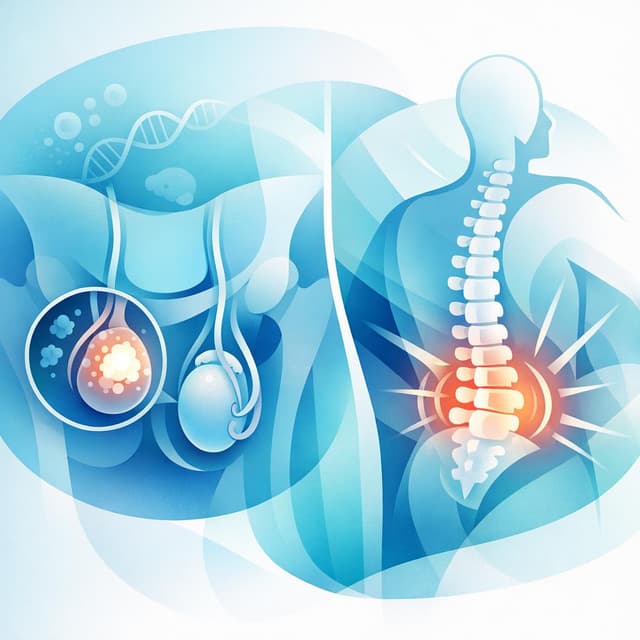
Back pain can be a symptom of testicular cancer, but it is usually a later sign that happens when cancer has spread to lymph nodes in the back of the abdomen (retroperitoneal or para‑aortic nodes). [1] Back pain alone is common and most often has non‑cancer causes, but when it occurs with other testicular or groin changes or when it is persistent, unexplained, or worsening it deserves medical evaluation. [2] [3]
How testicular cancer can cause back pain
- Testicular cancer most often first shows up as a lump, swelling, or change in a testicle, sometimes with a dull ache or heaviness in the scrotum, lower abdomen, or groin. [1] [4]
- Back pain can occur when disease has advanced to abdominal lymph nodes, which sit in front of the spine and can cause persistent lumbar pain. [1] [3]
- Studies and case series describe young men whose main presenting symptom was back pain, and many had metastatic spread to para‑aortic nodes; diagnosing them took longer when back pain was the first complaint. [3] [5]
Common symptoms to watch for
- Lump or swelling in one testicle. [1] [4]
- Feeling of heaviness in the scrotum. [1]
- Dull ache in the lower abdomen or groin. [1] [4]
- Pain or discomfort in a testicle or the scrotum. [1]
- Sudden fluid buildup in the scrotum. [4]
- Breast tissue enlargement or tenderness (gynecomastia). [1]
- Back pain, especially if persistent or unexplained. [1]
Most testicular cancers affect only one testicle, and early treatment is highly effective. [1] [6]
When to see a doctor
- If you notice any testicular or groin symptom pain, swelling, or a lump that lasts longer than two weeks, make an appointment. [7] [8]
- Make an appointment promptly for new, persistent low back pain that is not clearly due to strain, is constant or getting worse, or is worse at night, particularly if you’re a younger man and/or you notice any testicular changes. [2] [3]
- Seek urgent care if back pain is accompanied by leg weakness, trouble walking, or loss of bowel/bladder control, which can signal spinal nerve compression from any cause. [9]
What to expect during evaluation
- A clinician will perform a testicular and abdomen exam to check for masses or tenderness. [10]
- Scrotal ultrasound is the key first test to tell if a lump is inside the testicle (more concerning) and to characterize any mass. [10] [11]
- Blood tests for tumor markers such as beta‑hCG, AFP (alpha‑fetoprotein), and LDH can help with diagnosis and monitoring. [12]
- If cancer is suspected or confirmed, imaging (CT scans) of the abdomen and chest assesses whether it has spread to lymph nodes or elsewhere; this is also how spread that could cause back pain is evaluated. [13] [14]
Why timely care matters
- Finding testicular cancer early improves outcomes and often limits treatment needed, and even when it spreads, cure rates are high with modern therapy. [6]
- Delays can occur when back pain is attributed to common causes; awareness that persistent back pain in young men can, rarely, be a cancer sign helps avoid missed diagnoses. [3] [5]
Quick reference: Symptoms and care timing
| Feature | What it may indicate | What to do | Why it matters |
|---|---|---|---|
| Lump/swelling in one testicle | Common early sign of testicular cancer | Seek care if present >2 weeks | Early diagnosis is highly treatable. [1] [7] |
| Heaviness in scrotum; dull groin/lower belly ache | Possible local tumor signs | Schedule evaluation | Often accompanies testicular changes. [1] |
| Persistent low back pain (esp. unexplained or night‑worse) | Possible retroperitoneal lymph node spread (less common) | See a clinician soon, especially if testicular changes are present | Back pain can be a later sign of spread. [1] [3] |
| Neurologic red flags: leg weakness, numb “saddle” area, bowel/bladder issues | Possible spinal cord/nerve compression from any cause | Seek urgent/emergency care | Requires rapid assessment. [9] |
Practical self‑check tips
- Perform a monthly testicular self‑check during or after a warm shower: feel each testicle gently for any new lump, change in size, firmness, or tenderness. If you find a change that persists beyond two weeks, arrange a visit. [7] [15]
- Keep in mind that most back pain is not cancer, but pair persistent back pain with any testicular change and you should get evaluated without delay. [2] [1]
Bottom line
- Yes back pain can be a symptom of testicular cancer, usually when it has spread to abdominal lymph nodes, but this is less common than local testicular signs. [1] [3]
- See a doctor if any testicular or groin symptom lasts more than two weeks, or sooner if you have a new, unexplained, persistent back pain, especially together with testicular changes. [7] [8] [2]
If you need help arranging care, starting with a primary care clinician or a urologist is reasonable; they can order an ultrasound and tumor marker tests and coordinate imaging if needed. [16] [10] [12]
Related Questions
Related Articles

Sources
- 1.^abcdefghijklmnoTesticular cancer - Symptoms and causes(mayoclinic.org)
- 2.^abcdVertebral tumor - Symptoms and causes(mayoclinic.org)
- 3.^abcdefgBack pain--a presentation of metastatic testicular germ cell tumours.(pubmed.ncbi.nlm.nih.gov)
- 4.^abcdTesticular Cancer(medlineplus.gov)
- 5.^abPersistent back pain due to malignant lymphadenopathy.(pubmed.ncbi.nlm.nih.gov)
- 6.^abTesticular cancer - Symptoms and causes(mayoclinic.org)
- 7.^abcdSymptoms and causes - Mayo Clinic(mayoclinic.org)
- 8.^abTesticular cancer - Symptoms and causes(mayoclinic.org)
- 9.^abSymptoms and causes - Mayo Clinic(mayoclinic.org)
- 10.^abcTesticular cancer - Diagnosis and treatment(mayoclinic.org)
- 11.^↑Diagnosis and treatment - Mayo Clinic(mayoclinic.org)
- 12.^abTesticular cancer - Diagnosis and treatment(mayoclinic.org)
- 13.^↑Diagnosing Testicular Cancer(mskcc.org)
- 14.^↑Diagnosing Testicular Cancer(mskcc.org)
- 15.^↑Testicular cancer: MedlinePlus Medical Encyclopedia(medlineplus.gov)
- 16.^↑Testicular cancer - Diagnosis and treatment(mayoclinic.org)
Important Notice: This information is provided for educational purposes only and is not intended to replace professional medical advice, diagnosis, or treatment. Always consult with a qualified healthcare provider before making any medical decisions.