
 Persly Medical Team
Based on PubMed | Is lower back pain an early sign of testicular cancer, and what other early symptoms should be monitored?
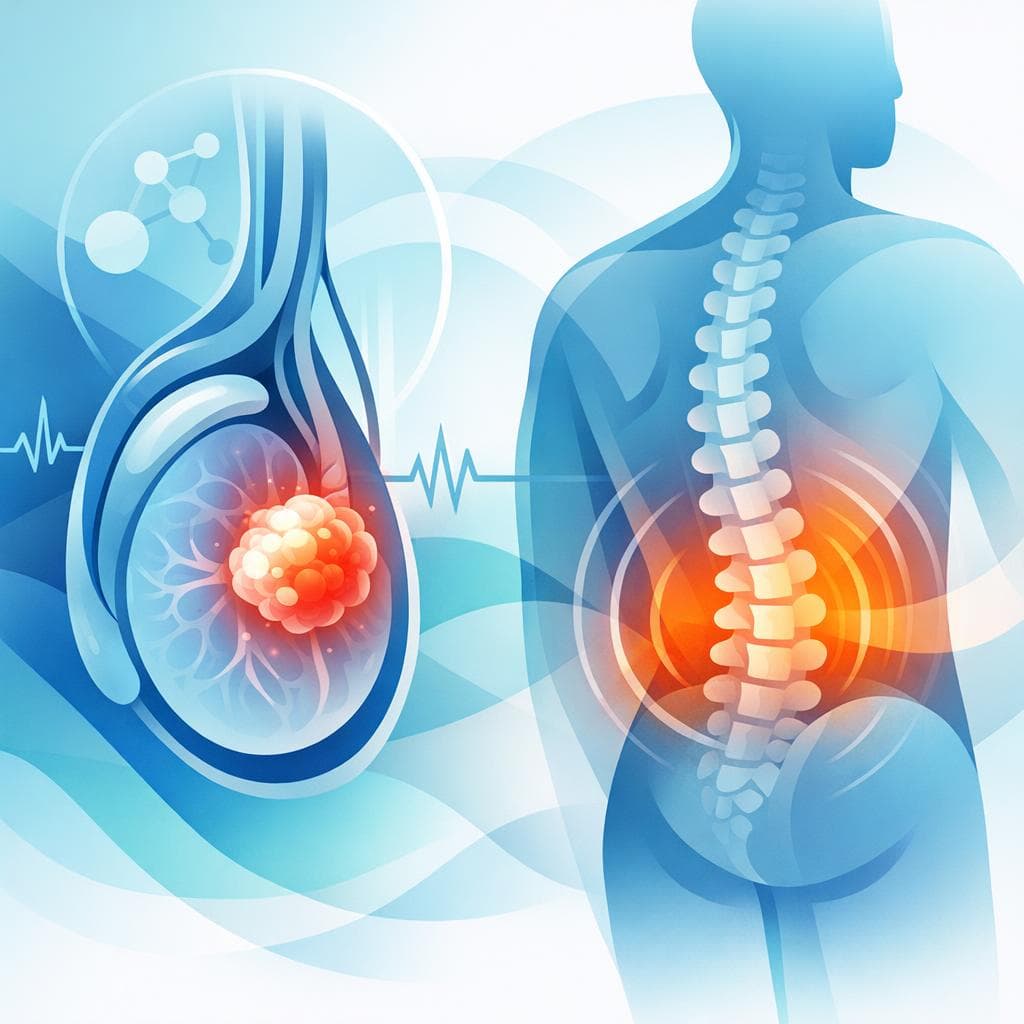
Lower back pain is generally not an early sign of testicular cancer; when it occurs, it often reflects spread to abdominal lymph nodes. Early signs to watch for include a painless lump or swelling in one testicle, scrotal heaviness, and a dull lower abdomen/groin ache. If changes persist beyond two weeks, seek medical evaluation; a testicular ultrasound is typically the first test.
Lower back pain is usually not an early sign of testicular cancer; it tends to appear later when the cancer has spread to lymph nodes in the back (retroperitoneal para‑aortic nodes). [1] In most people, the earliest and most common warning sign is a lump, swelling, or firmness in one testicle, often painless. [2] If you notice any persistent testicular changes for more than two weeks, it’s reasonable to get checked. [3]
What counts as “early” symptoms
- A lump or swelling in either testicle is the most frequent early symptom. [2]
- A feeling of heaviness in the scrotum may be noticed. [2]
- A dull ache in the lower abdomen or groin can occur. [2]
- Pain or discomfort in a testicle or the scrotum is possible, although lumps are often painless. [2]
- Sudden fluid build‑up in the scrotum (rapid swelling) can be a warning sign. [2]
- Breast tissue enlargement or tenderness (gynecomastia) can occur due to hormone changes from some tumors. [2]
These symptoms don’t always mean cancer, but persistent changes warrant a medical exam, usually starting with a quick, painless testicular ultrasound. [2] [4]
Where lower back pain fits
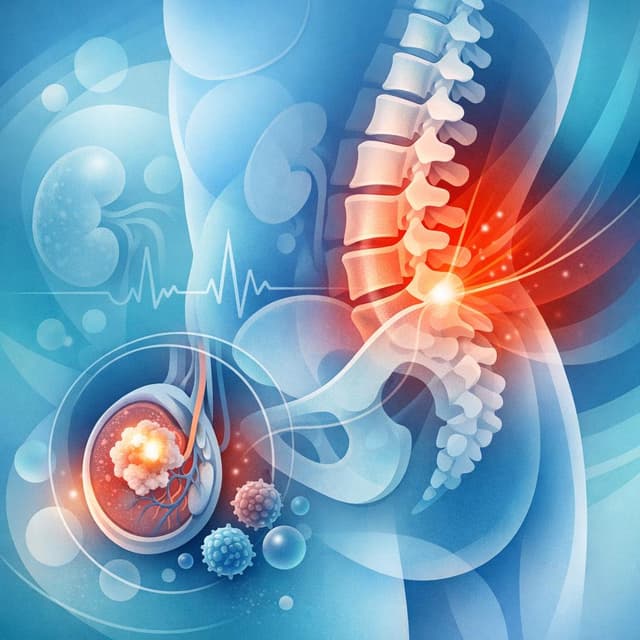
- Back pain can be part of the symptom list but is more often linked to more advanced disease after spread to abdominal lymph nodes. [1]
- Historical clinical reports show that when back pain is a major presenting symptom, para‑aortic lymph node metastases are typically present, meaning the disease has already spread. [5]
- Because back pain is very common for non‑cancer reasons, it’s rarely the first clue to testicular cancer on its own. [6]
In short, back pain alone is not a typical early sign; a testicular lump or swelling is much more characteristic at the beginning. [2] [1]
Comparison: Early vs. later symptoms
| Symptom | More typical timing | Notes |
|---|---|---|
| Painless lump or swelling in one testicle | Early | Most common first sign; often discovered by self‑exam or incidentally. [2] |
| Scrotal heaviness | Early | May be subtle and easy to overlook. [2] |
| Dull ache in lower abdomen/groin | Early | Non‑specific but recognized early feature. [2] |
| Sudden scrotal swelling/fluid | Early | New rapid changes should be assessed. [2] |
| Testicular/scrotal discomfort | Early | Pain can occur but many lumps are painless. [2] |
| Breast tenderness/enlargement | Early to intermediate | Hormonal effect from some tumors. [2] |
| Lower back pain | Later/more advanced | Often reflects spread to retroperitoneal nodes. [1] [5] |
| Persistent back/abdominal pain with weight loss, cough, or shortness of breath | Advanced | May indicate spread to nodes, lungs, or liver. [7] |
When to seek care
- If you feel a new lump, firmness, or swelling in a testicle, or any testicular change that lasts more than two weeks, arrange an exam. [3]
- Evaluation typically includes a physical exam and testicular ultrasound, which uses sound waves to create images and helps distinguish benign from suspicious masses. [4]
- If cancer is suspected, tumor markers and imaging may follow, and treatment is highly effective even when spread is present. [8]
Practical self‑check tips
- Perform a brief self‑exam monthly, ideally after a warm shower when the scrotal skin is relaxed, feeling for any new lump, firmness, or change compared with the other side. [2]
- Report any persistent testicular change, heaviness, or dull ache even if it’s not painful rather than waiting. [3]
Key takeaways
- Lower back pain is generally not an early sign and is more suggestive of later spread if it is related to testicular cancer. [1] [5]
- The earliest signs to monitor are a painless lump or swelling, scrotal heaviness, dull lower abdominal/groin ache, sudden scrotal swelling, and testicular discomfort. [2]
- Persistent symptoms beyond two weeks deserve a medical check, and ultrasound is the first‑line test. Early detection leads to excellent outcomes. [3] [4] [8]
Related Questions
Related Articles


Sources
- 1.^abcdeSymptoms and causes - Mayo Clinic(mayoclinic.org)
- 2.^abcdefghijklmnopqTesticular cancer - Symptoms and causes(mayoclinic.org)
- 3.^abcdSymptoms and causes - Mayo Clinic(mayoclinic.org)
- 4.^abcTesticular cancer - Diagnosis and treatment(mayoclinic.org)
- 5.^abcBack pain--a presentation of metastatic testicular germ cell tumours.(pubmed.ncbi.nlm.nih.gov)
- 6.^↑Metastatic testicular cancer presenting as lower back pain in a pilot.(pubmed.ncbi.nlm.nih.gov)
- 7.^↑Testicular cancer - Symptoms and causes(mayoclinic.org)
- 8.^abTesticular cancer - Symptoms and causes(mayoclinic.org)
Important Notice: This information is provided for educational purposes only and is not intended to replace professional medical advice, diagnosis, or treatment. Always consult with a qualified healthcare provider before making any medical decisions.