
 Persly Medical Team
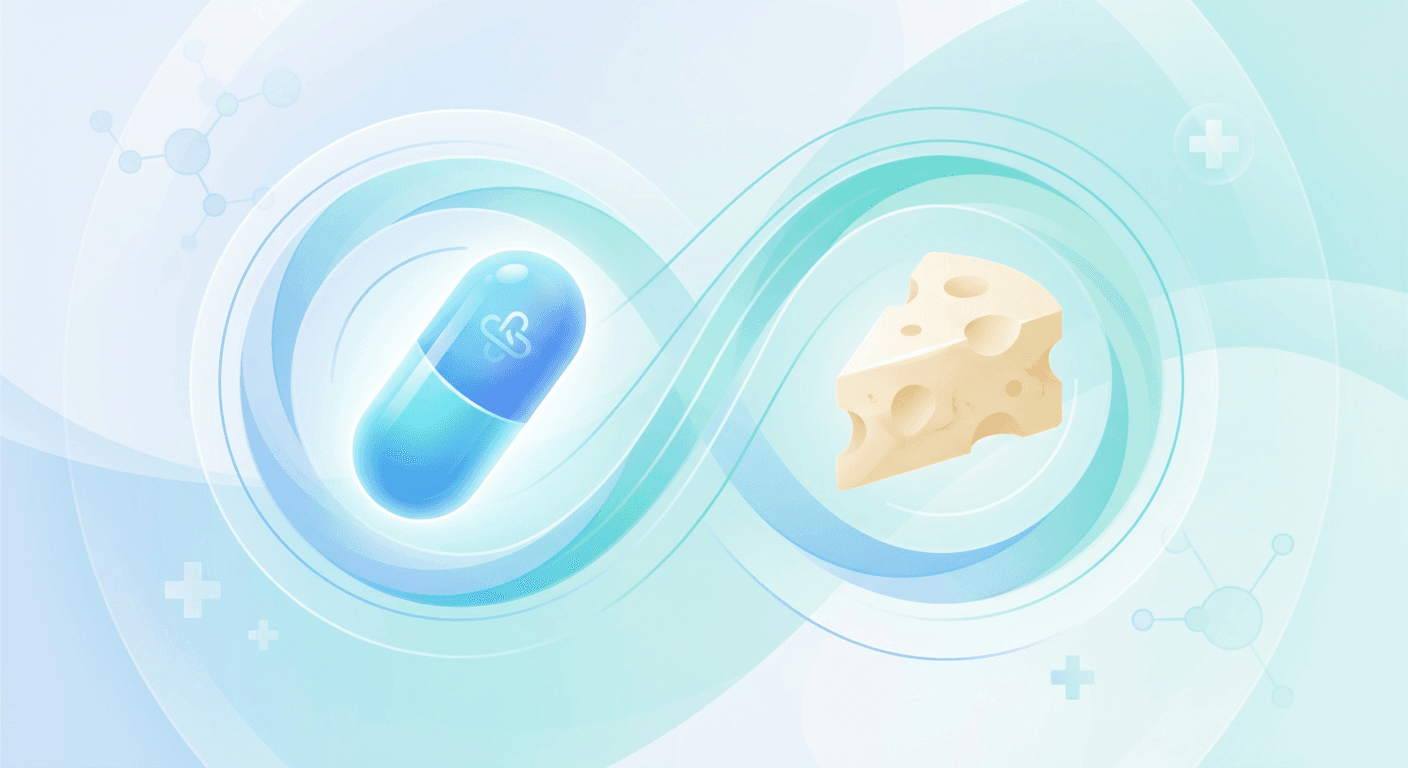
Can I eat cheese while taking omeprazole, or does it affect the medication’s effectiveness?
Cheese does not meaningfully affect omeprazole's effectiveness. Food may slow the rate of absorption but not the total amount, so the drug still works; focus on taking it about 30 minutes before meals. If high-fat cheeses trigger reflux symptoms, adjust portions this is a symptom trigger, not a drug interaction.
You can eat cheese while taking omeprazole, and it does not meaningfully reduce the medication’s effectiveness. Omeprazole’s absorption is generally not impaired by typical foods, and no specific interaction with dairy or cheese is documented. Food may slow the rate at which omeprazole is absorbed, but not the overall amount, so its effect on acid suppression remains intact. [1] There is no official guidance that cheese or dairy products diminish omeprazole’s benefit; standard instructions focus more on timing (taking it before meals) rather than avoiding specific foods. [1]
How food affects omeprazole
- Omeprazole is a proton pump inhibitor (PPI) that reduces stomach acid to treat reflux, ulcers, and related conditions. Food can delay the rate of absorption but typically does not reduce the total absorption (extent), so clinical effectiveness is maintained. [1]
- Some product information notes that certain vehicles (like applesauce with specific capsule strengths) may lower peak levels (Cmax) modestly without changing overall exposure (AUC), and the clinical impact of those Cmax changes is unclear. This suggests omeprazole still works even if taken with certain foods. [2] [3]
Cheese and dairy: practical points
- No direct interaction: There is no evidence that cheese or dairy directly interferes with omeprazole’s mechanism or significantly alters its effectiveness. [1]
- Reflux considerations: Some people find high‑fat cheeses can trigger reflux symptoms, independent of the medication. If fatty or aged cheeses worsen heartburn, you might choose lower‑fat options or smaller portions, but this is about symptom management rather than a drug interaction. [1]
- Calcium and PPIs: Long‑term PPI use can reduce stomach acidity, which may affect absorption of some minerals like certain iron salts; however, routine dairy intake does not require avoidance with omeprazole. This is a general PPI consideration, not a cheese‑specific restriction. [4]
Best way to take omeprazole
- Timing matters more than specific foods: For most formulations, take omeprazole about 30 minutes before a meal (often breakfast) to ensure the drug is active when acid pumps are stimulated by eating. This timing improves efficacy regardless of the foods you eat later. [1]
- Capsule administration details: Some official labeling shows that administering certain omeprazole capsule strengths with applesauce can lower peak levels, but overall exposure remains similar, and clinical relevance is uncertain. This supports that minor food-related changes do not typically negate effectiveness. [2] [3]
Key takeaways
- Cheese does not meaningfully reduce omeprazole’s effectiveness. [1]
- Focus on taking omeprazole before meals for best results, rather than avoiding specific foods. [1]
- If certain cheeses trigger your heartburn, consider portion control or lower‑fat choices; this is about symptom triggers, not drug interference. [1]
Would you like tips on which foods tend to trigger reflux for many people, so you can tailor your diet comfortably?
Related Questions
Related Articles
Sources
- 1.^abcdefghiTherapeutic evaluation of omeprazole.(pubmed.ncbi.nlm.nih.gov)
- 2.^abDailyMed - OMEPRAZOLE capsule, delayed release(dailymed.nlm.nih.gov)
- 3.^abDailyMed - OMEPRAZOLE capsule, delayed release(dailymed.nlm.nih.gov)
- 4.^↑DailyMed - OMEPRAZOLE capsule, delayed release(dailymed.nlm.nih.gov)
Important Notice: This information is provided for educational purposes only and is not intended to replace professional medical advice, diagnosis, or treatment. Always consult with a qualified healthcare provider before making any medical decisions.