
 Persly Medical Team
Is it safe to eat spicy food while taking omeprazole, and does spicy food affect how well the medication works?
It’s generally safe to eat spicy food while taking omeprazole, and spicy foods do not reduce the drug’s acid-suppressing effectiveness. However, capsaicin can still trigger heartburn via non-acid sensory pathways, so symptoms may persist despite proper PPI use. Taking omeprazole before meals and adjusting spice level and meal habits can help reduce discomfort.
Spicy Foods and Omeprazole: Safety, Effects, and Practical Tips
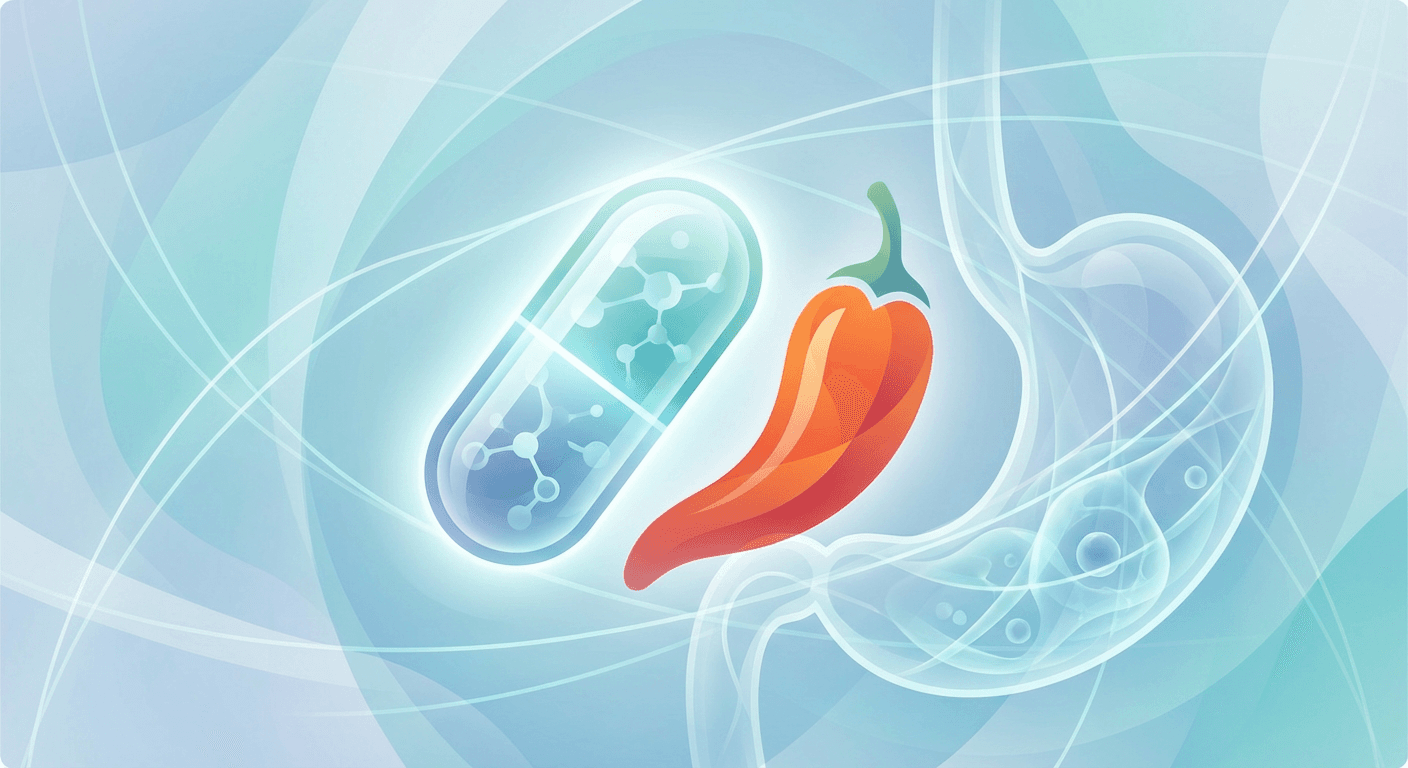
It is generally safe to eat spicy food while taking omeprazole, but spicy meals can still trigger heartburn and reflux symptoms for many people even when acid is being suppressed. [1] Spicy foods do not meaningfully interfere with how omeprazole works to reduce stomach acid, although they may provoke symptoms through non‑acid pathways (such as nerve stimulation), so you may still feel heartburn or burning after spicy meals. [2] [3]
What Omeprazole Does (And What It Doesn’t)
- Strong acid suppression: Omeprazole is a proton pump inhibitor (PPI) that blocks the final step of acid production in the stomach, leading to substantial, dose‑dependent reductions in gastric acidity. [4] This is why it’s effective for conditions like GERD and peptic ulcers. [4]
- Timing matters: Standard delayed‑release omeprazole is best taken before meals to optimize acid control across the day. [5] Food can slow the rate of absorption of omeprazole, but it does not significantly reduce the total amount absorbed, so its overall acid‑reducing effect remains intact. [6] [7]
- Symptom triggers beyond acid: Omeprazole does not change esophageal motility or lower esophageal sphincter pressure, and some symptoms can be driven by chemical and nerve (sensory) stimulation rather than acid alone. [4] This is one reason spicy foods might still cause discomfort even when acid levels are controlled. [8]
Does Spicy Food Reduce Omeprazole’s Effectiveness?
- No direct reduction of acid suppression: There is no evidence that spicy foods impair omeprazole’s pharmacologic ability to suppress acid or reduce its overall absorption. [6] [9]
- Symptoms can persist despite acid control: Capsaicin (the active “hot” ingredient in chili) can stimulate TRPV1 receptors in the esophagus and stomach, causing burning or pain independent of acid. [8] In studies, capsaicin provoked esophageal symptoms in both healthy individuals and people with GERD, especially those with erosive disease. [8]
- Gastric lining safety in healthy subjects: Controlled endoscopic studies found that very spicy meals did not cause visible damage to the stomach or duodenum in healthy volunteers, unlike aspirin which produced clear erosions. [3] This suggests spicy foods mainly trigger symptoms rather than injuring the mucosa in most healthy people. [3]
Why Spicy Foods Still Cause Heartburn on PPIs
- Sensory activation: Capsaicin can directly activate pain pathways in the esophagus, leading to chest burning or heartburn sensations even when acid is suppressed. [8]
- Trigger overlap: Many people have multiple dietary triggers (spicy, fatty, fried, chocolate, caffeine, alcohol, certain fruits/vegetables), and these can worsen reflux by slowing gastric emptying or relaxing the lower esophageal sphincter, separate from acid effects. [10] [1]
Practical Eating Strategies While on Omeprazole
- Personalize your triggers: If spicy dishes reliably cause symptoms for you, it can help to reduce the heat level, choose milder varieties, or pair with non‑spicy sides to dilute the capsaicin effect. This approach respects that triggers vary by person. [1]
- Meal timing: Avoid late‑night eating and large meals, as both can increase reflux risk even with PPI therapy. [10] [1]
- Dose timing for delayed‑release omeprazole: Take your dose before meals as directed to optimize control of daytime acid exposure. [5]
- Supportive habits: Eating slowly, avoiding tight clothes around the abdomen, elevating the head of the bed, and maintaining a healthy weight can further reduce heartburn episodes. [10] [1]
- Consider non‑acid contributors: If you continue to experience burning with spicy foods despite proper PPI use, recognize that symptoms may be driven by sensory pathways rather than inadequate acid suppression. [8] Discussing persistent symptoms with a clinician can help tailor therapy if needed. [2]
Quick Reference: Lifestyle Guidance Often Given with Omeprazole
- Avoid late‑night meals; don’t lie down soon after eating. [10] [1]
- Limit common triggers (rich, spicy, fatty/fried foods; chocolate; caffeine; alcohol; certain fruits/vegetables). [10] [1]
- Eat smaller portions and more slowly. [1]
- Elevate the head of the bed; wear loose‑fitting clothing around the stomach. [10]
Key Takeaways
- Safety: Spicy foods are generally safe to consume while taking omeprazole, and they do not degrade the medication’s acid‑suppressing effect. [6] [3]
- Symptoms: Spicy foods often still trigger heartburn or chest burning because they stimulate sensory receptors, not because acid suppression has failed. [8]
- Management: Use omeprazole as directed before meals and pair it with lifestyle adjustments; tailor the spiciness to your personal tolerance to reduce discomfort. [5] [1]
If you’d like, I can help you identify which spicy ingredients and meal patterns most often trigger your symptoms and suggest gentler alternatives.
Related Questions
Related Articles

Sources
- 1.^abcdefghiOmeprazole Delayed-Release Tablets 20 mg(dailymed.nlm.nih.gov)
- 2.^abProton pump inhibitors in the management of GERD.(pubmed.ncbi.nlm.nih.gov)
- 3.^abcdSpicy food and the stomach. Evaluation by videoendoscopy.(pubmed.ncbi.nlm.nih.gov)
- 4.^abcTherapeutic evaluation of omeprazole.(pubmed.ncbi.nlm.nih.gov)
- 5.^abcDailyMed - OMEPRAZOLE capsule, delayed release(dailymed.nlm.nih.gov)
- 6.^abcTherapeutic evaluation of omeprazole.(pubmed.ncbi.nlm.nih.gov)
- 7.^↑Development of an oral formulation of omeprazole.(pubmed.ncbi.nlm.nih.gov)
- 8.^abcdefCapsaicin induction of esophageal symptoms in different phenotypes of gastroesophageal reflux disease.(pubmed.ncbi.nlm.nih.gov)
- 9.^↑Influence of acid secretory status on absorption of omeprazole from enteric coated granules.(pubmed.ncbi.nlm.nih.gov)
- 10.^abcdefOMEPRAZOLE AND SODIUM BICARBONATE capsule(dailymed.nlm.nih.gov)
Important Notice: This information is provided for educational purposes only and is not intended to replace professional medical advice, diagnosis, or treatment. Always consult with a qualified healthcare provider before making any medical decisions.