

 Persly Medical Team
Based on PubMed | Is it true that taking turmeric before bedtime lowers blood pressure in people with hypertension?
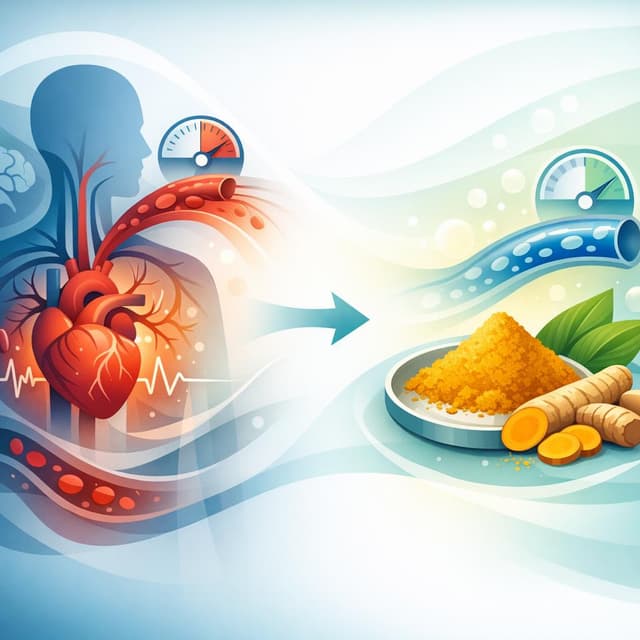
There is no clinical evidence that taking turmeric specifically at bedtime lowers blood pressure more than other dosing times. Regular curcumin/turmeric may produce small average reductions (about 1-2 mmHg), so prioritize proven treatments and lifestyle changes, and use caution if you take anticoagulants.
Taking turmeric before bedtime has not been proven to lower blood pressure more than taking it at other times of day. Current human studies on turmeric/curcumin show small average reductions in blood pressure with regular supplementation, but they do not demonstrate a specific “bedtime advantage.” [1] [2]
What the evidence shows
- Curcumin/turmeric and blood pressure: A recent systematic review and meta‑analysis pooling 35 randomized controlled trials found that curcumin/turmeric supplementation was associated with modest average reductions in systolic blood pressure by about 2 mmHg and diastolic blood pressure by about 0.8 mmHg, and improvements in markers of vascular function. These effects were small and observed with general supplementation, not tied to a particular dosing time. [1] [2]
- No trials on bedtime timing: Available randomized trials and meta‑analyses do not report that taking turmeric specifically at night lowers blood pressure more than morning or divided dosing. In other words, there is no clinical evidence that bedtime use is superior for blood pressure control. [1] [2]
Why timing claims persist
- Curcumin has a short half-life and limited absorption, and some supplements add bioavailability enhancers (like piperine from black pepper) or use lipid/nano formulations to improve uptake. While such strategies can affect how much curcumin your body absorbs, published human trials showing blood pressure benefits have not linked those effects to bedtime dosing. Any benefit seen so far appears related to consistent daily intake rather than the clock time. [1] [2]
How meaningful is the effect?
- The average reductions reported (around 1–2 mmHg) are considered small. For context, lifestyle approaches such as the DASH eating pattern, sodium reduction, weight loss, physical activity, and limiting alcohol tend to lower blood pressure by larger margins. Turmeric may be a reasonable complementary approach, but it is not a replacement for proven treatments or lifestyle changes. [1] [2]
Safety and interactions
- Overall tolerance: Curcumin is generally well‑tolerated; the most common side effects are mild stomach upset, nausea, or diarrhea at higher doses. [3]
- Anticoagulants/antiplatelets: There is a reported case of increased INR with a vitamin K antagonist when turmeric was used, suggesting a potential to enhance blood‑thinner effects. If you take warfarin, fluindione, or other anticoagulants, use turmeric cautiously and inform your clinician. [4]
- Antihypertensive medicines: Human data do not show consistent, clinically meaningful drug–drug interactions between curcumin and standard blood pressure medications. Still, because curcumin can have mild vasodilatory and antiplatelet properties, monitor for dizziness or lightheadedness when starting or increasing doses, especially if you already take blood pressure or blood‑thinning drugs. [3]
- Surgery/bleeding risk: Due to potential antiplatelet effects, it’s prudent to stop high‑dose turmeric/curcumin supplements about 1–2 weeks before planned surgery, after discussing with your healthcare team. [3]
Practical guidance
- Choose evidence‑based priorities: Keep taking your prescribed antihypertensive medications as directed, and focus on lifestyle pillars (DASH‑style eating, sodium <1,500–2,300 mg/day as tolerated, regular aerobic activity, healthy weight, moderate alcohol). These have larger and better‑proven effects on blood pressure.
- If you add turmeric/curcumin:
- Consider standardized curcumin extract products with bioavailability enhancers, taken with food to reduce stomach upset. [3]
- Typical study dosages vary widely; many use standardized curcumin in the range of several hundred milligrams to ~1 gram daily, sometimes divided. Because products differ greatly, start low and follow label instructions or medical advice. [1] [2]
- Timing: Take it at a consistent time that fits your routine (morning or evening). There is no evidence that bedtime specifically improves blood pressure outcomes. [1] [2]
- Monitor blood pressure at home for several weeks to see if there is any personal benefit, and watch for side effects like GI upset or easy bruising. [3]
Bottom line
- There is no clinical evidence that taking turmeric specifically before bedtime lowers blood pressure more than taking it at other times. [1] [2]
- Regular curcumin/turmeric supplementation may produce small average reductions in blood pressure, but effects are modest and not time‑dependent in the research to date. [1] [2]
- Curcumin is generally safe, but use caution with anticoagulants and monitor for GI effects and bleeding risk. [3] [4]
Quick reference table
| Question | What studies show | Takeaway |
|---|---|---|
| Does turmeric lower BP? | Meta‑analysis of 35 RCTs: ~2 mmHg systolic and ~0.8 mmHg diastolic average reductions; improved endothelial function. [1] [2] | Small, complementary benefit possible. |
| Is bedtime better? | Trials do not compare bedtime vs other dosing times for BP outcomes. [1] [2] | No proven “bedtime advantage.” |
| Safety | Generally well‑tolerated; GI upset most common; watch interactions with blood thinners; limited evidence of major antihypertensive interactions. [3] [4] | Usually safe; review meds for bleeding risk. |
If you plan to start a turmeric/curcumin supplement for hypertension, it may be reasonable as an add‑on, but it should sit behind proven therapies and lifestyle approaches, and the timing (including bedtime) does not appear to change its blood pressure effect based on current evidence. [1] [2]
Related Questions
Related Articles


Sources
- 1.^abcdefghijklCurcumin/turmeric supplementation could improve blood pressure and endothelial function: A grade-assessed systematic review and dose-response meta-analysis of randomized controlled trials.(pubmed.ncbi.nlm.nih.gov)
- 2.^abcdefghijklCurcumin/turmeric supplementation could improve blood pressure and endothelial function: A grade-assessed systematic review and dose-response meta-analysis of randomized controlled trials.(pubmed.ncbi.nlm.nih.gov)
- 3.^abcdefgClinical utility of curcumin extract.(pubmed.ncbi.nlm.nih.gov)
- 4.^abcProbable interaction between an oral vitamin K antagonist and turmeric (Curcuma longa).(pubmed.ncbi.nlm.nih.gov)
Important Notice: This information is provided for educational purposes only and is not intended to replace professional medical advice, diagnosis, or treatment. Always consult with a qualified healthcare provider before making any medical decisions.