

 Persly Medical Team
Based on NIH | Is it true that people with hypertension should avoid turmeric or curcumin supplements because they can interact with blood pressure medications or significantly affect blood pressure?
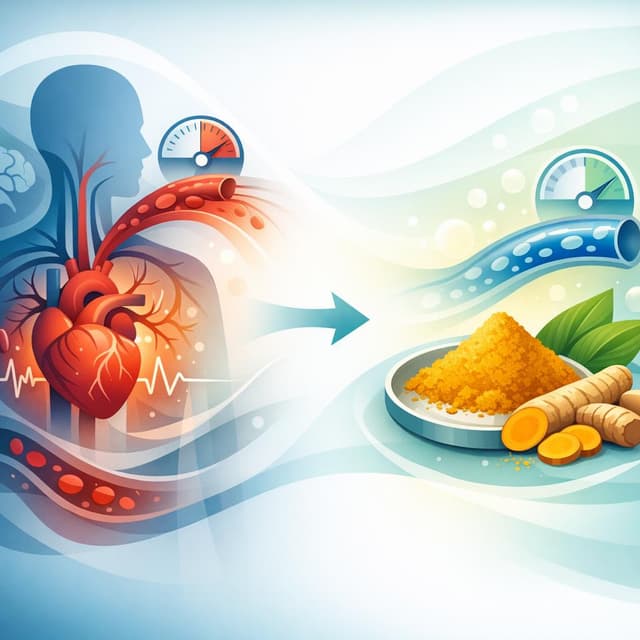
People with hypertension generally don’t need to avoid turmeric or curcumin. Human trials show a small blood pressure–lowering effect; animal data suggest a possible interaction with losartan, so monitor BP when starting supplements, especially if on ARBs. Use as a complement, not a replacement for prescribed therapy.
People with high blood pressure do not generally need to avoid turmeric or curcumin, but it’s wise to use them cautiously alongside blood pressure medicines. Evidence in adults suggests curcumin may have a small blood pressure–lowering effect, and there is limited animal research hinting at possible interactions with certain antihypertensive drugs. Overall, the risk of a dangerous interaction appears low, but monitoring and moderation are sensible. If you take prescription blood pressure medication, especially an ARB like losartan, it may be prudent to monitor your blood pressure more closely when starting a turmeric/curcumin supplement. [1] [2]
What the research shows
-
Small blood pressure effect in humans:
- Systematic reviews of clinical trials show curcumin supplementation produces either a small reduction in systolic and diastolic pressure (about 2 mmHg systolic and <1 mmHg diastolic) or no meaningful change in systolic pressure with a possible modest improvement in diastolic pressure after longer use. This suggests any effect is mild and not typically clinically significant for most people. [2] [1]
-
Animal data on interactions:
- In hypertensive rats, curcumin enhanced the blood pressure–lowering effect of losartan (an angiotensin II receptor blocker, ARB) and increased losartan blood levels (area under the curve), implying a pharmacokinetic interaction. This model indicates a potential for stronger blood pressure lowering when curcumin is combined with losartan, though human data confirming this are lacking. [3] [4]
-
Official labeling for antihypertensives:
- U.S. labeling for common antihypertensives (e.g., aliskiren) warns about interactions with certain prescription drugs (like cyclosporine, itraconazole) and NSAIDs, but does not specifically list turmeric/curcumin. This absence suggests no established, clinically confirmed interaction has been documented in humans for these agents. [5] [6] [7]
Practical implications for antihypertensive classes
-
ACE inhibitors/ARBs (e.g., lisinopril, losartan):
- Human evidence of a major interaction with turmeric/curcumin is not established. Animal findings with losartan suggest a theoretical risk of additive blood pressure lowering and higher drug levels; monitor for dizziness or lightheadedness and track home BP when starting curcumin. [3] [4]
- Drug labels emphasize interactions with NSAIDs and certain antifungals/immunosuppressants rather than herbs like turmeric. This indicates turmeric is not a known, contraindicated co-therapy. [5] [7]
-
Beta blockers, calcium channel blockers, diuretics:
When to be cautious
-
If you are on multiple antihypertensives or have tightly controlled blood pressure:
-
If you use losartan (or other ARBs) specifically:
-
If you take other medications with narrow safety margins:
Sensible use tips
-
Start low, go slow:
-
Monitor at home:
-
Choose quality products:
-
Do not replace prescribed therapy:
Bottom line
- There is no strong human evidence that turmeric/curcumin dangerously interacts with standard blood pressure medicines. Clinical trials show at most a small BP reduction, suggesting low risk for most users. [1] [2]
- Animal studies indicate a possible interaction with losartan that could enhance drug levels and BP lowering, so added caution and monitoring are reasonable if you take an ARB. [3] [4]
- Official drug information for common antihypertensives does not list turmeric/curcumin as a known interaction, reinforcing that avoidance is not routinely required, though sensible monitoring is wise. [5] [7] [6]
Quick reference table
| Topic | What we know | Practical advice |
|---|---|---|
| Curcumin’s BP effect in humans | Small reduction in SBP (~2 mmHg) or no significant change; possible small DBP improvement with longer use | Effect is mild; unlikely to cause major BP drops in most adults |
| Interaction with ARBs (losartan) | Animal studies show increased losartan levels and stronger BP lowering with curcumin | Monitor BP more closely; watch for dizziness; discuss persistent low readings with clinician |
| Official antihypertensive labels | No specific turmeric/curcumin interaction listed; known interactions focus on other drugs (e.g., cyclosporine, itraconazole, NSAIDs) | Not routinely contraindicated; general caution still reasonable |
| Use with other classes (beta blockers, CCBs, diuretics) | No clear human interaction evidence | Start low, monitor symptoms and BP |
| Role in therapy | Complementary at best; not a substitute for medications or lifestyle changes | Maintain prescribed meds and heart-healthy habits |
If you plan to start a turmeric/curcumin supplement and are on blood pressure medication, a careful, monitored trial at a modest dose is reasonable. Track your readings and check in with your healthcare professional if your blood pressure runs lower than usual or if you develop symptoms like dizziness or fainting. [1] [2]
Related Questions
Related Articles


Sources
- 1.^abcdefghijklmEffects of curcumin on blood pressure: A systematic review and dose-response meta-analysis.(pubmed.ncbi.nlm.nih.gov)
- 2.^abcdefghijklmCurcumin/turmeric supplementation could improve blood pressure and endothelial function: A grade-assessed systematic review and dose-response meta-analysis of randomized controlled trials.(pubmed.ncbi.nlm.nih.gov)
- 3.^abcdefChanges in Pharmacokinetics and Pharmacodynamics of Losartan in Experimental Diseased Rats Treated with (pubmed.ncbi.nlm.nih.gov)
- 4.^abcdefPre-treatment with curcumin enhances plasma concentrations of losartan and its metabolite EXP3174 in rats.(pubmed.ncbi.nlm.nih.gov)
- 5.^abcdTEKTURNA- aliskiren hemifumarate tablet, film coated(dailymed.nlm.nih.gov)
- 6.^abcTEKTURNA- aliskiren hemifumarate tablet, film coated(dailymed.nlm.nih.gov)
- 7.^abcdTEKTURNA- aliskiren hemifumarate tablet, film coated(dailymed.nlm.nih.gov)
- 8.^abBlood Pressure Medicines(medlineplus.gov)
Important Notice: This information is provided for educational purposes only and is not intended to replace professional medical advice, diagnosis, or treatment. Always consult with a qualified healthcare provider before making any medical decisions.