
 Persly Medical Team
Based on CDC | Does long-term consumption of spicy foods increase the risk of developing hypertension or worsen blood pressure control?
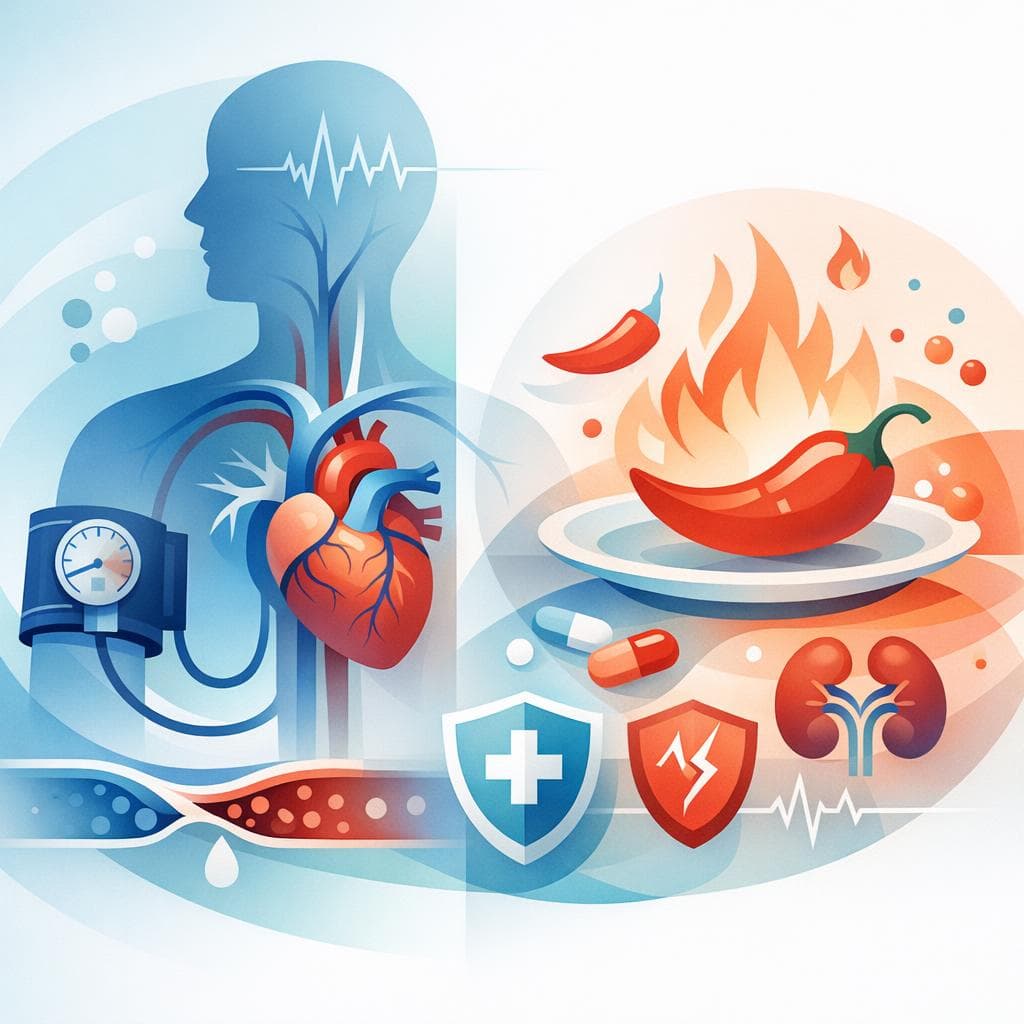
Current evidence suggests long-term spicy food consumption does not increase hypertension risk and does not consistently worsen blood pressure control; in some groups (especially women) it may be linked to slightly lower blood pressure. Because most data are observational, prioritize proven measures: limit sodium, get adequate potassium, moderate alcohol, avoid smoking, and stay active.
Long-term spicy food intake does not appear to raise the risk of hypertension, and it does not consistently worsen blood pressure control. In some populations especially women regular spicy food consumption has been associated with slightly lower blood pressure or lower odds of hypertension, although results are mixed and largely observational. [1]
What the evidence shows
- Large population data from China suggest that frequent spicy food consumption may be linked to lower systolic blood pressure and a lower chance of hypertension in women, while showing no clear harmful effect in men; diastolic pressure changes were small and directionally inconsistent by sex. [1] This points to a possible modest benefit or at least no harm, but it is not definitive. [1]
- These studies are cross-sectional (a snapshot in time), so they cannot prove cause and effect; unmeasured lifestyle factors (like overall diet quality or activity) may explain some of the associations. Prospective, multicenter studies are still needed to confirm causality. [1]
The bigger picture: proven dietary drivers of blood pressure
- Independent of spiciness, the strongest diet-related drivers of high blood pressure are high sodium (salt) intake and inadequate potassium intake. Most dietary sodium comes from processed and restaurant foods, not from home-added salt. [2] Eating more potassium-rich foods (e.g., fruits, vegetables, beans, yogurt) supports blood pressure control. [2]
- Standard lifestyle risk factors for hypertension also include a high-salt diet, smoking, excess alcohol, and physical inactivity. These well-established factors carry much greater weight than the “spicy” quality of foods. [3]
Practical implications for daily life
- Spicy itself is not the problem; salt is. If your spicy dishes are also salty (e.g., packaged noodles, salty sauces, pickled items), the salt can raise blood pressure over time. Keeping daily sodium low while enjoying spices is a heart-healthy strategy. [2]
- Many heart-healthy diets encourage flavoring with herbs and spices (chili, garlic, ginger, pepper) to reduce reliance on salt while keeping food enjoyable, which can help maintain a low-sodium eating pattern. This approach supports blood pressure control. [4]
How spicy foods might affect blood pressure
- The main spicy compound in chili peppers is capsaicin. Human population data to date do not show a consistent blood pressure–raising effect of capsaicin-rich foods; some findings suggest small reductions in systolic pressure in certain groups, especially women. However, mechanisms and causality remain uncertain in humans. [1]
Key takeaways
- Based on current human data, long-term spicy food intake does not increase hypertension risk overall and may be neutral or modestly helpful for blood pressure in some groups. Because most evidence is observational, it should be interpreted cautiously. [1]
- Focus on fundamentals known to influence blood pressure:
Quick reference table
| Question | What current evidence suggests | Practical tip |
|---|---|---|
| Does spicy food raise hypertension risk? | Generally no; possible small benefit in women in some cohorts; evidence not causal. [1] | You can keep spicy foods if overall diet quality is good. |
| Will spicy food worsen BP control? | Not consistently; effects vary and are small. [1] | Track salt in spicy sauces and processed foods. [2] |
| What matters more than “spicy”? | Sodium reduction and adequate potassium. [2] | Cook at home, flavor with spices instead of salt. [4] |
| Other lifestyle risks | High-salt diet, smoking, heavy alcohol, inactivity. [3] | Address these to meaningfully lower risk. |
Bottom line
You can generally enjoy spicy foods without increasing your long-term risk of hypertension, provided your overall diet is low in sodium and rich in potassium. Prioritizing salt reduction and healthy lifestyle habits will have a much larger impact on blood pressure than the level of spiciness itself. [2] [3] [4]
Related Questions
Related Articles
Sources
- 1.^abcdefghAssociation between spicy food and hypertension among Han Chinese aged 30-79 years in Sichuan Basin: a population-based cross-sectional study.(pubmed.ncbi.nlm.nih.gov)
- 2.^abcdefghHigh Blood Pressure Risk Factors(cdc.gov)
- 3.^abcdDiagnosing High Blood Pressure(nyulangone.org)
- 4.^abc고혈압의 식사요법 Hypertension | 건강정보(health.severance.healthcare)
Important Notice: This information is provided for educational purposes only and is not intended to replace professional medical advice, diagnosis, or treatment. Always consult with a qualified healthcare provider before making any medical decisions.