
 Persly Medical Team
Based on NIH | Is it safe for people with hypertension to consume honey, or could it raise blood pressure or interact with antihypertensive medications?
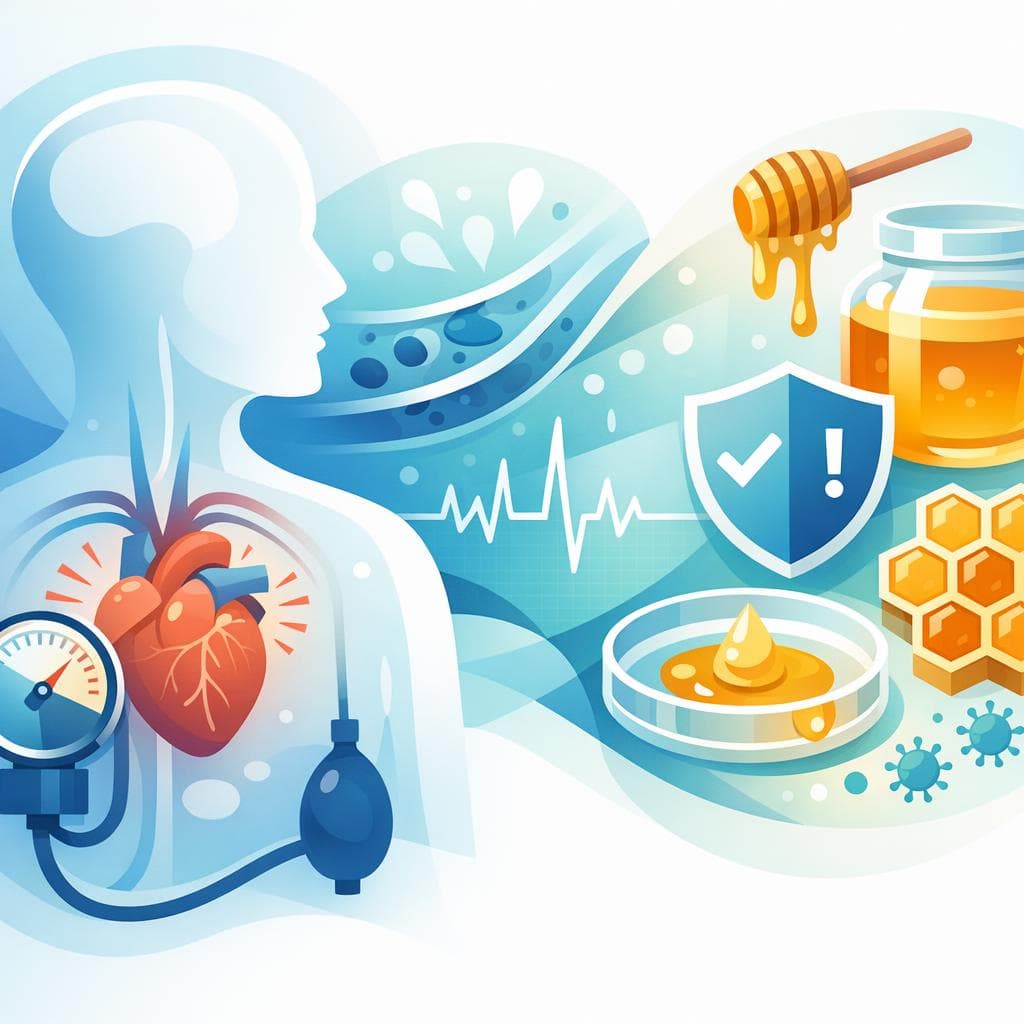
Honey is generally safe for people with hypertension when consumed in moderation and does not appear to raise blood pressure on its own. There are no well‑documented interactions with common antihypertensives, but limit total added sugars and avoid grayanotoxin‑contaminated “mad honey,” which can cause hypotension.
People with hypertension can generally consume honey in moderation as part of a balanced diet, and honey does not appear to raise blood pressure on its own when used sensibly. However, honey is an added sugar, so portion control is important for weight, glucose, and overall heart risk. [1] [2] There are no well‑documented, clinically significant interactions between typical honey intake and common blood pressure medicines (such as ACE inhibitors, ARBs, beta‑blockers, calcium channel blockers, or diuretics) in humans. A rare exception involves “mad honey” (grayanotoxin‑contaminated honey), which can cause low blood pressure and fainting. [3]
What the evidence suggests
-
Antihypertensive drug interactions: Standard drug references and labeling list interactions among blood pressure medicines and other drugs, but do not identify ordinary honey as a problematic interacting agent with ACE inhibitors, ARBs, beta‑blockers, calcium channel blockers, or diuretics. This suggests no recognized, clinically significant honey–antihypertensive interaction in routine practice. [4] [5]
-
Blood pressure effects: Controlled trials and syntheses evaluating honey’s impact on cardiometabolic risk factors show potential small improvements in some markers (like fasting glucose and lipids) when honey is consumed within a healthy eating pattern; these analyses do not demonstrate a consistent blood pressure‑raising effect. Overall, honey did not emerge as a cause of increased blood pressure in these controlled comparisons. [6] [7] Reviews also discuss possible beneficial antioxidant and metabolic effects, while calling for more high‑quality, controlled studies. This means current evidence does not show honey reliably increases blood pressure and may, in some contexts, be neutral or part of a healthful pattern. [8]
-
Special caution “mad honey”: Honey made from certain Rhododendron species contains grayanotoxins and can cause dizziness, sweating, low heart rate, hypotension (low blood pressure), and fainting. This is uncommon and tied to specific geographic sources; avoid unfamiliar or “mad honey.” [3]
-
Animal data signal, not human evidence: An animal study in rabbits suggested honey could lower diltiazem (a calcium channel blocker) blood concentrations. This has not been confirmed in humans, and there are no clinical recommendations to avoid honey with diltiazem based on human data. [9]
Practical guidance on honey intake for hypertension
-
Portion control: Following heart‑healthy diet guidance like DASH includes limiting sweets and added sugars. Keeping added sugars to less than 10% of your daily calories is recommended; honey counts as an added sugar. [1] [10] Public health guidance similarly advises limiting added sugars to support healthy weight and lower cardiometabolic risk. For many adults, that is roughly no more than 6–9 teaspoons (24–36 g) of added sugar per day, total from all sources. [11] [2] Within this limit, a small amount of honey (for example, 1–2 teaspoons) used to sweeten tea or yogurt can fit a balanced plan. Replacing, not adding, sugars helps keep calories in check. [1]
-
Keep the big picture: Lifestyle measures like the DASH eating plan, healthy weight, exercise, and not smoking are proven to lower blood pressure and reduce risk. Honey should be a minor component of the diet, not a treatment for high blood pressure. [12]
-
Choose safe sources: Purchase honey from reputable producers and avoid imported or unlabeled “mad honey.” If you experience symptoms like sudden dizziness, slow heart rate, or fainting after consuming honey, seek medical care and bring the product information. [3]
Who might need extra caution
-
People with diabetes or prediabetes: Honey affects blood sugar similarly to other sugars. Limited amounts can fit into a carbohydrate plan, but excess intake can undermine weight and glucose control, both of which affect blood pressure. [10]
-
Those on strict sodium/weight goals: While honey contains negligible sodium, excess calories from added sugars can contribute to weight gain, which may raise blood pressure over time. [2]
-
Users of calcium channel blockers like diltiazem: The animal data suggesting lower drug levels with honey have not been reproduced in people. There is no clinical directive to avoid honey with diltiazem, but if you notice changes in blood pressure control, discuss with your clinician. [9]
Bottom line
- Moderate honey consumption is generally safe for people with hypertension and is unlikely to raise blood pressure when it replaces, rather than adds to, other sugars. [1] [10]
- No established human evidence shows harmful interactions between usual dietary honey and common blood pressure medications. [4] [5]
- Limit added sugars overall, including honey, to align with heart‑healthy eating patterns; aim for less than 10% of daily calories from added sugars. [1] [2]
- Avoid “mad honey,” which can cause dangerous low blood pressure and fainting. [3]
Quick reference: Honey and hypertension safety
| Topic | What we know | Practical take |
|---|---|---|
| Blood pressure effect | No consistent evidence of BP increase with moderate intake within healthy diet patterns | Use small amounts; do not rely on honey for BP control |
| Medication interactions | No recognized human interactions with ACEi, ARB, beta‑blocker, diuretic, or typical CCBs | Take medicines as prescribed; monitor BP as usual |
| Intake limits | Added sugars (including honey) ≤10% of daily calories; DASH limits sweets | 1–2 tsp honey can fit if replacing other sugars |
| Special risk | “Mad honey” can cause hypotension/syncope | Avoid unknown/unlabeled honeys; seek care if symptoms occur |
If you keep honey portions small and account for it within your added‑sugar budget, it can be part of a heart‑healthy plan alongside proven measures like DASH eating, exercise, weight management, and adherence to prescribed medications. As always, consistent home blood pressure monitoring helps you see how your routine affects your numbers. [13]
Related Questions
Related Articles
Sources
- 1.^abcdefDASH diet to lower high blood pressure: MedlinePlus Medical Encyclopedia(medlineplus.gov)
- 2.^abcdBe Smart About Sugar(cdc.gov)
- 3.^abcdeMad honey disease: A challenging encounter in the emergency department.(pubmed.ncbi.nlm.nih.gov)
- 4.^abc(dailymed.nlm.nih.gov)
- 5.^abc(dailymed.nlm.nih.gov)
- 6.^↑Effect of honey on cardiometabolic risk factors: a systematic review and meta-analysis.(pubmed.ncbi.nlm.nih.gov)
- 7.^↑Effect of honey on cardiometabolic risk factors: a systematic review and meta-analysis.(pubmed.ncbi.nlm.nih.gov)
- 8.^↑Honey and cardiovascular risk factors, in normal individuals and in patients with diabetes mellitus or dyslipidemia.(pubmed.ncbi.nlm.nih.gov)
- 9.^abInfluence of honey on orally and intravenously administered diltiazem kinetics in rabbits.(pubmed.ncbi.nlm.nih.gov)
- 10.^abcdSweeteners - sugars: MedlinePlus Medical Encyclopedia(medlineplus.gov)
- 11.^↑Sweetened beverages: MedlinePlus Medical Encyclopedia(medlineplus.gov)
- 12.^↑DASH Eating Plan(medlineplus.gov)
- 13.^↑High blood pressure in adults - hypertension: MedlinePlus Medical Encyclopedia(medlineplus.gov)
Important Notice: This information is provided for educational purposes only and is not intended to replace professional medical advice, diagnosis, or treatment. Always consult with a qualified healthcare provider before making any medical decisions.