
 Persly Medical Team
Based on PubMed | Does drinking coffee increase the risk of gallbladder cancer?
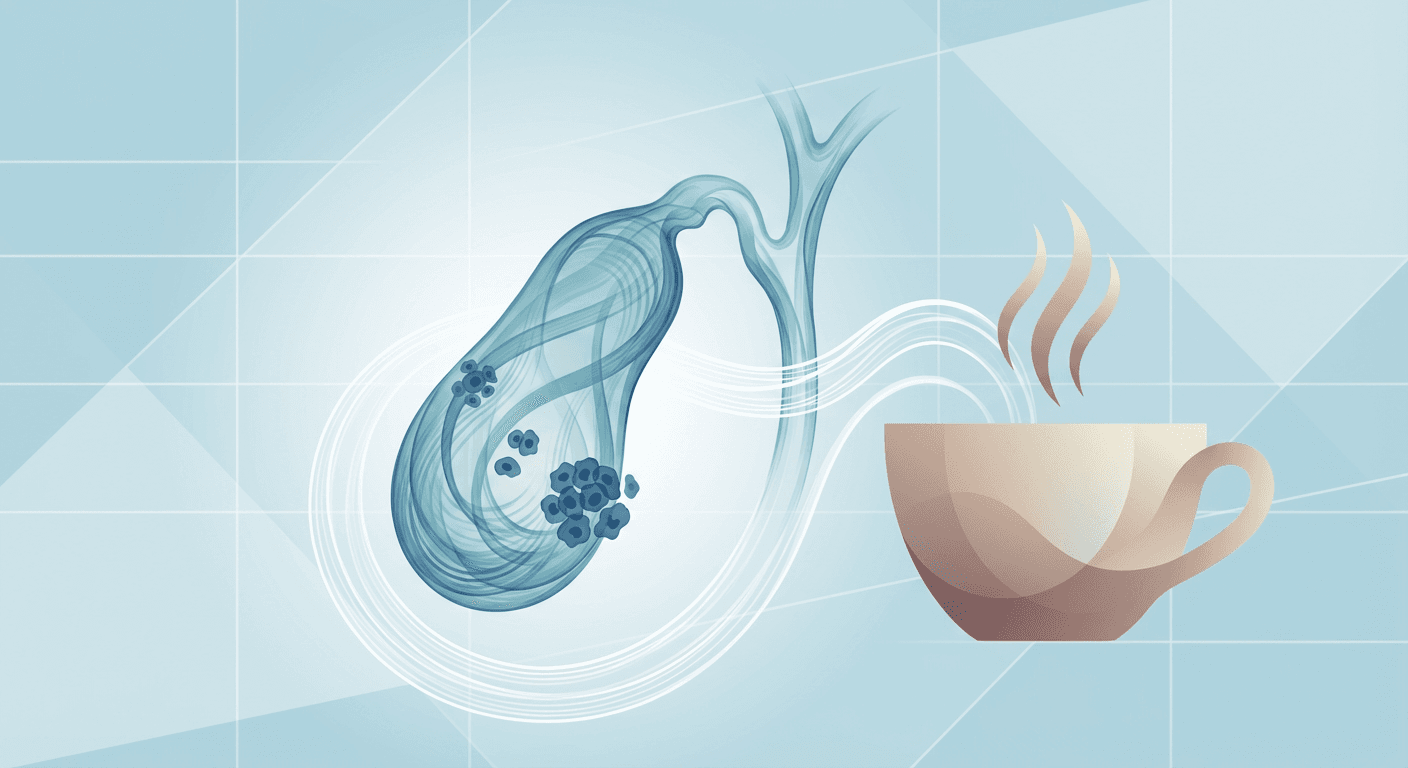
Current evidence does not link coffee to a higher risk of gallbladder cancer; large reviews find coffee neutral for most cancers and possibly protective for some digestive cancers, though gallbladder-specific data are limited. Established risk factors include gallstones, porcelain gallbladder, older age, female sex, obesity, typhoid carrier state, large polyps, and family history. Moderate coffee intake is generally acceptable unless personal symptoms dictate otherwise.
Drinking coffee does not appear to increase the risk of gallbladder cancer, and there is no high‑quality evidence linking coffee intake to higher gallbladder cancer rates. In fact, large reviews of coffee and cancer overall suggest coffee is neutral for most cancers and may be linked to lower risk for several digestive cancers, though gallbladder‑specific data are limited. [1] [2] Gallbladder cancer risk is driven primarily by factors such as gallstones, certain gallbladder conditions, age, sex, and specific infections not by coffee intake. [3] [4]
What the evidence shows
- Broad analyses of prospective cohort studies find that coffee drinkers have either similar or lower overall cancer risk compared with non‑drinkers, with inverse associations reported for several gastrointestinal sites; these summaries do not identify coffee as a risk factor for gallbladder cancer. [1] [2]
- Leading clinical centers list established gallbladder cancer risk factors gallstones, “porcelain” gallbladder (calcium deposits in the wall), older age, female sex, obesity, typhoid carrier state, large gallbladder polyps, and family history without citing coffee as a risk factor. [3] [4] [5]
- General medical guidance on coffee notes possible protective associations for some cancers of the digestive tract, while emphasizing that evidence is not conclusive; this guidance does not implicate coffee in raising gallbladder cancer risk. [6]
Coffee, gallstones, and why that matters
Most gallbladder cancers arise in the setting of long‑standing gallstones and chronic inflammation. [3] Because of this, researchers have asked whether coffee could influence gallstone formation. Animal experiments suggest caffeine can change bile physiology and may prevent cholesterol gallstone formation in experimental models, though animal results do not automatically translate to humans. [7] While this does not prove protection in people, it supports the idea that coffee is unlikely to increase gallstone‑related cancer risk. [7]
Key, proven risk factors for gallbladder cancer
- Gallstones and chronic gallbladder inflammation. [3]
- Porcelain gallbladder (heavy calcium deposits in the wall). [3]
- Older age (especially 70+). [3]
- Female sex. [3]
- Obesity and certain diet patterns (high‑carbohydrate, low‑fiber). [4]
- Chronic Salmonella typhi carrier state (typhoid). [4]
- Large or growing gallbladder polyps (≥1 cm). [4]
- Family history (risk increases, but remains low overall). [8]
Coffee is not included among these established factors. [3] [4] [8]
Practical guidance on coffee intake
- For most people, moderate coffee consumption (for example, 2–4 cups per day) can be part of a healthy diet and is not known to raise gallbladder cancer risk. [6]
- Individual tolerance varies, and caffeine can worsen reflux, anxiety, palpitations, or sleep problems in some people; consider decaf if sensitive. [6]
- If you have known gallbladder disease, follow your clinician’s specific advice on diet and symptom triggers; coffee is not a proven carcinogenic factor for the gallbladder, but personal triggers for pain or dyspepsia should guide intake. [3] [4]
Summary table: Coffee and gallbladder cancer risk
| Topic | What research indicates | Takeaway |
|---|---|---|
| Coffee and overall cancer risk | Large cohort meta‑analyses show neutral to lower overall cancer risk among coffee drinkers; no signal of increased gallbladder cancer risk identified | Coffee does not appear to raise gallbladder cancer risk. [1] [2] |
| Clinical risk factor lists for gallbladder cancer | Gallstones, porcelain gallbladder, age, sex, obesity, typhoid, large polyps, family history; coffee not listed | Coffee is not an established risk factor. [3] [4] [8] |
| Mechanistic/experimental data related to gallstones | Animal models show caffeine can prevent cholesterol gallstone formation by altering bile and gallbladder absorption | Suggests coffee is unlikely to promote gallstone‑linked cancer pathways; human confirmation is limited. [7] |
| General medical guidance on coffee | Possible protective links for some digestive cancers; evidence not conclusive; main risks relate to caffeine side effects | Moderate coffee is generally acceptable for most adults. [6] |
Bottom line
Based on current evidence, drinking coffee is not associated with a higher risk of gallbladder cancer, and recognized medical sources do not list coffee as a risk factor for this disease. [3] [4] [1] If you have other gallbladder cancer risk factors such as gallstones, porcelain gallbladder, or a history of typhoid those deserve attention with your clinician, but coffee intake itself is not considered a driver of risk. [3] [4]
Related Questions
Related Articles
Sources
- 1.^abcdCoffee consumption and risk of cancers: a meta-analysis of cohort studies.(pubmed.ncbi.nlm.nih.gov)
- 2.^abcEpidemiologic evidence on coffee and cancer.(pubmed.ncbi.nlm.nih.gov)
- 3.^abcdefghijklGallbladder Cancer(mskcc.org)
- 4.^abcdefghijGallbladder Cancer Causes & Risk Factors(mskcc.org)
- 5.^↑Gallbladder Cancer Causes & Risk Factors(mskcc.org)
- 6.^abcdCoffee and health: What does the research say?(mayoclinic.org)
- 7.^abcCaffeine prevents cholesterol gallstone formation.(pubmed.ncbi.nlm.nih.gov)
- 8.^abcGallbladder Cancer Causes & Risk Factors(mskcc.org)
Important Notice: This information is provided for educational purposes only and is not intended to replace professional medical advice, diagnosis, or treatment. Always consult with a qualified healthcare provider before making any medical decisions.