
 Persly Medical Team
Based on NIH | Can liver cirrhosis cause blood in the stool, and which complications are most likely responsible?
Yes cirrhosis can cause blood in the stool, most often from portal hypertension–related complications. The most critical sources are esophageal or gastric variceal bleeding; other contributors include portal hypertensive gastropathy, GAVE, portal hypertensive colopathy, and hemorrhoids. Black, tarry stools or bright red blood warrant urgent evaluation.
Can Liver Cirrhosis Cause Blood in the Stool?
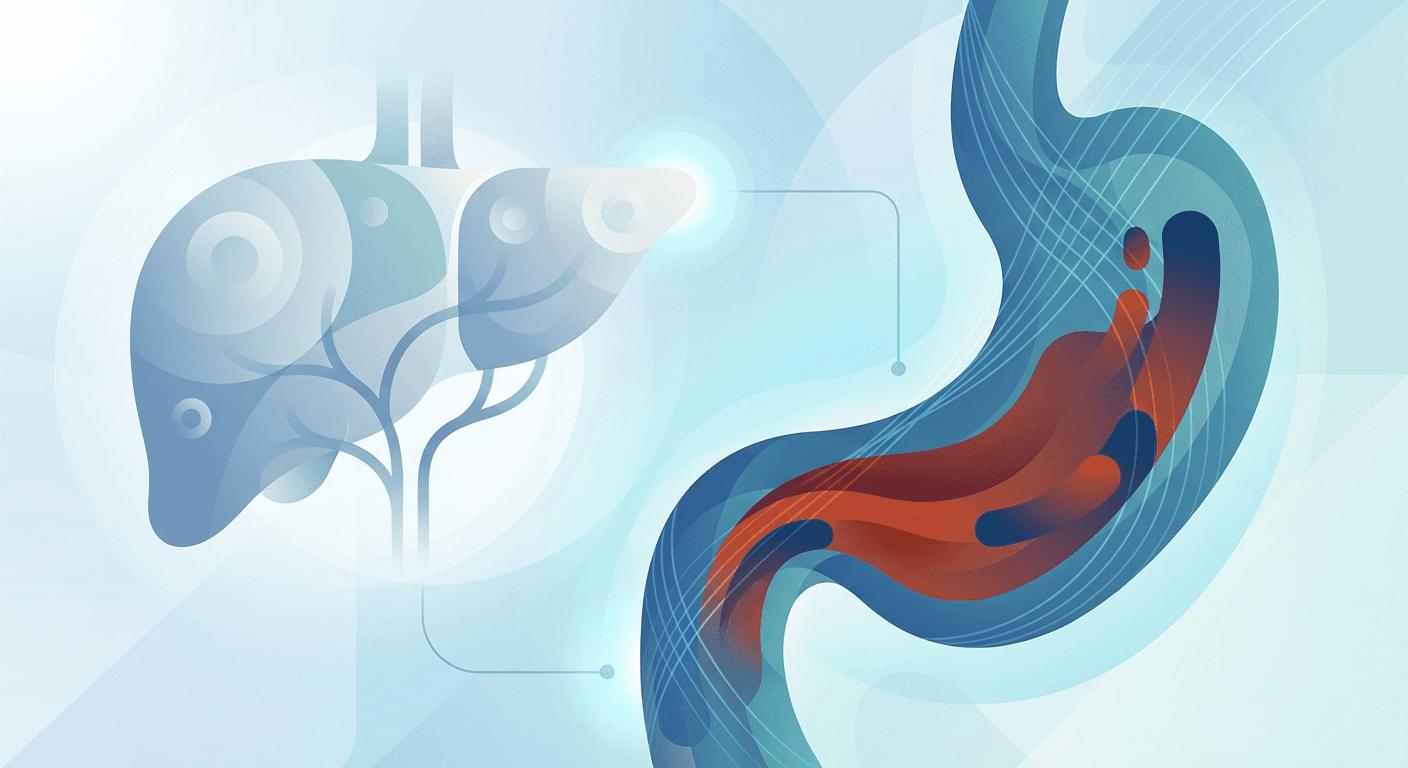
Yes, liver cirrhosis can be associated with blood in the stool, and this is most commonly due to complications of portal hypertension (increased pressure in the portal venous system) that develop as cirrhosis progresses. Bleeding can present as bright red blood (hematochezia) or black, tarry stools (melena), depending on where the bleeding occurs and its volume. [1] [2]
Why Cirrhosis Leads to Bleeding
Cirrhosis causes scarring in the liver, which raises pressure in the portal vein and reroutes blood through fragile collateral veins in the esophagus, stomach, and intestines. These enlarged veins (varices) and vascular changes can rupture or leak, leading to gastrointestinal bleeding. [1] [3] Additionally, the liver’s reduced ability to produce clotting factors can make bleeding more likely and harder to stop. This combination of portal hypertension and impaired clotting increases the risk of both upper and lower GI bleeding. [2] [4]
Most Likely Cirrhosis-Related Sources of Blood in the Stool
1) Esophageal or Gastric Variceal Bleeding (Upper GI source, often melena; can be hematochezia if brisk)
Varices in the esophagus or stomach are a major cause of life‑threatening bleeding in cirrhosis. When bleeding is heavy, blood can pass rapidly through the intestines and appear as black tarry or even bright red stools. [5] [6] People with cirrhosis may have warning signs like jaundice, ascites (fluid in the belly), easy bruising, and then develop black or bloody stools during an active bleed. This scenario is a medical emergency and typically requires urgent therapy (e.g., banding, medications to lower portal pressure). [7] [8]
2) Portal Hypertensive Gastropathy (PHG) and Gastric/Antral Vascular Ectasia (GAVE)
PHG and GAVE are stomach lining changes linked to portal hypertension. They more often cause chronic, slow blood loss with anemia, but can occasionally trigger overt bleeding seen as dark stools. [9] These conditions are managed by reducing portal pressures (PHG) or by endoscopic ablation techniques (GAVE). While less likely than varices to cause massive bleeding, they remain common in cirrhosis. [9]
3) Portal Hypertensive Enteropathy and Colopathy (Lower GI sources)
Portal hypertension can affect the small bowel and colon, producing fragile vascular lesions. In the colon (portal hypertensive colopathy), bleeding may appear as bright red blood or intermittent scant rectal bleeding, though robust data on exact risk is limited. [10] [11] These lower GI manifestations are recognized causes in cirrhosis, but their true incidence and bleeding risk are less well defined compared to varices. [11]
4) Hemorrhoids and Anorectal Varices
Hemorrhoids are common in the general population and can be worsened by portal hypertension. In cirrhosis, hemorrhoids and anorectal varices can lead to bright red blood coating the stool or on toilet paper, and are among the more frequently observed findings in lower GI bleeding evaluations. [11] Although they are often less dangerous than esophageal varices, they can still be troublesome and recurrent. [11]
5) Other Non-Variceal Causes (less common but possible)
Cirrhosis does not exclude routine GI problems. Peptic ulcers, erosive esophagitis, Dieulafoy’s lesion, and Mallory–Weiss tears can contribute to bleeding, especially in those with portal hypertension and impaired clotting. [11] These typically cause upper GI bleeding (melena), but severe cases can present with hematochezia. [11]
Key Symptoms to Watch For
- Black, tarry stools (melena) or visible red blood in stools (hematochezia). These may signal variceal bleeding or other GI sources related to cirrhosis. [5] [7]
- Lightheadedness, rapid heart rate, or fainting may indicate significant blood loss and require urgent care. [7]
- Signs of advanced liver disease such as jaundice, ascites, easy bruising, and confusion may accompany variceal bleeding. [7] [1]
If you have cirrhosis and notice blood in your stool or black stools, this can be a medical emergency and should prompt immediate evaluation. [12] [13]
How Clinicians Evaluate Bleeding in Cirrhosis
- Initial stabilization: Assess blood pressure and heart rate and start fluids if needed to stabilize circulation. [14]
- Locate the source: Upper endoscopy is used to detect and treat esophageal or gastric varices, PHG, and GAVE; colonoscopy is the first‑line test to identify colonic causes such as portal hypertensive colopathy or hemorrhoids. Angiography or capsule studies may be used if endoscopy does not find the source. [14] [15]
- Concurrent management: In suspected variceal bleeding, medications that reduce portal pressure and antibiotics are typically started urgently while arranging endoscopy. [16]
- Tailored therapy: PHG is managed by lowering portal pressures; GAVE is typically treated with endoscopic ablation; varices are banded or treated with other endoscopic techniques; lower GI sources may need endoscopic or radiologic treatments depending on severity. Shunt procedures (like TIPS) may be considered for refractory portal hypertension–related bleeding. [9] [11]
Quick Comparison: Likely Complications Behind Blood in the Stool
| Complication | Where it bleeds | Typical stool appearance | How common/important in cirrhosis | Usual management focus |
|---|---|---|---|---|
| Esophageal/gastric varices | Upper GI | Black tarry stools; can be bright red if brisk | Most critical, potentially life‑threatening | Endoscopic banding, portal pressure drugs, antibiotics, possible shunt |
| Portal hypertensive gastropathy (PHG) | Stomach | Often chronic anemia; melena when overt | Common in portal hypertension | Reduce portal pressure; severe cases may need shunt |
| Gastric antral vascular ectasia (GAVE) | Stomach antrum | Chronic anemia; melena possible | Seen in cirrhosis but not dependent on portal pressure | Endoscopic ablation therapies |
| Portal hypertensive colopathy | Colon | Bright red blood; intermittent | Recognized but under‑studied | Endoscopic/radiologic as needed; manage portal hypertension |
| Hemorrhoids/anorectal varices | Rectum/anus | Bright red blood on stool/paper | Frequently observed in LGI workups | Local and endoscopic treatments; address portal hypertension |
Practical Takeaways
- Cirrhosis can indeed cause blood in the stool, most often through complications of portal hypertension such as varices and portal hypertensive mucosal changes. [1] [3]
- Black, tarry stools or bright red blood should be treated urgently, especially in anyone known or suspected to have cirrhosis. [12] [13]
- Variceal bleeding is the most dangerous and common serious cause, while lower GI sources like portal hypertensive colopathy and hemorrhoids are also possible but usually less life‑threatening. [5] [11]
When to Seek Care
If you notice blood in your stool, black tarry stools, feel lightheaded, or have signs of advanced liver disease, seek emergency care right away. Prompt evaluation and treatment can be lifesaving in cirrhosis‑related bleeding. [7] [12] [13]
Related Questions
Related Articles
Sources
- 1.^abcdCirrhosis - Symptoms and causes(mayoclinic.org)
- 2.^abSymptoms and causes - Mayo Clinic(mayoclinic.org)
- 3.^abCirrhosis: MedlinePlus Medical Encyclopedia(medlineplus.gov)
- 4.^↑Cirrhosis(medlineplus.gov)
- 5.^abcdEsophageal varices - Symptoms and causes(mayoclinic.org)
- 6.^↑Esophageal varices - Symptoms and causes(mayoclinic.org)
- 7.^abcdefSymptoms and causes - Mayo Clinic(mayoclinic.org)
- 8.^abBleeding esophageal varices: MedlinePlus Medical Encyclopedia(medlineplus.gov)
- 9.^abcdeReview article: the management of portal hypertensive gastropathy and gastric antral vascular ectasia in cirrhosis.(pubmed.ncbi.nlm.nih.gov)
- 10.^abClinical manifestations of portal hypertension.(pubmed.ncbi.nlm.nih.gov)
- 11.^abcdefghijNon-variceal gastrointestinal bleeding in patients with liver cirrhosis: a review.(pubmed.ncbi.nlm.nih.gov)
- 12.^abcCirrhosis - discharge: MedlinePlus Medical Encyclopedia(medlineplus.gov)
- 13.^abcAscites: MedlinePlus Medical Encyclopedia(medlineplus.gov)
- 14.^abDiagnosis and management of lower gastrointestinal bleeding.(pubmed.ncbi.nlm.nih.gov)
- 15.^↑The management of lower gastrointestinal bleeding.(pubmed.ncbi.nlm.nih.gov)
- 16.^↑It’s (Usually) OK to Wait Until Morning to Scope that Patient with UGI Bleeding - American College of Gastroenterology(gi.org)
Important Notice: This information is provided for educational purposes only and is not intended to replace professional medical advice, diagnosis, or treatment. Always consult with a qualified healthcare provider before making any medical decisions.