
 Persly Medical Team
Based on PubMed | Can a skin rash occur with head and neck cancer or its treatments, and does its presence or severity have any prognostic implications?
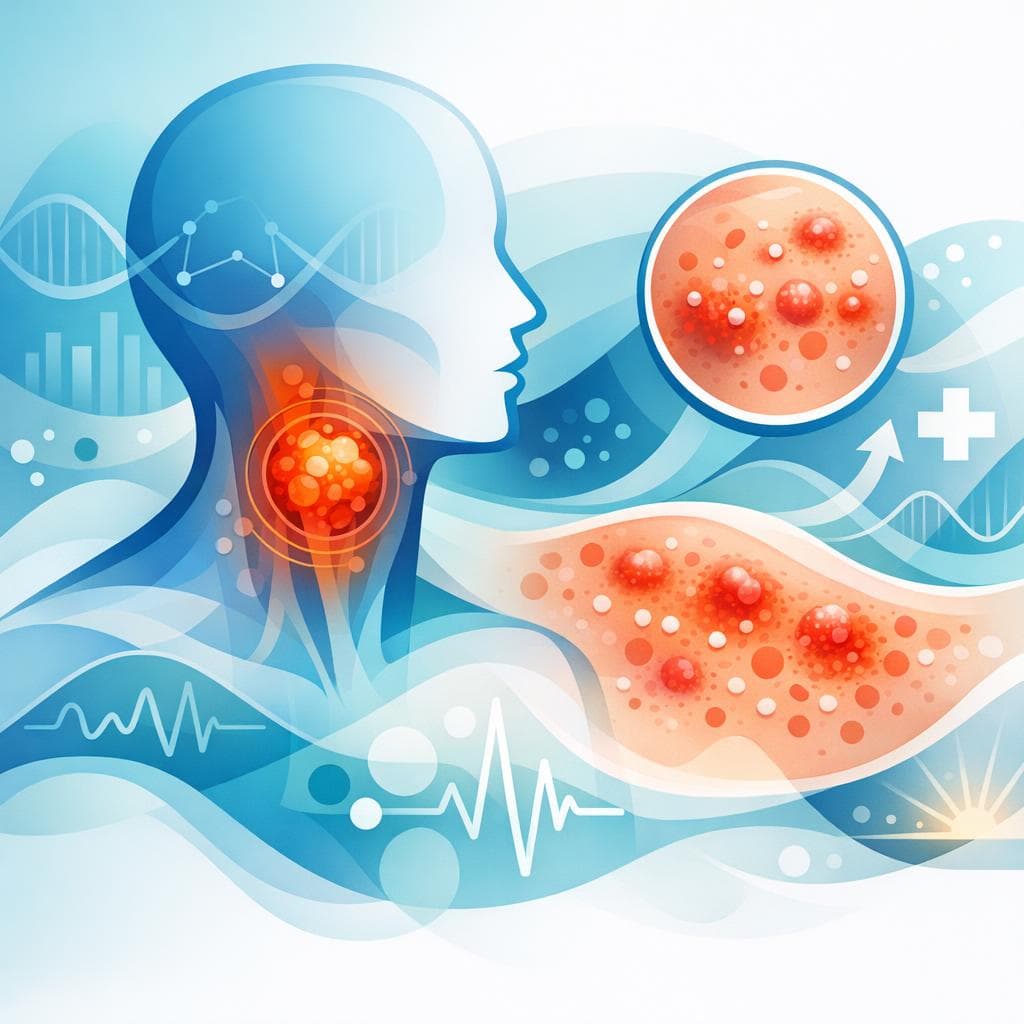
Skin rashes are common with head and neck cancer treatments especially radiation, cetuximab, and immunotherapy and are usually manageable with supportive care. In cetuximab-treated patients, a more pronounced acneiform rash has been linked to better survival, while true cutaneous metastases are rare but indicate advanced disease and a poor prognosis.
Skin rashes are fairly common in people undergoing treatment for head and neck cancer, and they can arise from radiation therapy, targeted therapy (especially cetuximab), immunotherapy, or combination chemo‑immunotherapy; less commonly, a rash or skin lesion can be caused by the cancer itself spreading to the skin. [1] [2] [3] [4] [5] [6] [7] Cutaneous (skin) side effects are usually manageable, but in some specific settings the presence and/or severity of rash has been linked to prognosis. [8] [9] In contrast, when skin involvement represents true cutaneous metastasis from head and neck squamous cell carcinoma, it is rare but generally signals advanced disease and a poorer outlook. [10] [11]
Why rashes occur
-
Radiation therapy (RT): RT to the head and neck commonly causes skin changes in the treatment field that resemble sunburn, with redness, dryness, itch, flaking, and sometimes blistering; these typically start after 2–3 weeks of treatment and peak toward the end of therapy. [1] [2] These reactions can be more pronounced in sun‑exposed areas and sensitive spots such as behind the ear or near the collarbone. [2] [12]
-
Targeted therapy (cetuximab, an EGFR inhibitor): Cetuximab frequently causes an acne‑like (acneiform) rash, itch, dry/cracked skin, and nail changes; the rash usually appears within about two weeks of starting therapy and often improves after stopping. [3] [4] When cetuximab is given with radiation, dermatologic toxicity (radiation dermatitis plus acneiform rash) is common, and severe dermatitis occurs in a sizable minority, though overall the combination is considered tolerable. [13] [14]
-
Immunotherapy (e.g., pembrolizumab combined with platinum/5‑FU): Immune‑related skin reactions including red or bumpy rash, dry itchy skin, peeling, or blisters can occur; prior radiation to the area can make these effects worse. [6] [15] Sun sensitivity can also occur, leading to sunburn‑like rashes after exposure. [16] Supportive care measures (moisturizers, sun protection, antihistamines, topical steroids as directed) are typically recommended. [5] [17]
-
Chemotherapy and other targeted agents: Some drugs used in head and neck cancer can cause photosensitivity and rashes, and treatment teams may adjust dosing or add supportive medications to help. [16] [18]
-
Cancer itself (cutaneous metastases): The cancer can, albeit uncommonly, spread to the skin and present as new nodules or inflammatory‑appearing lesions; such cutaneous metastases are rare in head and neck squamous cell carcinoma and generally associated with a poor prognosis. [10] [11] These lesions may occur near the primary site (contiguous spread) or, very rarely, at distant sites (e.g., abdomen, nasal tip “clown nose”), and they require biopsy to confirm. [11] [19]
Prognostic implications of rash
-
Cetuximab‑induced rash and survival: In a landmark randomized trial in locoregionally advanced head and neck squamous cell carcinoma, adding cetuximab to radiotherapy improved overall survival compared with radiotherapy alone; within the cetuximab‑treated group, those who developed at least grade 2 acneiform rash had significantly better overall survival than those with none or only grade 1 rash. [8] The survival advantage for patients with more prominent rash has been interpreted as a pharmacodynamic marker of EGFR pathway inhibition rather than a harmful effect. [8] A separate analysis found radiation dermatitis and skin rash to be frequent with cetuximab/RT, and while rash occurrence did not predict improved survival across all patients, a survival association was observed in a subgroup previously treated with taxane‑based induction chemotherapy. [20]
-
Radiation dermatitis severity: Radiation dermatitis is extremely common during head and neck RT, often grade 1–2 but with approximately one quarter experiencing grade ≥3 severity; while this influences comfort and treatment tolerance, its severity itself is generally viewed as a toxicity to manage rather than a consistent prognostic marker for cancer outcomes. [14] [21]
-
Cutaneous metastases: When skin lesions represent metastatic spread of head and neck squamous cell carcinoma, they are uncommon but typically signal advanced disease and are associated with a “dismal” or poor prognosis. [10] [11] Case series and reports emphasize the need to distinguish true cutaneous metastases from radiation changes or benign rashes because management and outlook differ markedly. [10] [22]
What rashes look like and when to seek care
-
Radiation‑related changes: Pink to red or darker discoloration, dry or itchy skin, flaking, swelling, and sometimes blisters confined to the radiation field; any rash with signs of infection (pain, pus, expanding redness) warrants prompt evaluation. [2] [12]
-
Cetuximab rash: Acne‑like bumps, often on the face, scalp, upper chest, and back, typically within two weeks of starting therapy; nail changes and dry skin may accompany. [4] Patients should promptly report severe, blistering, or peeling rashes given rare but serious skin reactions. [23]
-
Immunotherapy or chemo‑immunotherapy rashes: Red, bumpy, itchy eruptions; peeling or blisters; and sun‑induced reactions can occur; care teams often recommend fragrance‑free moisturizers, sun protection, antihistamines, and topical steroids when appropriate. [6] [16] [5]
-
New nodules or unusual lesions: New, firm, or rapidly enlarging skin nodules especially outside treated skin areas should be evaluated and often biopsied to rule out cutaneous metastasis. [10] [11]
Management and supportive care
-
Skin care during RT: Keep the skin clean with mild, unscented soap, moisturize regularly, avoid scratching or friction, and protect treated areas from sun; report blisters, open skin, or rashes that suggest infection. [2] [24] [12]
-
Managing cetuximab rash: Most reactions are managed without stopping therapy using gentle skin care, sun protection, moisturizers, topical corticosteroids, and oral antibiotics (e.g., tetracyclines) when appropriate; clinicians may adjust doses if severe. [3] [25]
-
Managing immunotherapy‑related rashes: Mild cases often respond to topical steroids and antihistamines; more extensive or severe cases may require treatment holds and systemic steroids per oncology guidance. [5] [6]
-
Photosensitivity precautions: Limit sun exposure, use SPF 50+ sunscreen, wear sun‑protective clothing and hats, and avoid peak UV hours to minimize rash flares and sunburn‑like reactions. [16] [15]
Key takeaways
-
Rash is common with head and neck cancer treatments especially with radiation and cetuximab and usually manageable with supportive care, dose adjustments, and preventive skin measures. [1] [2] [3] [13]
-
In cetuximab‑treated patients, a more noticeable acneiform rash (grade ≥2) has been associated with better survival, suggesting rash can act as a positive response marker in that specific context. [8]
-
Conversely, when the cancer itself spreads to the skin (cutaneous metastases), it is uncommon but typically indicates advanced disease and a poorer prognosis, requiring prompt recognition and biopsy confirmation. [10] [11]
-
Always inform the care team about new or worsening skin changes, especially blistering, open skin, signs of infection, or new nodules outside radiation fields, so management can be tailored and serious causes can be excluded. [12] [10]
Related Questions
Related Articles


Sources
- 1.^abcRadiation Therapy for Head and Neck Cancer(mskcc.org)
- 2.^abcdefRadiation Therapy to Your Head and Neck(mskcc.org)
- 3.^abcdDailyMed - ERBITUX- cetuximab solution(dailymed.nlm.nih.gov)
- 4.^abcCetuximab(mskcc.org)
- 5.^abcdPatient information - Head and neck cancer recurrent or metastatic - Cisplatin, fluorouracil and pembrolizumab(eviq.org.au)
- 6.^abcdPatient information - Head and neck cancer recurrent or metastatic - Cisplatin, fluorouracil and pembrolizumab(eviq.org.au)
- 7.^↑Patient information - Head and neck cancer recurrent or metastatic - Carboplatin, fluorouracil and pembrolizumab(eviq.org.au)
- 8.^abcdRadiotherapy plus cetuximab for locoregionally advanced head and neck cancer: 5-year survival data from a phase 3 randomised trial, and relation between cetuximab-induced rash and survival.(pubmed.ncbi.nlm.nih.gov)
- 9.^↑Incidence of dermatitis in head and neck cancer patients treated with primary radiotherapy and cetuximab.(pubmed.ncbi.nlm.nih.gov)
- 10.^abcdefgCutaneous metastases from head and neck squamous cell carcinoma.(pubmed.ncbi.nlm.nih.gov)
- 11.^abcdefSkin metastasis of head and neck carcinoma predictive for dismal outcome.(pubmed.ncbi.nlm.nih.gov)
- 12.^abcdRadiation Therapy to Your Head and Neck(mskcc.org)
- 13.^abIncidence of dermatitis in head and neck cancer patients treated with primary radiotherapy and cetuximab.(pubmed.ncbi.nlm.nih.gov)
- 14.^abManagement of dermatitis in patients with locally advanced squamous cell carcinoma of the head and neck receiving cetuximab and radiotherapy.(pubmed.ncbi.nlm.nih.gov)
- 15.^abPatient information - Head and neck cancer recurrent or metastatic - Cisplatin, fluorouracil and pembrolizumab(eviq.org.au)
- 16.^abcdPatient information - Head and neck cancer recurrent or metastatic - Carboplatin, fluorouracil and pembrolizumab(eviq.org.au)
- 17.^↑Patient information - Head and neck cancer recurrent or metastatic - Cisplatin, fluorouracil and pembrolizumab(eviq.org.au)
- 18.^↑Chemotherapy & Targeted Drugs for Head & Neck Cancer(nyulangone.org)
- 19.^↑Clown Nose: A Rare Hypopharyngeal Cancer Metastasis.(pubmed.ncbi.nlm.nih.gov)
- 20.^↑Toxicity of concomitant cetuximab and radiotherapy with or without initial taxane-based induction chemotherapy in locally advanced head and neck cancer.(pubmed.ncbi.nlm.nih.gov)
- 21.^↑Acute skin toxicity management in head and neck cancer patients treated with radiotherapy and chemotherapy or EGFR inhibitors: Literature review and consensus.(pubmed.ncbi.nlm.nih.gov)
- 22.^↑Cutaneous metastasis from squamous carcinoma of the base of tongue.(pubmed.ncbi.nlm.nih.gov)
- 23.^↑Cetuximab(mskcc.org)
- 24.^↑Radiation Therapy to Your Head and Neck(mskcc.org)
- 25.^↑Asian expert recommendation on management of skin and mucosal effects of radiation, with or without the addition of cetuximab or chemotherapy, in treatment of head and neck squamous cell carcinoma.(pubmed.ncbi.nlm.nih.gov)
Important Notice: This information is provided for educational purposes only and is not intended to replace professional medical advice, diagnosis, or treatment. Always consult with a qualified healthcare provider before making any medical decisions.