

 Persly Medical Team
Based on PubMed | Is unintentional weight loss an early symptom of head and neck cancer, and how common is it at initial presentation?
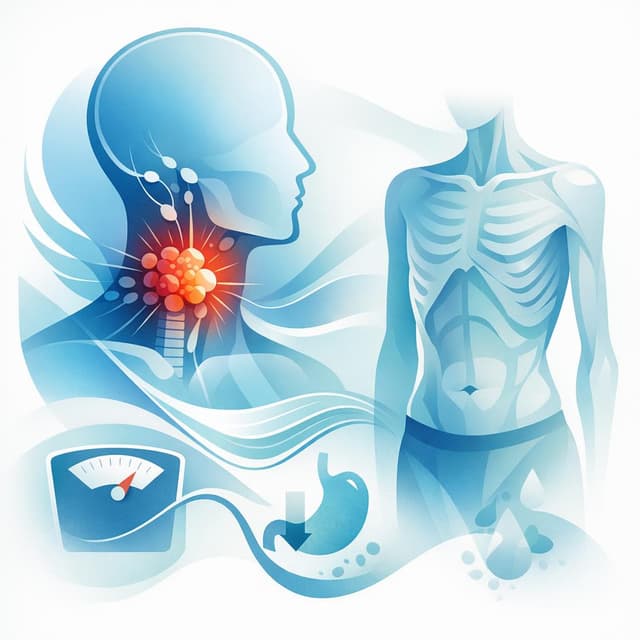
Unintentional weight loss can be an early sign of head and neck cancer, most often resulting from pain or difficulty swallowing that reduces intake, rather than being the very first symptom. At initial presentation, about 35% to 50% of patients have clinically significant weight loss or malnutrition, especially with pharyngeal tumors or advanced stage; early nutritional assessment is important.
Unintentional weight loss can be an early sign of head and neck cancer, but it’s usually driven by tumor-related eating and swallowing problems rather than being the very first symptom. In many people, cancers of the mouth, throat, or larynx cause pain with swallowing (odynophagia), difficulty swallowing (dysphagia), or mouth/throat sores that make eating hard; this reduced intake often leads to weight loss. [1] Weight loss is considered a common symptom across head and neck cancer types and is specifically highlighted for throat cancers because painful or difficult swallowing can reduce calories and cause unintended weight drop. [2] [3]
Why weight loss happens
- Tumor symptoms limiting intake: Sore throat, mouth ulcers, dysphagia, and pain can reduce how much and what people are able to eat, causing a calorie deficit. [1] [2]
- Secondary effects: Problems moving the jaw or tongue, hoarseness, and persistent mouth patches may coexist with swallowing issues and further impair nutrition. [1]
- Systemic effect: Like many cancers, head and neck cancers can contribute to broader metabolic changes, but in this group, mechanical and pain-related barriers to eating are especially important. [2]
How common at initial presentation?
Published clinical data show that poor nutritional status and weight loss are frequent before treatment begins, though exact rates vary by tumor site and stage.
- Across head and neck cancers, approximately one‑third to over one‑half of individuals show clinically important malnutrition at diagnosis when assessed by standard tools that incorporate recent weight loss and intake. In one prospective cohort, 48.5% were malnourished at diagnosis, with pharyngeal tumors and advanced stage more often affected. [4]
- In a study of locally advanced cases, 36% were malnourished before any therapy, and unintentional weight loss was a key contributor to poorer function and quality of life. [5]
- Among nasopharyngeal carcinoma cases, 35% had more than 5% pretreatment weight loss, and advanced stage was a predictor of greater weight loss and low albumin. [6]
- Symptom‑driven risks: Before treatment, symptoms such as anorexia, dysphagia, and mouth sores were significant predictors of reduced intake and weight loss, accelerating both the timing and likelihood of weight loss. [7]
Taken together, these data suggest that at the time of first oncology evaluation, a large minority to roughly half of people with head and neck cancers already have clinically meaningful weight loss or malnutrition, with higher prevalence in pharyngeal sites and advanced stages. [4] [5] [6]
Is it “early” or later?
- Weight loss can appear early in the disease course if swallowing becomes painful or difficult soon after tumor onset. Authoritative clinical guidance lists weight loss among common signs across head and neck and throat cancers because eating difficulties often arise relatively early. [1] [3]
- However, in many cases, the first noticed symptoms are local (for example, a non‑healing mouth sore, a neck lump, persistent sore throat, voice change, or trouble swallowing), with weight loss emerging as these symptoms persist and intake falls. [1] [8]
In practical terms, unintentional weight loss can be an early warning sign when it accompanies other head and neck symptoms, but it is not always the very first symptom to appear. [1] [2]
Why early recognition matters
- Weight loss and low body mass index at baseline are linked to worse tolerance of treatment and poorer survival; in several cohorts, low BMI or significant pre‑treatment loss correlated with outcomes. [7] [5]
- Because of this, expert care teams emphasize nutritional assessment before therapy and early dietitian involvement to prevent further loss. [9]
What to watch for
If someone has unexplained weight loss along with:
- A non‑healing mouth sore,
- Persistent sore throat or pain with swallowing,
- Trouble swallowing or a sensation of food sticking,
- Voice changes/hoarseness,
- A new neck lump,
these combined features warrant prompt medical evaluation. [1] [8]
Summary
- Unintentional weight loss is a common symptom in head and neck cancers and often reflects difficulty eating due to pain or swallowing problems. [2] [3]
- At initial presentation, studies suggest that roughly 35% or more already have clinically important weight loss or malnutrition, with some series approaching about half, especially in pharyngeal sites and advanced stages. [6] [4] [5]
- Early detection and nutritional support are important because baseline weight loss is associated with worse outcomes and treatment tolerance. [7] [9]
Related Questions
Related Articles


Sources
- 1.^abcdefgHead and Neck Cancer Symptoms & Signs | Memorial Sloan Kettering Cancer Center(mskcc.org)
- 2.^abcdeHead and neck cancers - Symptoms and causes(mayoclinic.org)
- 3.^abcThroat Cancer Symptoms | Lump in Throat & More Signs | Memorial Sloan Kettering Cancer Center(mskcc.org)
- 4.^abcAssessment of nutritional status at the time of diagnosis in patients treated for head and neck cancer.(pubmed.ncbi.nlm.nih.gov)
- 5.^abcdPrevalence and influence of malnutrition on quality of life and performance status in patients with locally advanced head and neck cancer before treatment.(pubmed.ncbi.nlm.nih.gov)
- 6.^abcPrevalence and Predictors of Malnutrition in Nasopharyngeal Carcinoma.(pubmed.ncbi.nlm.nih.gov)
- 7.^abcNutrition impact symptoms: key determinants of reduced dietary intake, weight loss, and reduced functional capacity of patients with head and neck cancer before treatment.(pubmed.ncbi.nlm.nih.gov)
- 8.^abHead and Neck Cancer(medlineplus.gov)
- 9.^abNutritional considerations for head and neck cancer patients: a review of the literature.(pubmed.ncbi.nlm.nih.gov)
Important Notice: This information is provided for educational purposes only and is not intended to replace professional medical advice, diagnosis, or treatment. Always consult with a qualified healthcare provider before making any medical decisions.