
 Persly Medical Team
Based on PubMed | If I have head and neck cancer or am undergoing treatment, when does shortness of breath mean I should seek urgent medical care rather than wait for a routine appointment?
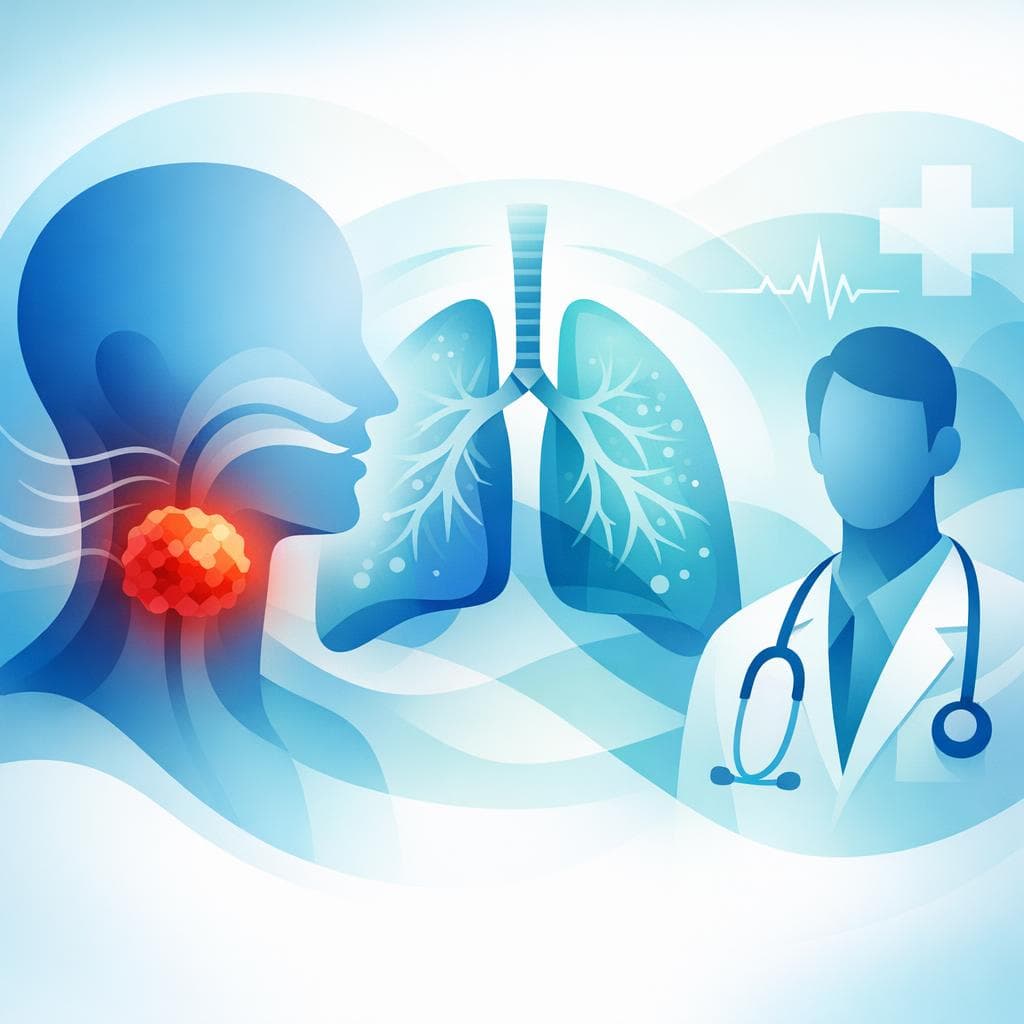
If you have head and neck cancer or are in treatment, treat any new, severe, or worsening shortness of breath especially with chest pain, wheeze, fever, fast or irregular heartbeat, fainting, or a new/worsening cough as an emergency. These signs can indicate airway obstruction, infection, pneumonitis, pulmonary embolism, or therapy-related heart/lung problems; seek urgent care immediately rather than waiting.
Shortness of breath that needs urgent care
If you have head and neck cancer or are in treatment, you should seek urgent medical care any time shortness of breath is new, severe, getting worse, or comes with chest pain, wheezing, fever, a fast heartbeat, faintness, or a new/worsening cough. [1] [2] Shortness of breath that appears during or after cancer therapies (chemotherapy, radiation, targeted therapy, or immunotherapy) can signal serious problems and is safer to evaluate immediately in an emergency setting rather than waiting for a routine visit. [3] [4]
Why breathlessness can be urgent
- Airway swelling or blockage: Tumors or treatment-related swelling in the throat or larynx can narrow the airway and cause sudden breathing trouble, which is an emergency. [5] [6]
- Lung inflammation from therapy: Some cancer medicines and immunotherapies can inflame the lungs (pneumonitis), leading to shortness of breath, cough, fever, and chest pain. [2] [3]
- Infection (pneumonia): Head and neck treatment can increase the risk of chest infections that present with shortness of breath, cough with phlegm, and fever. [7]
- Blood clots in the lungs (pulmonary embolism): Cancer raises clot risk; warning signs include sudden shortness of breath, chest pain worse with deep breaths or cough, coughing up blood, and rapid or irregular heartbeat. [8]
- Heart problems related to treatment: Some regimens can cause chest pain, tightness, shortness of breath, or abnormal heartbeat and need immediate assessment. [9] [10]
Red-flag symptoms that mean “go now”
Seek immediate care (call emergency services or go to the nearest emergency department) if any of the following occur:
- Shortness of breath at rest or with simple activity, or breathing that is rapidly getting worse. [3] [4]
- Wheezing, noisy breathing, or a whistling/squeaking sound when you breathe. [11] [7]
- Chest pain, pressure, or tightness with breathing problems. [1] [9]
- Fever of 38°C (100.4°F) or higher, or feeling unwell with cough or phlegm. [12] [7]
- Very fast or irregular heartbeat, lightheadedness, or fainting. [12] [9]
- New or worsening cough, especially if accompanied by fever or chest pain. [2] [7]
- Coughing up blood or sudden sharp chest pain that worsens with deep breathing (possible blood clot). [8]
These symptoms are highlighted by multiple cancer-care programs for people receiving chemotherapy, immunotherapy, or targeted therapies, and they recommend immediate evaluation rather than waiting. [1] [3]
Treatment-specific cautions
- Chemotherapy + immunotherapy combinations (e.g., regimens for recurrent or metastatic head and neck cancer): Call immediately or go to emergency care for shortness of breath, chest pain, wheezing, fast heartbeat, new cough, or fever, because these may be immune-related or infectious and can worsen quickly. [11] [2]
- Radiation to the head and neck: Shortness of breath, wheezing, chest pain with breathing, cough with mucus, or fever can be signs of pneumonia or airway complications and warrant prompt medical attention. [7]
- General after-chemotherapy guidance: Trouble breathing at rest or with simple tasks is listed as a reason to seek care right away after discharge. [4]
Common urgent causes clinicians consider
Shortness of breath in this setting can have several urgent causes, and rapid diagnosis is important for best outcomes. [13]
- Airway obstruction from tumor, swelling, or bilateral vocal cord paralysis. [6]
- Pulmonary embolism (blood clot in the lung). [8]
- Pneumonia or other respiratory infections. [7]
- Treatment-related pneumonitis from immunotherapy or targeted therapy. [2] [3]
- Cardiac complications (arrhythmias, cardiomyopathy) related to therapy. [9] [10]
What to do now and how to prepare
- If you have any of the red-flag symptoms above, seek urgent care immediately do not wait for a routine appointment. [1] [3]
- Bring your treatment summary or alert card to the hospital; it helps the team identify therapy-related side effects quickly. [14]
- If symptoms are mild and you are unsure, it is generally safer to contact your oncology team the same day for guidance, since breathing problems can escalate. [12] [3]
Quick reference table
| Situation | Why it’s urgent | What to do now |
|---|---|---|
| New/worsening shortness of breath with chest pain, wheeze, fast heartbeat, fever, or cough | Possible airway obstruction, pneumonitis, pneumonia, heart event, or blood clot | Go to emergency department immediately |
| Shortness of breath during or after immunotherapy/targeted therapy | Drug-related lung or heart inflammation can progress rapidly | Seek urgent care; tell staff your medications |
| Trouble breathing after head/neck radiation with cough, mucus, fever | Possible pneumonia or radiation-related complications | Call your team urgently or go to emergency care |
| Shortness of breath at rest or with simple tasks after chemo | Red flag in discharge guidance | Seek immediate evaluation |
Staying alert to these warning signs and acting quickly can be lifesaving, and cancer centers emphasize not delaying when breathing symptoms arise during treatment. [1] [3]
Related Questions
Related Articles


Sources
- 1.^abcdefPatient information - Head and neck cancer recurrent or metastatic - Carboplatin, fluorouracil and pembrolizumab(eviq.org.au)
- 2.^abcdefgPatient information - Head and neck cancer recurrent or metastatic - Carboplatin, fluorouracil and pembrolizumab(eviq.org.au)
- 3.^abcdefghijPatient information - Lung cancer metastatic - Crizotinib(eviq.org.au)
- 4.^abcdAfter chemotherapy - discharge: MedlinePlus Medical Encyclopedia(medlineplus.gov)
- 5.^↑Head-and-neck Cancer in the Emergency Department: A Contemporary Review of Common Presentations and Management.(pubmed.ncbi.nlm.nih.gov)
- 6.^abNeck neoplastic conditions in the emergency setting: role of multidetector computed tomography.(pubmed.ncbi.nlm.nih.gov)
- 7.^abcdefghRadiation Therapy to Your Head and Neck: What You Need To Know About Swallowing(mskcc.org)
- 8.^abcdCancer and Blood Clots Infographic(cdc.gov)
- 9.^abcdefPatient information - Head and neck cancer recurrent or metastatic - Carboplatin, fluorouracil and pembrolizumab(eviq.org.au)
- 10.^abPatient information - Head and neck cancer recurrent or metastatic - Cisplatin, fluorouracil and pembrolizumab(eviq.org.au)
- 11.^abPatient information - Head and neck cancer recurrent or metastatic - Carboplatin, fluorouracil and pembrolizumab(eviq.org.au)
- 12.^abcPatient information - Head and neck cancer recurrent or metastatic - Carboplatin, fluorouracil and pembrolizumab(eviq.org.au)
- 13.^↑Pathophysiology and diagnosis of dyspnea in patients with advanced cancer.(pubmed.ncbi.nlm.nih.gov)
- 14.^↑Patient information - Head and neck cancer recurrent or metastatic - Carboplatin, fluorouracil and pembrolizumab(eviq.org.au)
Important Notice: This information is provided for educational purposes only and is not intended to replace professional medical advice, diagnosis, or treatment. Always consult with a qualified healthcare provider before making any medical decisions.