
 Persly Medical Team
Based on CDC | Is blood in the urine an early sign of head and neck cancer, and what other early symptoms should I look out for?
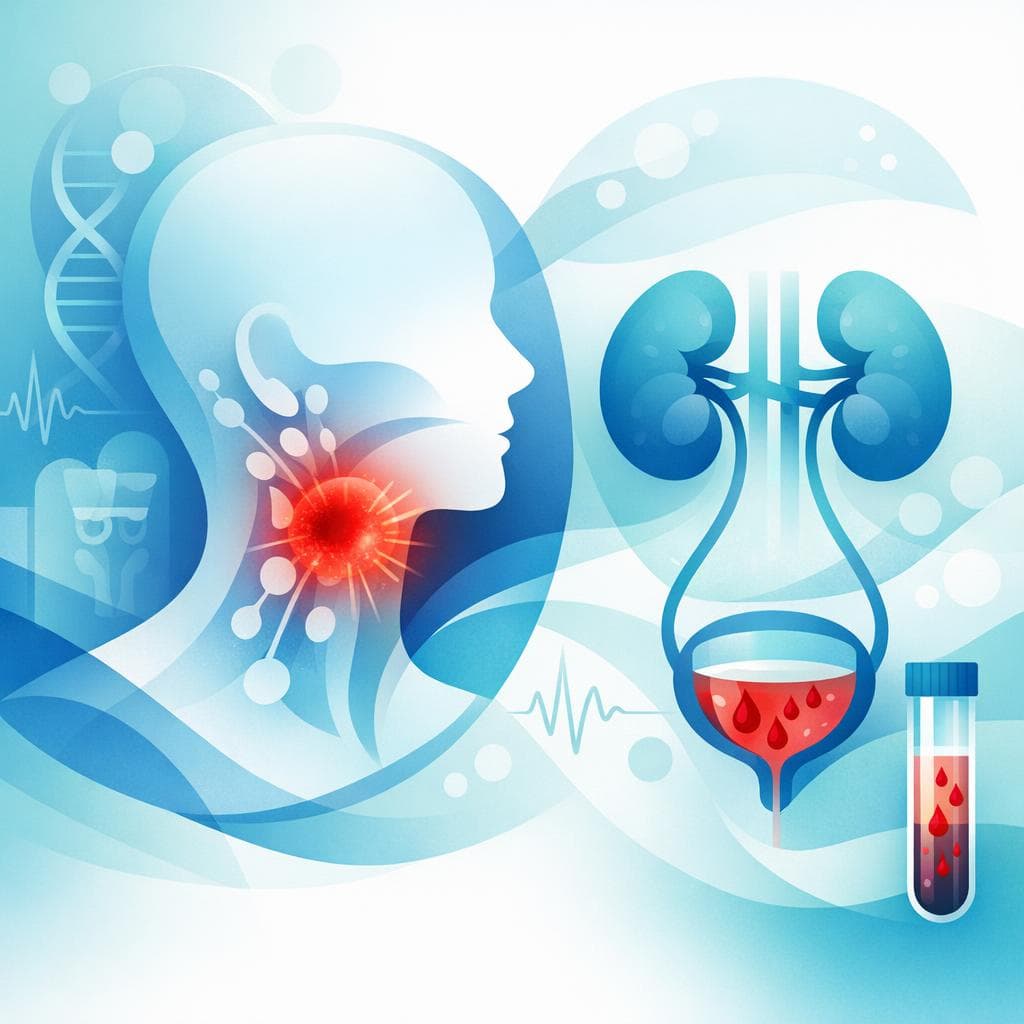
Blood in the urine is not an early sign of head and neck cancer; early symptoms are typically local, such as a nonhealing mouth sore, hoarseness, painful or difficult swallowing, nasal blockage or nosebleeds, ear pain, or a painless neck lump. Hematuria more often indicates urinary tract issues or, in patients on cisplatin/carboplatin, kidney side effects seek evaluation for symptoms lasting over 2–3 weeks and contact your care team promptly if blood in urine occurs during treatment.
Blood in the urine (hematuria) is not considered an early sign of head and neck cancer. Instead, early symptoms usually involve the mouth, throat, voice box, nose/sinuses, or neck, depending on where the tumor starts. [1] [2]
Is Hematuria Linked to Head & Neck Cancer?
- Head and neck cancers typically present with local symptoms such as a nonhealing mouth sore, throat pain, hoarseness, trouble swallowing, or a neck lump. Hematuria is not listed among common presenting symptoms for primary head and neck cancers. [1] [2]
- Blood in the urine is more often related to urinary tract conditions (for example, kidney or bladder issues) or, in people receiving certain chemotherapy for head and neck cancer, a treatment side effect affecting the kidneys. Cisplatin‑ or carboplatin‑based regimens can cause kidney problems that may lead to less urination or blood in the urine. [3] [4]
Common Early Symptoms to Watch For
Early signs vary by location, but several patterns recur across trusted clinical summaries.
Mouth and Throat
- A sore or ulcer in the mouth that doesn’t heal. [1] [2]
- White or red patches in the mouth (leukoplakia/erythroplakia). [5]
- Pain in the mouth or throat that persists. [2]
- Pain when swallowing or trouble swallowing (dysphagia). [1] [2]
- Hoarseness or voice change that lasts. [1] [2]
- Loose teeth or changes in how dentures fit. [1] [6]
Neck and Jaw
- A painless lump in the neck (often an enlarged lymph node). [1] [7]
- Jaw or facial pain, or difficulty moving the jaw. [5]
Nose and Sinuses
- Nosebleeds. [1] [8]
- Nasal stuffiness or blockage that doesn’t clear. [8]
- Headaches or pain around the eyes; pain in upper teeth (sinus/nasal cavity sites). [9] [10]
Ears and Breathing
- Ear pain or hearing changes. [5] [11]
- Noisy breathing, shortness of breath, or stridor when tumors affect the voice box or throat. [12]
General or Other
- Unexplained weight loss. [8]
Why Early Symptoms Matter
- Many head and neck cancers are first found because of persistent local symptoms such as neck lumps, hoarseness, nonhealing mouth sores, chronic sore throat, or swallowing trouble. Historic clinical series emphasize these signs and the need to take them seriously, especially in people who smoke or drink alcohol. [13]
- There is no single “perfect” early warning sign for every head and neck cancer site, and some early cancers cause subtle symptoms. Regular clinical evaluation helps catch cancers earlier, particularly in higher‑risk individuals. [14]
When to Seek Care
- If you notice any of the above symptoms lasting more than 2–3 weeks (for example, a persistent mouth sore, hoarseness, a neck lump, or pain when swallowing), it would be reasonable to arrange an evaluation with a clinician or dentist experienced in head and neck assessment. Prompt evaluation is especially important if you have risk factors such as tobacco or heavy alcohol use, or a history of HPV‑related disease. [1] [2]
- If you are undergoing chemotherapy for head and neck cancer and notice blood in your urine or reduced urination, you should contact your care team promptly because some regimens can affect the kidneys. These side effects are recognized and need timely medical attention. [3] [4]
Quick Reference Table: Typical Early Features
| Area | Common early signs | Notes |
|---|---|---|
| Mouth | Nonhealing sore; white/red patches; pain; loose teeth; denture fit changes | Persistent lesions warrant exam. [1] [5] [6] |
| Throat/Voice box | Sore throat that doesn’t go away; hoarseness; pain with swallowing; trouble swallowing | Voice change or dysphagia lasting weeks needs evaluation. [1] [2] |
| Neck | Painless lump/swollen lymph node | Common first sign in several subsites. [1] [7] |
| Nose/Sinuses | Nosebleeds; persistent blockage; headaches; facial/eye pain; upper tooth pain | Unilateral symptoms are concerning. [8] [9] [10] |
| Ear | Ear pain; hearing changes | Often referred pain from throat/larynx. [5] [11] |
| Urine | Blood in urine | Not an early sign of head and neck cancer; may reflect other causes or cancer therapy kidney effects. [1] [2] [3] [4] |
Bottom Line
- Hematuria is generally not an early sign of head and neck cancer, and it should prompt evaluation for urinary tract causes or, if you are in treatment, possible medication side effects. [1] [2] [3] [4]
- Look out for persistent mouth sores, neck lumps, hoarseness, sore throat, trouble swallowing, nosebleeds, and ongoing nasal blockage, and seek medical review if these last beyond a couple of weeks. [1] [2] [8] [7] [13]
Related Questions
Related Articles


Sources
- 1.^abcdefghijklmnoHead and neck cancers - Symptoms and causes(mayoclinic.org)
- 2.^abcdefghijkHead and Neck Cancer(medlineplus.gov)
- 3.^abcdPatient information - Head and neck cancer recurrent or metastatic - Cisplatin, fluorouracil and pembrolizumab(eviq.org.au)
- 4.^abcdPatient information - Head and neck cancer recurrent or metastatic - Carboplatin, fluorouracil and pembrolizumab(eviq.org.au)
- 5.^abcdeHead and Neck Cancer Symptoms & Signs | Memorial Sloan Kettering Cancer Center(mskcc.org)
- 6.^abTypes of Head & Neck Cancer(nyulangone.org)
- 7.^abcHead and Neck Cancer Symptoms & Signs | Memorial Sloan Kettering Cancer Center(mskcc.org)
- 8.^abcdeHead and neck cancers - Symptoms and causes(mayoclinic.org)
- 9.^abHead and Neck Cancers Basics(cdc.gov)
- 10.^abHead and Neck Cancers Basics(cdc.gov)
- 11.^abHead and Neck Cancers Basics(cdc.gov)
- 12.^↑The presenting symptoms of head and neck cancer.(pubmed.ncbi.nlm.nih.gov)
- 13.^abThe presenting symptoms of head and neck cancer.(pubmed.ncbi.nlm.nih.gov)
- 14.^↑Symptoms in early head and neck cancer: an inadequate indicator.(pubmed.ncbi.nlm.nih.gov)
Important Notice: This information is provided for educational purposes only and is not intended to replace professional medical advice, diagnosis, or treatment. Always consult with a qualified healthcare provider before making any medical decisions.