
 Persly Medical Team
Based on PubMed | What causes difficulty swallowing in advanced-stage head and neck cancer, and what symptoms and complications should patients expect?
Dysphagia in advanced head and neck cancer arises from tumor obstruction and treatment-related injury: mucositis and swelling early, and fibrosis and nerve damage later, all disrupting swallow mechanics. Patients may experience painful swallowing, food sticking, coughing or choking, voice changes, and thick secretions; major risks include aspiration pneumonia, malnutrition, and potential feeding-tube dependence. Early swallow evaluation, targeted therapy, symptom control, and nutrition support can reduce complications and improve safety.
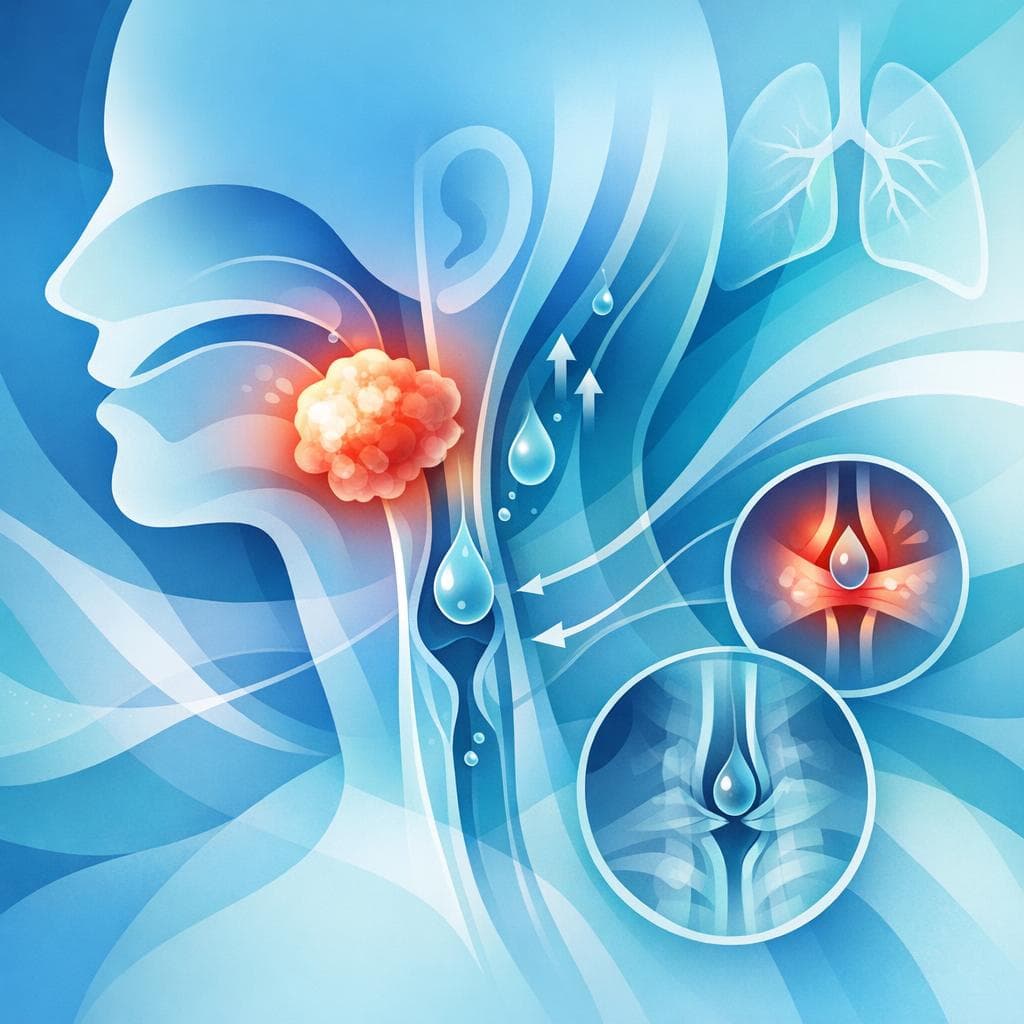
Difficulty swallowing (dysphagia) in advanced head and neck cancer usually comes from a mix of the tumor itself and the effects of treatment on the muscles and nerves that control swallowing. [1] The tumor can physically block or invade areas needed for swallowing (mouth, tongue, throat, voice box), while surgery, radiation, and chemotherapy can inflame tissues at first and later cause scarring, stiffness (fibrosis), lymphedema, and nerve injury that weaken or discoordinate the swallow. [1] [2] Radiation commonly causes mucositis (painful mouth/throat sores), swelling, thick mucus, and dry mouth in the first 4–5 weeks, which acutely worsen swallowing; as these improve, late effects like fibrosis and nerve damage can keep swallowing difficult. [2] Head and neck cancers themselves often present with trouble swallowing along with a persistent sore throat, hoarseness, a nonhealing mouth sore, or a neck lump. [3] [4]
How cancer and treatment cause dysphagia
- Tumor mass effect and invasion: Advanced tumors can narrow or obstruct the throat or esophagus and disrupt the coordinated motion of the tongue, soft palate, pharynx, and larynx needed to safely move food to the esophagus. [1] [5]
- Surgery-related changes: Removing parts of the tongue, pharynx, or larynx alters the anatomy and mechanics of the swallow; for example, glossectomy impairs the oral phase (moving food to the throat), while pharyngeal or laryngeal surgery impairs the pharyngeal phase. [6]
- Radiation and chemoradiation effects: Within weeks, mucositis, dermatitis, edema, pain, thick secretions, and dry mouth impair swallowing; later, fibrosis, lymphedema, and neural injury can cause long‑term weakness, stiffness, and poor coordination. [2] [7]
- Xerostomia and taste loss: Damage to salivary glands reduces saliva and alters taste, making chewing and bolus transport harder and more painful. [2]
- Weakness and reduced range of motion: Stiffness and pain limit jaw, tongue, and neck movement, further disrupting safe swallowing. [8]
Common symptoms to expect
- Trouble starting a swallow, food sticking in the throat or chest, coughing or choking during meals, and a sensation that “something is caught” in the throat. [5] [9]
- Painful swallowing and mouth sores during and shortly after radiation; thick mucus, dry mouth, fatigue, and appetite loss are common around weeks 4–6 of treatment and can persist for weeks afterward. [2] [10]
- Voice changes, persistent sore throat, ear pain, and neck lumps can accompany swallowing problems depending on tumor site. [3] [11]
Major complications and risks
- Aspiration and aspiration pneumonia: Food or liquids going “down the wrong pipe” into the airway can lead to pneumonia; about one‑third of people with significant dysphagia may develop pneumonia requiring treatment, and aspiration‑related pneumonia can have high mortality (reported 20%–65%). [12] [13]
- Malnutrition and dehydration: Poor oral intake from pain, obstruction, or fear of choking leads to weight loss, nutrient deficits, and weakness. [14] [12]
- Feeding tube dependence: If swallowing is unsafe or inadequate, temporary or longer‑term feeding tubes may be needed to protect the lungs and maintain nutrition. [15]
- Long‑term dysphagia and quality‑of‑life impact: Late radiation effects (fibrosis, nerve injury) can make swallowing problems persist or worsen months to years after therapy, affecting social eating, speech, and overall well‑being. [2] [16]
Typical timeline during treatment
- Weeks 1–5 of radiation/chemoradiation: Acute mucositis, pain, dry mouth, thick mucus, and swelling drive sudden worsening of swallowing. [2]
- Weeks 4–6: Peak mouth sores and painful swallowing; marked taste changes and thick secretions; reduced appetite. [10]
- Early recovery (first 2–4 weeks after treatment): Many acute symptoms slowly improve, but swallowing may remain difficult. [10]
- Late effects (months to years): Fibrosis, lymphedema, and neuromuscular changes can cause persistent or new-onset dysphagia. [2]
What helps: evaluation and management
- Early, specialized swallow evaluation: Seeing a speech-language pathologist for instrumental assessment (such as videofluoroscopy) helps define the problem, tailor exercises, and identify aspiration so that safe strategies can be used. [2] [6]
- Swallow therapy and exercises: Targeted exercises and compensatory techniques (e.g., posture changes, texture modification) can reduce aspiration risk and improve function; prevention and early therapy during treatment are emphasized. [7] [2]
- Nutrition support: Dietitians can help with high-calorie, easy‑to‑swallow foods and supplements; feeding tubes are considered when intake is unsafe or insufficient to maintain weight and hydration. [15]
- Multidisciplinary care: Coordinated care among oncology, ENT, speech-language pathology, and nutrition teams is key to monitor and adjust treatment as needs change. [16]
- Symptom control: Managing pain, dry mouth, and thick mucus supports safer, more comfortable eating and can lessen complications. [10]
Quick reference: causes, symptoms, and complications
| Category | What to expect | Why it happens |
|---|---|---|
| Primary causes | Tumor obstruction/invasion; surgery-altered anatomy; radiation-induced mucositis (early) and fibrosis/nerve injury (late) | Tumor narrows/disrupts swallow pathway; treatment inflames tissues then scars/stiffens and weakens muscles and nerves. [1] [2] [6] |
| Early symptoms | Painful swallowing, mouth/throat sores, thick mucus, dry mouth, taste changes; coughing/choking while eating | Acute radiation effects (weeks 1–6) and tumor mass effect. [2] [10] [5] |
| Late symptoms | Persistent difficulty, food sticking, voice changes, fatigue with meals | Fibrosis, lymphedema, neuromuscular discoordination after treatment. [2] |
| Major complications | Aspiration and pneumonia; malnutrition and dehydration; feeding tube dependence; reduced quality of life | Airway entry of food/liquid; inadequate intake from pain/obstruction; chronic functional impairment. [12] [14] [15] [16] |
When to seek help
Trouble swallowing that does not improve, frequent coughing or choking during meals, fever or chest congestion after eating (possible aspiration), rapid weight loss, or inability to keep up with fluids are reasons to contact the care team promptly. Speech and swallowing rehabilitation and nutrition support can be started early to reduce risks and preserve function. [2] [16]
If you’re in active treatment or planning for it, asking your team about preventive swallow exercises and early referral to a swallowing specialist can meaningfully reduce complications and improve recovery. [7] [8]
Related Questions
Related Articles


Sources
- 1.^abcdSpecial groups: head and neck cancer.(pubmed.ncbi.nlm.nih.gov)
- 2.^abcdefghijklmnDysphagia in head and neck cancer patients treated with radiation: assessment, sequelae, and rehabilitation.(pubmed.ncbi.nlm.nih.gov)
- 3.^abHead and Neck Cancer(medlineplus.gov)
- 4.^↑Head and neck cancers - Symptoms and causes(mayoclinic.org)
- 5.^abcDysphagia - Symptoms and causes(mayoclinic.org)
- 6.^abc[Swallowing and Voice Disorders in Cancer Patients].(pubmed.ncbi.nlm.nih.gov)
- 7.^abcDysphagia in head and neck cancer patients treated with chemoradiotherapy.(pubmed.ncbi.nlm.nih.gov)
- 8.^abRadiation Therapy for Head and Neck Cancer(mskcc.org)
- 9.^↑Advanced Cancer of the Oral Cavity(mskcc.org)
- 10.^abcdeDiet and Nutrition During Head and Neck Cancer Treatment(mskcc.org)
- 11.^↑Head and Neck Cancer Symptoms & Signs | Memorial Sloan Kettering Cancer Center(mskcc.org)
- 12.^abcDysphagia in Head and Neck Cancer Patients: Pretreatment Evaluation, Predictive Factors, and Assessment during Radio-Chemotherapy, Recommendations.(pubmed.ncbi.nlm.nih.gov)
- 13.^↑Radiation Therapy to Your Head and Neck: What You Need To Know About Swallowing(mskcc.org)
- 14.^abDysphagia in head and neck cancer patients treated with chemoradiotherapy.(pubmed.ncbi.nlm.nih.gov)
- 15.^abcDiet and Nutrition During Head and Neck Cancer Treatment(mskcc.org)
- 16.^abcdDysphagia in Head and Neck Cancer.(pubmed.ncbi.nlm.nih.gov)
Important Notice: This information is provided for educational purposes only and is not intended to replace professional medical advice, diagnosis, or treatment. Always consult with a qualified healthcare provider before making any medical decisions.