
 Persly Medical Team
Based on PubMed | Can head and neck cancer cause difficulty swallowing at night, and when should I seek medical evaluation for this symptom?
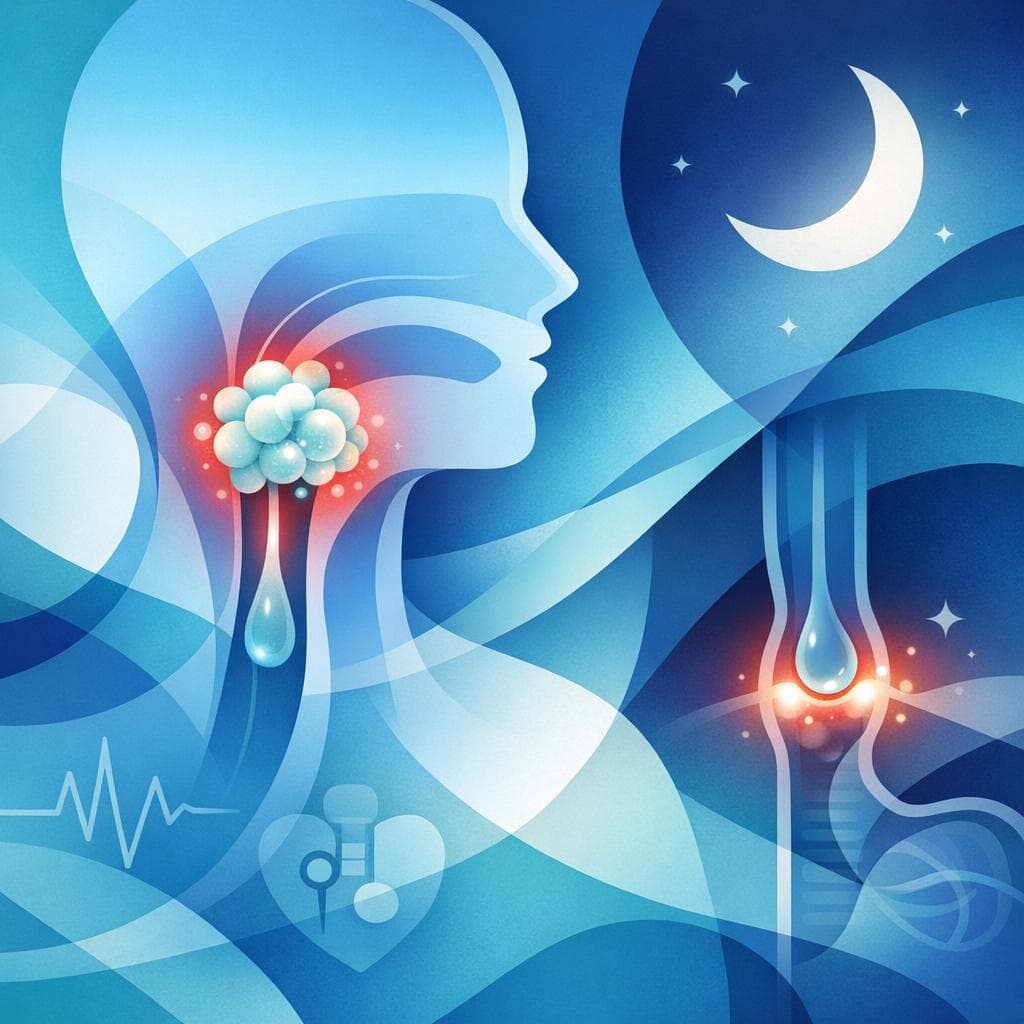
Head and neck cancers can cause difficulty swallowing (dysphagia), which some people notice more at night due to reflux, dry mouth, mucus, and fatigue. Seek medical evaluation for persistent or worsening dysphagia, especially with red flags such as weight loss, a neck lump, voice changes, regurgitation, blood in saliva, or breathing problems; sudden airway issues require emergency care.
Head and neck cancers can cause difficulty swallowing, and some people notice it more at night. Difficulty swallowing (dysphagia) is a recognized symptom of cancers in the mouth, throat, larynx, and related areas, and it may appear along with a persistent sore throat, hoarseness, or a lump in the neck. [1] Esophageal cancers can also present with trouble swallowing that can worsen as a tumor narrows the passage for food. [2] [3]
Why it may feel worse at night
- Body position and reflux: Lying down can let stomach contents move up more easily, irritating the throat and esophagus, which may make swallowing feel more difficult. GERD can contribute to dysphagia and may flare at night if you eat close to bedtime. [4]
- Dry mouth and thick mucus: Saliva naturally decreases at night, and people with head and neck tumors or after treatments like radiation often have dry mouth and thick mucus, which can make swallowing harder in the evening and overnight. [5]
- Fatigue and muscle control: Swallowing relies on many small muscles; when you’re tired at night, coordination can feel worse, which may make existing swallowing issues more noticeable. Head and neck cancer and its treatments can affect the nerves and muscles involved in swallowing at multiple stages. [6] [7]
Red-flag signs that need prompt medical evaluation
- Persistent trouble swallowing that doesn’t go away or keeps getting worse. This is a core warning sign for head and neck cancers and for esophageal cancer. [1] [2] [3]
- Unintentional weight loss, food coming back up (regurgitation), frequent heartburn, or coughing/gagging when swallowing. These are concerning features commonly associated with dysphagia that warrant medical review. [8] [9]
- Any difficulty swallowing together with breathing trouble, or if it feels like food is stuck and you cannot clear it; this can be an emergency. Severe obstruction requires urgent help. [8]
- A persistent sore throat, a neck lump, voice changes/hoarseness, or a mouth/throat sore that doesn’t heal. These are classic signs linked to head and neck cancers and should be assessed. [1] [10]
- Blood in saliva or phlegm, especially with swallowing pain or ongoing sore throat. Seek care in these cases. [11]
When to seek care
- If you regularly have difficulty swallowing day or night make an appointment with a healthcare professional. Persistent dysphagia should be evaluated, especially if paired with weight loss, regurgitation, or vomiting. [8]
- If you have any of the red-flag signs above (for example, a neck lump or ongoing hoarseness with dysphagia), it’s reasonable to seek care sooner rather than later. These could indicate a structural problem that needs imaging and specialist review. [1] [2] [3]
- If swallowing difficulty suddenly worsens and affects breathing, seek emergency care immediately. Airway compromise is a medical emergency. [8]
What to expect during evaluation
- History and physical exam focusing on the mouth, throat, and neck, looking for sores, masses, or signs of nerve involvement common in head and neck conditions. [12]
- Swallowing assessment and imaging: Depending on findings, clinicians may order tests like a videofluoroscopic swallow study or endoscopy to see where and why swallowing is impaired. Swallow-specific imaging helps pinpoint which stage of the swallow is affected and guides treatment. [13] [14]
- Team approach: If a head and neck cancer is suspected or diagnosed, care often involves an ear, nose, and throat specialist (otolaryngologist), a speech-language pathologist for swallowing rehab, and nutrition support. Management is multifactorial and benefits from coordinated care. [6] [13]
Practical tips you can try now (while arranging care)
- Avoid eating right before bedtime and try smaller, earlier evening meals to reduce nighttime reflux. Antacids may provide temporary relief if heartburn is present, but do check with your clinician. [4]
- Stay upright for 2–3 hours after the last meal; consider a slight bed head elevation to minimize reflux while sleeping. This can ease nighttime throat irritation. [4]
- Choose softer, moist foods and sip fluids with bites to make swallowing easier; if dry mouth is an issue, saliva substitutes or sugar-free lozenges may help comfort. Radiation and other treatments can cause dry mouth and painful swallowing, and comfort measures are commonly recommended. [5]
Bottom line
- Yes, head and neck cancers can cause difficulty swallowing, and it may be more noticeable at night due to reflux, dry mouth, mucus, and fatigue. [1] [6]
- Seek medical evaluation if dysphagia is persistent, worsening, or accompanied by red-flag signs such as weight loss, a neck lump, voice changes, regurgitation, or blood in saliva and seek urgent help if breathing is affected. [8] [1] [2] [11]
Related Questions
Related Articles


Sources
- 1.^abcdefHead and Neck Cancer(medlineplus.gov)
- 2.^abcdSymptoms of Esophageal Cancer(mskcc.org)
- 3.^abcEsophageal Cancer(stanfordhealthcare.org)
- 4.^abcDysphagia - Diagnosis and treatment(mayoclinic.org)
- 5.^abRadiation Therapy for Head & Neck Cancer(nyulangone.org)
- 6.^abcDysphagia in Head and Neck Cancer.(pubmed.ncbi.nlm.nih.gov)
- 7.^↑Dysphagia in head and neck cancer.(pubmed.ncbi.nlm.nih.gov)
- 8.^abcdeDysphagia - Symptoms and causes(mayoclinic.org)
- 9.^↑Dysphagia - Symptoms and causes(mayoclinic.org)
- 10.^↑Pharyngeal (Throat) Cancer(stanfordhealthcare.org)
- 11.^abSore Throat Basics(cdc.gov)
- 12.^↑Head and neck cancer: early detection.(pubmed.ncbi.nlm.nih.gov)
- 13.^abDysphagia in head and neck cancer patients treated with radiation: assessment, sequelae, and rehabilitation.(pubmed.ncbi.nlm.nih.gov)
- 14.^↑[Swallowing and Voice Disorders in Cancer Patients].(pubmed.ncbi.nlm.nih.gov)
Important Notice: This information is provided for educational purposes only and is not intended to replace professional medical advice, diagnosis, or treatment. Always consult with a qualified healthcare provider before making any medical decisions.