
 Persly Medical Team
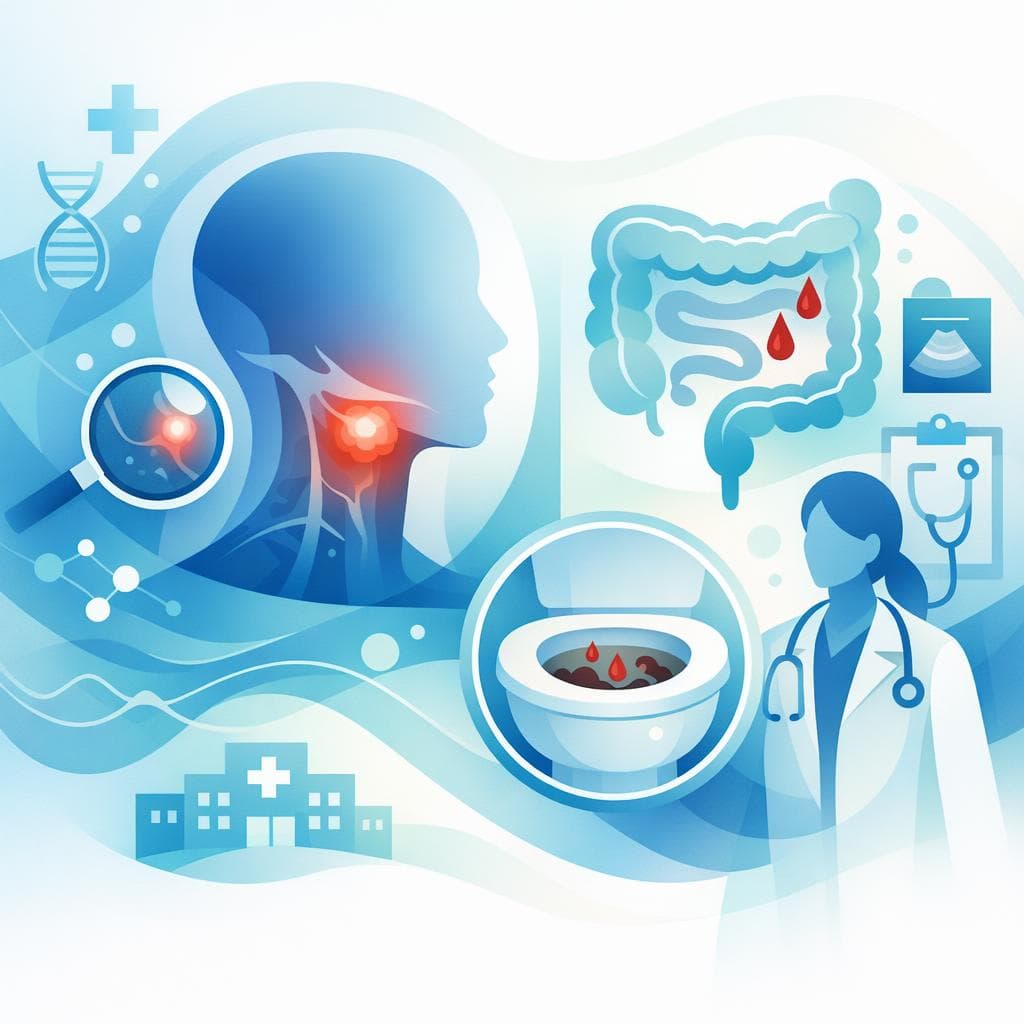
Based on NIH | If I have head and neck cancer, when should I see a doctor about blood in my stool?
Any blood in the stool when you have (or may have) head and neck cancer warrants prompt evaluation. Go to the emergency department immediately for black, tarry, or heavy bleeding, faintness, or vomiting blood; otherwise, contact your oncology team the same day for any new or persistent bleeding. Cancer and its treatments can raise bleeding risk, so early assessment is important.
Seeing any blood in your stool when you have (or may have) head and neck cancer should prompt timely medical attention, because gastrointestinal bleeding can sometimes signal a serious condition that needs urgent evaluation. [1] If the bleeding is heavy, you feel faint, or your stool looks black and tarry, you should seek emergency care right away rather than waiting for an appointment. [1] [2] [3]
Why this matters
Blood in the stool can come from many causes, ranging from hemorrhoids to ulcers or polyps, but in people with cancer, bleeding needs careful assessment. [4] Cancer treatment or the cancer itself can increase bleeding risks, and rapid evaluation is important if you become weak, dizzy, or your bleeding is more than minimal. [4] [5]
When to go to the emergency department 🚑
Go to the ER now if any of the following occur:
- Black, tarry stools (melena), dark blood mixed in stool, or passing maroon/bright red blood in larger amounts. These can indicate active gastrointestinal bleeding. [1] [3]
- You feel lightheaded, faint, have rapid shallow breathing, confusion, or cold/clammy skin. These are signs of shock from blood loss. [2]
- Vomiting blood or material that looks like coffee grounds. This suggests upper GI bleeding. [1] [5]
- Severe or persistent abdominal pain together with bloody or black stools. This can be a warning sign of significant bleeding. [6] [7]
When to contact your cancer or primary care team urgently (same day) 📞
Even if you are not in immediate danger, you should contact your oncology team the same day if you notice:
- Any new blood in the stool or a change to black/tarry stools. Early evaluation helps find the source. [3]
- Ongoing small amounts of blood over more than 24 hours. Persistent bleeding should be checked. [5]
- New dizziness, fatigue, or weakness without obvious cause. These can indicate blood loss. [2]
- Concurrent symptoms such as severe sore throat that doesn’t improve, difficulty swallowing, or unintentional weight loss, as these may relate to your overall cancer status and nutrition. [8]
What the blood might look like and what it can mean
- Black, tarry stools (melena): Usually from upper gastrointestinal bleeding (esophagus, stomach, or duodenum). [3] This often needs urgent evaluation because it can reflect significant blood loss. [5]
- Dark blood mixed with stool or maroon stool: Can be from either upper or lower GI sources and still requires prompt care. [1]
- Bright red blood coating the stool or on tissue: Often from lower GI sources (like hemorrhoids or fissures), but in the setting of cancer, it should still be discussed promptly with your team. [1] [9]
Common causes in people with cancer
- Benign GI lesions are common (e.g., stomach or duodenal ulcers, gastritis), and many bleeding episodes in people with cancer come from these rather than from tumors. [10] Even so, it’s important not to assume; endoscopic evaluation is often needed to identify the source safely. [4] [10]
- Cancer or treatment-related factors (such as inflammation, low platelets from chemotherapy, or tumor involvement of the GI tract) can also cause bleeding. [4] Because multiple causes are possible, targeted tests like endoscopy are the cornerstone of diagnosis and management. [4]
What to expect during evaluation
- Initial assessment focuses on your stability (vital signs, blood counts) and the amount and appearance of bleeding. [5]
- Endoscopy (a camera exam of the upper or lower GI tract) is commonly used to find and sometimes treat the source of bleeding. [4] If bleeding is brisk or the source is unclear, other imaging or procedures may be considered. [4] [5]
How to reduce bleeding risk during cancer care
- Avoid constipation by drinking fluids, eating fiber, and using stool softeners if you’re straining; this can reduce hemorrhoid and fissure bleeding. [11] Ask your care team before starting any over‑the‑counter medicines. [11]
- Avoid alcohol and activities that increase injury risk if your platelets are low or you’ve been advised you are at higher bleeding risk. [11] Report any nosebleeds, gum bleeding, or unusual bruising as they can accompany GI bleeding. [12]
Quick reference table
| Situation | What it suggests | What to do |
|---|---|---|
| Black, tarry stools or dark blood mixed in stool | Possible upper GI or significant lower GI bleeding | Go to the emergency department now. [1] [3] |
| Bright red blood and feeling faint/dizzy or rapid breathing | Possible active bleeding with shock signs | Call emergency services or go to ER immediately. [2] |
| New small amounts of blood without weakness | Could be hemorrhoids or minor lower GI source, but needs assessment in cancer setting | Call your oncology/primary team the same day for guidance. [1] [5] |
| Vomiting blood or coffee‑ground material | Upper GI bleeding | Go to the emergency department now. [1] [5] |
Bottom line
- Any blood in the stool deserves prompt attention when you have head and neck cancer. [4] Seek emergency care immediately if stools are black/tarry, you pass a lot of blood, you feel faint, or you vomit blood. [1] [2] [3] [5]
- If bleeding is mild but new, contact your oncology team the same day for advice and possible testing. [5] Rapid evaluation helps find the cause and keep you safe. [4]
Related Questions
Related Articles


Sources
- 1.^abcdefghijGastrointestinal Bleeding(medlineplus.gov)
- 2.^abcdeRectal bleeding - Mayo Clinic(mayoclinic.org)
- 3.^abcdefBlack or tarry stools: MedlinePlus Medical Encyclopedia(medlineplus.gov)
- 4.^abcdefghiGastrointestinal bleeding in the cancer patient.(pubmed.ncbi.nlm.nih.gov)
- 5.^abcdefghijGastrointestinal bleeding: MedlinePlus Medical Encyclopedia(medlineplus.gov)
- 6.^↑Health Star 44-249(dailymed.nlm.nih.gov)
- 7.^↑(dailymed.nlm.nih.gov)
- 8.^↑Head and neck cancers - Symptoms and causes(mayoclinic.org)
- 9.^↑Lower gastrointestinal bleeding.(pubmed.ncbi.nlm.nih.gov)
- 10.^abGastrointestinal hemorrhage in the cancer patient.(pubmed.ncbi.nlm.nih.gov)
- 11.^abcBleeding during cancer treatment: MedlinePlus Medical Encyclopedia(medlineplus.gov)
- 12.^↑Bleeding during cancer treatment: MedlinePlus Medical Encyclopedia(medlineplus.gov)
Important Notice: This information is provided for educational purposes only and is not intended to replace professional medical advice, diagnosis, or treatment. Always consult with a qualified healthcare provider before making any medical decisions.