
 Persly Medical Team
Based on NIH | Can early-stage head and neck cancer cause blood in the stool, or should this symptom prompt evaluation for other causes?
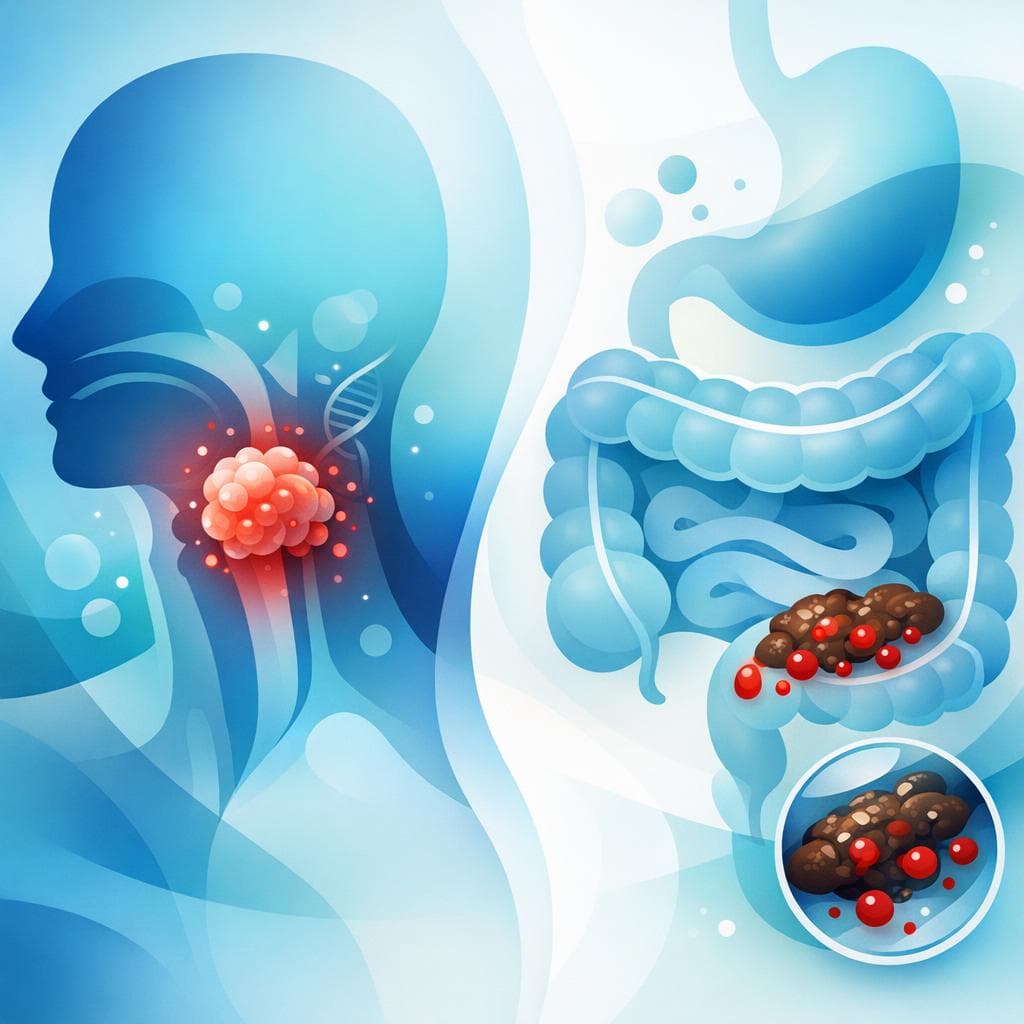
Early-stage head and neck cancer rarely causes blood in the stool. Rectal bleeding or black, tarry stools usually come from gastrointestinal sources and warrant a separate GI-focused evaluation; seek urgent care if bleeding is heavy or you have melena.
Early-stage head and neck cancer rarely causes blood in the stool. Blood seen in or on stool (hematochezia) or black, tarry stools (melena) more commonly comes from problems in the gastrointestinal (GI) tract and typically warrants a separate evaluation focused on GI causes. [1] [2]
Why blood in stool points to GI causes
- Location matters. Bright red blood usually comes from the lower GI tract (colon, rectum, or anus), while black, tarry stools often mean digested blood from the upper GI tract (esophagus, stomach, or small intestine). [3] [4]
- Common GI sources. Causes range from hemorrhoids and anal fissures to peptic ulcers, diverticulosis, inflammatory bowel disease, polyps, and colorectal cancer. [2] [3]
- Urgency and safety. GI bleeding can be serious; sudden or heavy bleeding with dizziness, fainting, fast heartbeat, or black/tarry stools should prompt urgent care. [5] [6]
Typical symptoms of early head and neck cancer
Early head and neck cancers most often cause local symptoms such as a persistent sore throat, trouble swallowing, a neck lump, hoarseness, a mouth sore that does not heal, ear pain, and patches in the mouth (white or red). [1] [7]
Some subtypes can cause bleeding in the mouth or coughing up blood, but bleeding into the stool is not a typical early feature of head and neck tumors. [7] [8]
Rare intersections to know
- Advanced or treatment-related scenarios. People with head and neck cancer may experience GI bleeding for unrelated GI reasons, just like anyone else, and they still need standard GI evaluation. [9]
- Exceptional cases. Very rarely, bleeding may occur from unusual pathways (for example, metastasis to a feeding-tube site), but these are exceptional and not how early disease presents. [10]
How GI bleeding is evaluated
A clinician will take a history and perform an exam, then select tests based on the pattern and severity of bleeding. [11]
- Initial tests: Complete blood count, clotting studies, and stool tests can help assess blood loss and potential infection. [12] [11]
- Procedures: A digital rectal exam and visualization with anoscopy, sigmoidoscopy, or colonoscopy can find and often treat lower GI sources; upper endoscopy is used for suspected upper GI bleeding. [13] [11]
- When to go to the ER: Signs of shock (fainting, rapid breathing, cool clammy skin) or vomiting blood/black stools require immediate care. [14] [5]
Practical takeaways
- Most likely explanation: Blood in stool is much more likely due to a GI condition than to early head and neck cancer. [2] [3]
- Don’t delay GI work‑up: Even if you are being evaluated for head and neck symptoms, blood in or on the stool should be assessed on its own merits with GI-focused testing. [11] [13]
- Head and neck symptoms still matter: Persistent sore throat, mouth sores that don’t heal, trouble swallowing, hoarseness, or a neck mass deserve timely evaluation by an ear, nose, and throat specialist, but these symptoms are separate from rectal bleeding. [1] [7]
Bottom line
While head and neck cancers can cause mouth or throat bleeding, blood in the stool is not a typical early sign and should generally prompt evaluation for gastrointestinal causes, with urgent care for heavy or black/tarry bleeding. [7] [4]
Related Questions
Related Articles


Sources
- 1.^abcHead and Neck Cancer(medlineplus.gov)
- 2.^abcGastrointestinal Bleeding(medlineplus.gov)
- 3.^abcRectal bleeding Causes - Mayo Clinic(mayoclinic.org)
- 4.^abBlack or tarry stools: MedlinePlus Medical Encyclopedia(medlineplus.gov)
- 5.^abGastrointestinal bleeding - Symptoms and causes(mayoclinic.org)
- 6.^↑Gastrointestinal bleeding: MedlinePlus Medical Encyclopedia(medlineplus.gov)
- 7.^abcdHead and neck cancers - Symptoms and causes(mayoclinic.org)
- 8.^↑Head and Neck Cancer Symptoms & Signs | Memorial Sloan Kettering Cancer Center(mskcc.org)
- 9.^↑Gastrointestinal bleeding in the cancer patient.(pubmed.ncbi.nlm.nih.gov)
- 10.^↑Tongue squamous cell carcinoma metastasis to percutaneous endoscopic gastrostomy site: A case report of an unusual cause of gastrointestinal bleeding.(pubmed.ncbi.nlm.nih.gov)
- 11.^abcdDiagnosis and treatment - Mayo Clinic(mayoclinic.org)
- 12.^↑Rectal bleeding: MedlinePlus Medical Encyclopedia(medlineplus.gov)
- 13.^abRectal bleeding: MedlinePlus Medical Encyclopedia(medlineplus.gov)
- 14.^↑Rectal bleeding When to see a doctor(mayoclinic.org)
Important Notice: This information is provided for educational purposes only and is not intended to replace professional medical advice, diagnosis, or treatment. Always consult with a qualified healthcare provider before making any medical decisions.