
 Persly Medical Team
Based on NIH | In someone with head and neck cancer, could noticing blood in the stool be related to the cancer or its treatments, and does this symptom affect overall prognosis?
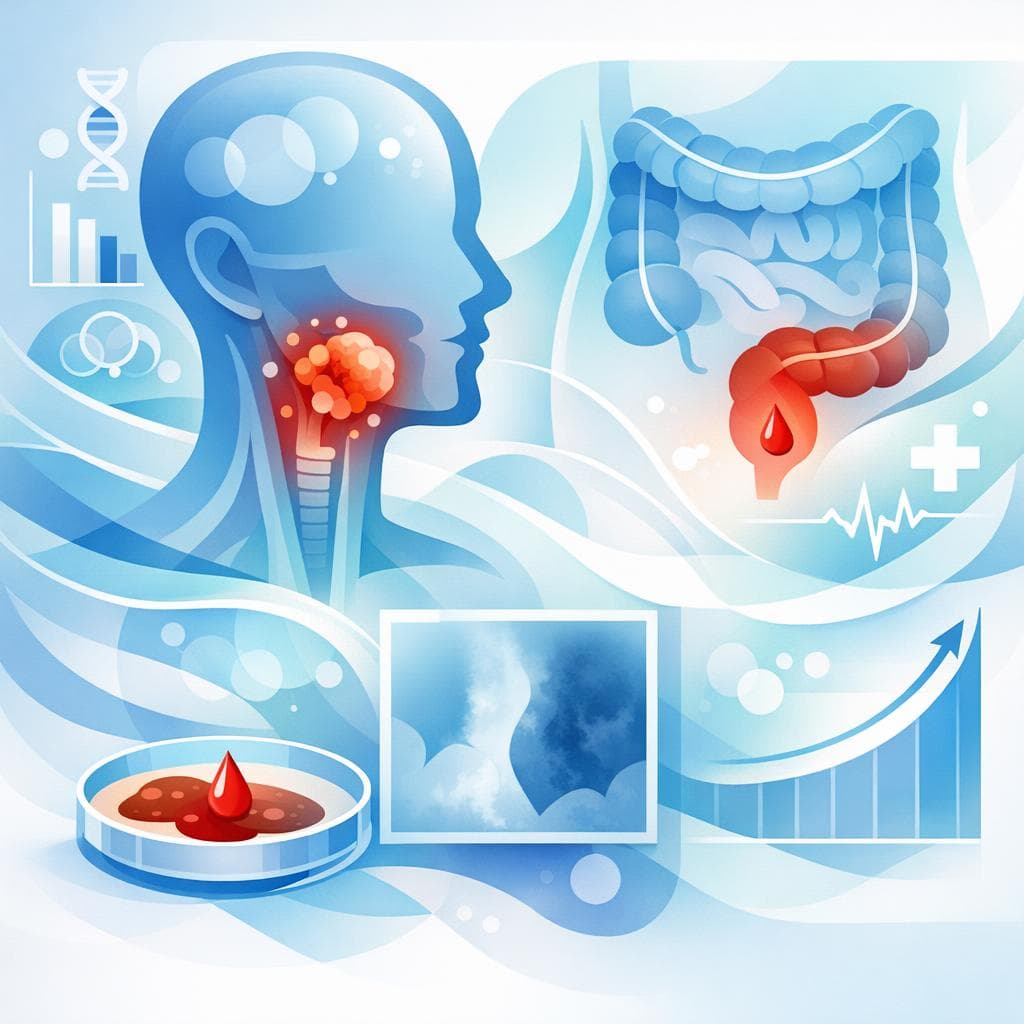
Blood in the stool during head and neck cancer care can arise from benign GI causes or from treatments such as chemotherapy (low platelets), immunotherapy-related colitis, or radiation injury; rarely, a second GI cancer is responsible. It requires prompt evaluation often with labs, medication review, and endoscopy to identify and treat the source. Overt GI bleeding in cancer patients is linked to worse outcomes, but timely management often addresses treatable causes.
Blood in the stool can happen in someone with head and neck cancer, and it can be related to several different causes some tied to the cancer itself, and others to common treatments or supportive medications. It also can carry prognostic implications, especially if the bleeding is significant or recurrent. Below is a practical, evidence‑based overview to help you understand what it might mean and what to do next.
Key takeaways
- Blood in the stool (red blood or black, tarry stools called “melena”) should be evaluated promptly because it can signal gastrointestinal (GI) bleeding from benign causes, treatment side effects, or a separate GI condition, including a second cancer. [1] [2]
- Certain head and neck cancer treatments including chemotherapy (via low platelets), immune checkpoint inhibitors (via colitis), radiation (via radiation enteritis/proctitis), and targeted therapy such as cetuximab (rare severe GI bleeding) can contribute to blood in the stool. [3] [4] [5] [6]
- In people with cancer, overt GI bleeding is associated with higher short‑term and long‑term mortality compared with those without cancer, which makes early identification and management important. [7] [8]
- Endoscopy is usually the cornerstone for diagnosing and treating GI bleeding in people with cancer and often finds non‑cancer causes such as ulcers or gastritis. [9] [10]
What “blood in the stool” can look like
- Black, tarry, foul‑smelling stools suggest bleeding higher up in the digestive tract (melena), often the esophagus, stomach, or duodenum. [1]
- Bright red blood mixed with or on the stool often points to a lower source (colon, rectum, anus), but brisk upper bleeding can also appear red. [2]
Possible causes in head and neck cancer
1) Unrelated but common GI causes (peptic ulcers, gastritis, hemorrhoids)
Even in people with cancer, the most frequent causes of GI bleeding identified on endoscopy are benign lesions such as gastric ulcers, gastritis, or duodenal ulcers. [9]
Rapid evaluation and treatment are emphasized because significant bleeding can be life‑threatening and often requires targeted therapy. [10]
2) Effects of cancer treatments
-
Chemotherapy and low platelets (thrombocytopenia):
Some chemotherapy regimens lower platelet counts, increasing bleeding risk, which can show up as black or bloody stools. [3]
Cancer treatment instructions consistently list black, tarry stools or red blood in stool as warning signs that need immediate attention. [11] [12] -
Immune checkpoint inhibitors (immunotherapy):
Drugs like nivolumab or avelumab can cause immune‑related colitis (inflammation of the colon) that leads to diarrhea with blood, or black/tarry stools, and abdominal pain. [4] [13] [14]
Upper GI inflammation (gastritis, duodenitis, esophagitis) can also occur and may lead to bleeding. [15] [13] -
Radiation‑related GI toxicity:
Radiation directed near abdominal or pelvic organs can cause radiation enteritis or proctitis; chronic cases can include bloody diarrhea or rectal bleeding. [5] [16]
Radiation proctitis can arise during treatment, within months, or even years later. [17] -
Targeted therapy (cetuximab) with radiotherapy:
Concurrent cetuximab‑radiation in head and neck cancer has been associated, albeit infrequently, with severe GI bleeding events in small clinical cohorts, suggesting a susceptible subgroup. [6]
3) Medications that raise bleeding risk
- Nonsteroidal anti‑inflammatory drugs (NSAIDs) and steroids can irritate the GI tract and exacerbate ulcers or bleeding; this is particularly concerning with chemotherapy‑related low platelets. (General principle supported by oncology bleeding guidance). [3]
- Anticoagulants, if used for clots, can amplify any existing GI bleeding (not specific to head and neck cancer but relevant in cancer care). [8]
4) Feeding tube–related issues
- Enteral feeding (e.g., PEG tube) can rarely be associated with GI ulceration or irritation around the tube site or due to medications given through the tube, which may manifest as GI bleeding; evaluation typically requires clinical assessment and endoscopy. (Clinical approach aligns with general cancer‑bleeding management paradigms.) [10] [9]
5) The cancer itself
- While head and neck tumors rarely cause GI bleeding directly, cancer elsewhere in the GI tract (a second primary or metastasis) can cause bleeding and should be considered if no benign cause is found. [2]
- In cancer cohorts with overt GI bleeding, a substantial portion of patients with tumors involving the GI tract bled from their tumors; however, many others bled from benign sources. [7] [9]
Does blood in the stool affect prognosis?
- In large prospective data, people with cancer who experience clinically relevant bleeding including GI bleeding have a higher risk of death than those who do not bleed, even after accounting for other factors. [8]
- Among patients admitted with overt GI bleeding, those with cancer have higher in‑hospital, 1‑month, and 1‑year mortality than non‑cancer patients, and they often present with more severe anemia. [7]
- Historically, many bleeding episodes in cancer patients stem from benign lesions, and endoscopic management can be effective; mortality from a major hemorrhage has been reported but is not universal. [9]
- In head and neck oncology generally, hemorrhagic events (e.g., catastrophic head and neck bleeds after prior radiation) can signal poor prognosis; while that is a different anatomic site than the bowel, it highlights the overall risk that bleeding complications can portend in this population. [18]
In short, bleeding itself is a marker of clinical vulnerability and is linked to worse outcomes, but the degree to which it affects an individual’s prognosis depends on the cause (benign vs tumor‑related), severity, response to treatment, and overall cancer status. [8] [7]
What to do if you notice blood in the stool
- Seek medical attention promptly, especially if the stool is black and tarry, there is bright red blood, you feel lightheaded, or you have abdominal pain. These signs are considered urgent during cancer treatment. [3] [11]
- Your care team may order labs (including hemoglobin and platelets), review medications (NSAIDs, steroids, anticoagulants), and arrange endoscopy to find and treat the source. [10] [9]
- Do not use rectal enemas or suppositories unless your team instructs you to; these can aggravate bleeding risks during some treatments. [19]
- If you are on immunotherapy and develop diarrhea with blood, tell your team right away because immune‑related colitis often needs early steroid treatment or other immunosuppression to prevent complications. [4] [13]
Comparison table: Potential links between treatments and blood in stool
| Treatment/Factor | How bleeding may occur | Typical clues | What clinicians may do |
|---|---|---|---|
| Chemotherapy (low platelets) | Mucosal bleeding from thrombocytopenia | Easy bruising, gum/nose bleeds, black or red stools | Check platelet count; hold/adjust chemo; transfuse platelets if severe; avoid rectal meds |
| Immunotherapy (checkpoint inhibitors) | Immune‑mediated colitis or upper GI inflammation | Diarrhea, abdominal pain, blood in stool or black stools | Stool tests; start steroids if immune colitis suspected; escalate per protocols; scope if needed |
| Radiation (abdomen/pelvis or scatter) | Radiation enteritis/proctitis with mucosal injury | Diarrhea with blood, rectal bleeding; can be early or delayed | Supportive care; anti‑inflammatory therapy; endoscopic therapy if needed |
| Cetuximab + radiation | Rare severe GI hemorrhage in susceptible patients | Overt GI bleeding during therapy | Urgent evaluation; hold drug; manage source; multidisciplinary review |
| NSAIDs/steroids | Ulceration/gastritis exacerbation | Stomach pain, black stools | Stop/replace NSAIDs; start acid suppression; evaluate for ulcers |
| Benign GI lesions | Ulcers, gastritis, hemorrhoids, fissures | Pain, melena, bright red blood | Endoscopy to diagnose/treat; acid suppression; banding if hemorrhoids |
Bottom line
- Blood in the stool during or after treatment for head and neck cancer can come from many causes, including common benign GI problems, cancer therapies (chemotherapy‑related low platelets, immunotherapy‑induced colitis, radiation enteritis/proctitis), certain medications, or less commonly, tumor‑related bleeding in the GI tract. Prompt evaluation is important to identify the source and treat it. [9] [3] [4] [5]
- Overt GI bleeding in people with cancer is linked with higher mortality and can signal more complex illness, but many causes are treatable timely endoscopic and medical care can improve outcomes. [7] [8] [10]
Related Questions
Related Articles


Sources
- 1.^abBlack or tarry stools: MedlinePlus Medical Encyclopedia(medlineplus.gov)
- 2.^abcGastrointestinal bleeding: MedlinePlus Medical Encyclopedia(medlineplus.gov)
- 3.^abcdefgBleeding during cancer treatment: MedlinePlus Medical Encyclopedia(medlineplus.gov)
- 4.^abcdeManaging Your Immunotherapy Side Effects(mskcc.org)
- 5.^abcdEnteritis por radiación: MedlinePlus enciclopedia médica(medlineplus.gov)
- 6.^abcSevere gastrointestinal bleeding in patients with locally advanced head and neck squamous cell carcinoma treated by concurrent radiotherapy and Cetuximab.(pubmed.ncbi.nlm.nih.gov)
- 7.^abcdeOvert gastrointestinal bleeding in patients with cancer: Clinical characteristics and outcomes.(pubmed.ncbi.nlm.nih.gov)
- 8.^abcdeBleeding events in patients with cancer: incidence, risk factors, and impact on prognosis in a prospective cohort study.(pubmed.ncbi.nlm.nih.gov)
- 9.^abcdefghGastrointestinal hemorrhage in the cancer patient.(pubmed.ncbi.nlm.nih.gov)
- 10.^abcdeGastrointestinal bleeding in the cancer patient.(pubmed.ncbi.nlm.nih.gov)
- 11.^abcBleeding during cancer treatment: MedlinePlus Medical Encyclopedia(medlineplus.gov)
- 12.^↑Managing Your Chemotherapy Side Effects(mskcc.org)
- 13.^abcd3594-Advanced or metastatic nivolumab (flat dosing)(eviq.org.au)
- 14.^ab4037-Bladder/Urothelial locally advanced or metastatic avelumab(eviq.org.au)
- 15.^ab4314-NSCLC neoadjuvant ciSplatin pemetrexed and nivolumab(eviq.org.au)
- 16.^abProctitis-Proctitis - Symptoms & causes - Mayo Clinic(mayoclinic.org)
- 17.^abProctitis-Proctitis - Symptoms & causes - Mayo Clinic(mayoclinic.org)
- 18.^↑Prognostic significance of hemorrhage requiring embolization in the setting of previously treated head and neck squamous cell carcinoma: Systematic review and retrospective cohort.(pubmed.ncbi.nlm.nih.gov)
- 19.^↑Bleeding during cancer treatment: MedlinePlus Medical Encyclopedia(medlineplus.gov)
Important Notice: This information is provided for educational purposes only and is not intended to replace professional medical advice, diagnosis, or treatment. Always consult with a qualified healthcare provider before making any medical decisions.