
 Persly Medical Team
Is joint pain common in cancer? Causes and care
Is Joint Pain a Common Symptom of Cancer? Causes and How to Manage It
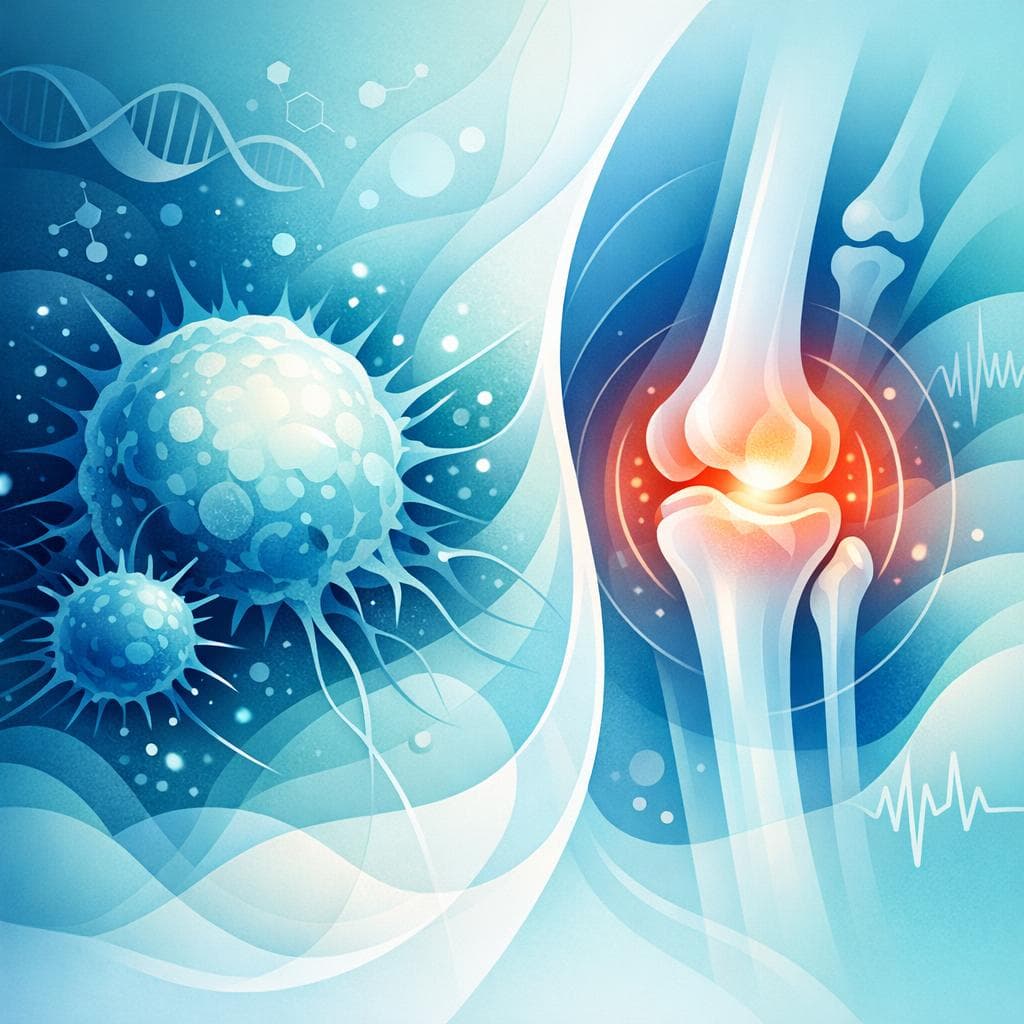
Joint pain can happen with cancer, but it isn’t universally present and is more likely in advanced disease or as a side effect of treatment. Not everyone with cancer has pain, yet pain becomes more common as cancer progresses or spreads. [1] The intensity and character of cancer pain vary widely dull, sharp, burning; intermittent or constant and depend on cancer type, stage, and where it is located. [2]
How Cancer Itself Can Cause Joint or Bone Pain
- Tumor pressure or tissue damage: Growing tumors can press on nearby nerves, bones, or organs, or invade and destroy tissue, leading to pain that may be felt around joints. [3] Chemicals released by tumors can also increase pain signaling. [3]
- Bone metastases: When cancer spreads to bone (common in breast, prostate, lung, kidney, thyroid), pain is often deep, aching, and worse with movement or at night, and may be felt in or near large joints like the hip or shoulder. [4] Bone metastases can weaken bone, raising fracture risk and causing significant pain. [4]
- Blockages and inflammation: Tumors can create blockages in blood or lymph vessels, leading to swelling and secondary pain around joints. [4]
How Cancer Treatments Can Trigger Joint Pain
- Surgery, radiation, chemotherapy: Pain can occur after surgery, during radiation, or with certain chemotherapies due to tissue inflammation, nerve irritation, or reduced activity causing muscle aches. [3] [5]
- Hormonal therapies (Aromatase inhibitors in breast cancer): Up to about half of women may develop aromatase inhibitor–associated musculoskeletal syndrome (AIMSS), featuring joint pains, stiffness, and bone loss due to estrogen deprivation. [6] Early, step‑wise management helps maintain treatment adherence. [7]
- Immunotherapy (checkpoint inhibitors): Can cause immune‑related arthritis and muscle inflammation; prompt evaluation and tailored treatment are important to control symptoms while maintaining cancer therapy. [8]
- Supportive drugs (e.g., pegfilgrastim): Some people experience bone/joint pain after pegfilgrastim; common approaches include NSAIDs, acetaminophen, opioids, and sometimes antihistamines like loratadine. [9]
When Joint Pain Signals Something Urgent
- New severe, focal bone pain, especially in the hip, spine, or ribs, worse at night or with weight‑bearing could indicate bone metastasis or impending fracture. [4]
- Sudden pain with loss of function or new deformity possible pathologic fracture; needs urgent imaging.
- Joint swelling with warmth and limited motion could be infection, inflammatory arthritis, or immune‑related toxicity; seek care promptly. [8]
How Joint Pain Is Assessed in Cancer
- History and exam: Location, quality, timing, triggers (movement, rest), treatment timeline, and associated symptoms. Clinicians look for mechanical vs. inflammatory patterns and therapy‑related timing. [4]
- Imaging: X‑ray, MRI, or bone scans when bone metastasis or fracture risk is suspected. Advances in imaging help pinpoint pain sources. [4]
- Labs: Inflammatory markers, calcium, vitamin D, and checks for therapy‑related side effects when appropriate. Structured assessment guides multimodal management. [10]
Evidence‑Based Management Options
Core Principles
- Treat the cause whenever possible (e.g., cancer control often reduces pain). [3]
- Use multimodal pain care, blending medications, physical therapies, and targeted procedures to maximize relief and minimize side effects. [10]
Medications
- Acetaminophen and NSAIDs: First‑line for mild to moderate musculoskeletal pain if safe for you. NSAIDs can be titrated to effect; acetaminophen can be combined if needed. [8]
- Opioids: For moderate to severe cancer pain, opioids remain a mainstay, tailored to individual needs and balanced against side effects like constipation and sedation. [11]
- Adjuvants:
- For neuropathic features (burning, shooting): gabapentinoids, SNRIs, or TCAs may help. These can complement opioids and reduce required doses. [11]
- Bone metastasis pain: consider bone‑targeting agents (bisphosphonates or denosumab) as part of oncology care to reduce skeletal events and pain. Local radiation can provide strong focal relief. [5]
- Aromatase inhibitor–related pain (AIMSS):
Physical Medicine and Rehabilitation
- Therapeutic exercise, stretching, and activity pacing: Restoring joint range and muscle support reduces pain and stiffness without medication side effects. [12]
- Manual therapies and modalities: Massage, manipulation, laser/light therapy, lymphatic drainage may ease musculoskeletal pain in selected cases. [12]
- Orthoses and assistive devices: Bracing and mobility aids can offload painful joints and enhance safety. [12]
Interventional and Local Treatments
- Radiation therapy: Highly effective for localized bone metastasis pain and preventing complications. [5]
- Radiofrequency ablation (RFA): Can reduce pain by interrupting nerve pain signals; used in selected cancer pain scenarios and major joint pain. [13]
- Cementoplasty/vertebroplasty: Injecting bone cement stabilizes painful metastases (e.g., spine, acetabulum) and can quickly relieve pain. [14] [15]
- Palliative orthopedic procedures: In complex joint metastasis, minimally invasive surgery may restore comfort and mobility. [16]
Complementary Approaches
- Acupuncture: Some benefit reported for pain, though evidence varies; it can be considered as an adjunct within a multimodal plan. [17]
- Cannabinoids: May help certain pain types and reduce opioid needs; evidence remains mixed and should be individualized with clinician guidance. [18]
Practical Self‑Care Tips
- Keep moving within limits: Gentle, regular activity maintains joint flexibility and reduces stiffness; avoid prolonged bed rest unless medically advised. [5]
- Warmth or cold packs: Heat helps stiffness; cold can ease inflamed joints try and see which works best for you. [5]
- Joint protection: Use braces or supports if a joint feels unstable; ask about bone safety if metastases are suspected. [12]
- Medication safety: Review all pain medicines with your care team to avoid interactions and manage side effects like constipation from opioids. [11]
Personalization and Ongoing Review
Cancer‑related joint pain has many possible causes from tumor effects to specific treatments so the best plan is personalized and may change over time as your therapy and symptoms evolve. [10] Combining targeted cancer treatment, smart pain medications, physical methods, and selective procedures offers the highest chance of safe, sustained relief. [3] [12]
Key Takeaways
- Joint pain is not guaranteed in cancer, but it’s common in advanced disease and with certain treatments. [1]
- Causes include tumor pressure, bone metastases, and treatment effects such as surgery, radiation, chemotherapy, hormonal therapy, and immunotherapy. [3] [5] [7] [8]
- Management is multimodal: analgesics, adjuvants, physical medicine, radiation or interventional procedures, and tailored strategies for therapy‑specific syndromes. [10] [12] [5]
- Seek prompt evaluation for severe focal bone pain, nighttime worsening, new swelling, or sudden loss of function. [4]
Related Questions
Related Articles

Sources
- 1.^abOverview of Cancer Pain(mskcc.org)
- 2.^↑Cancer pain: Relief is possible(mayoclinic.org)
- 3.^abcdefCancer pain: Relief is possible(mayoclinic.org)
- 4.^abcdefgCauses of Cancer Pain(mskcc.org)
- 5.^abcdefgCauses of Cancer Pain(mskcc.org)
- 6.^↑Aromatase Inhibitor-Associated Musculoskeletal Syndrome: Understanding Mechanisms and Management.(pubmed.ncbi.nlm.nih.gov)
- 7.^abcd1819-Arthralgia and myalgia | eviQ(eviq.org.au)
- 8.^abcd1819-Arthralgia and myalgia | eviQ(eviq.org.au)
- 9.^↑Effect of Loratadine for Pegfilgrastim-Induced Bone Pain.(pubmed.ncbi.nlm.nih.gov)
- 10.^abcdCancer pain: molecular mechanisms and management.(pubmed.ncbi.nlm.nih.gov)
- 11.^abc469056 | Stanford Health Care(stanfordhealthcare.org)
- 12.^abcdefTreating cancer-related pain: Exploring the efficacy of physical medicine modalities(mayoclinic.org)
- 13.^↑The Application of Radiofrequency Ablation in Acute and Chronic Pain Management.(pubmed.ncbi.nlm.nih.gov)
- 14.^↑Combination radiofrequency ablation and cementoplasty for palliative treatment of painful neoplastic bone metastasis: experience with 53 treated lesions in 36 patients.(pubmed.ncbi.nlm.nih.gov)
- 15.^↑Computed tomography-guided coblation and cementoplasty of a painful acetabular metastasis: an effective palliative treatment.(pubmed.ncbi.nlm.nih.gov)
- 16.^↑Palliative surgery for acetabular metastasis with pathological central dislocation of the hip joint after radiation therapy: a case report.(pubmed.ncbi.nlm.nih.gov)
- 17.^↑Investigating the Analgesic Mechanisms of Acupuncture for Cancer Pain: Insights From Multimodal Bioelectrical Signal Analysis.(pubmed.ncbi.nlm.nih.gov)
- 18.^↑Tetrahydrocannabinol and Cannabidiol for Pain Treatment-An Update on the Evidence.(pubmed.ncbi.nlm.nih.gov)
Important Notice: This information is provided for educational purposes only and is not intended to replace professional medical advice, diagnosis, or treatment. Always consult with a qualified healthcare provider before making any medical decisions.