
 Persly Medical Team
Hot flashes and cancer: causes and management
Hot Flashes and Cancer: What’s Common, What Causes Them, and How to Manage Them
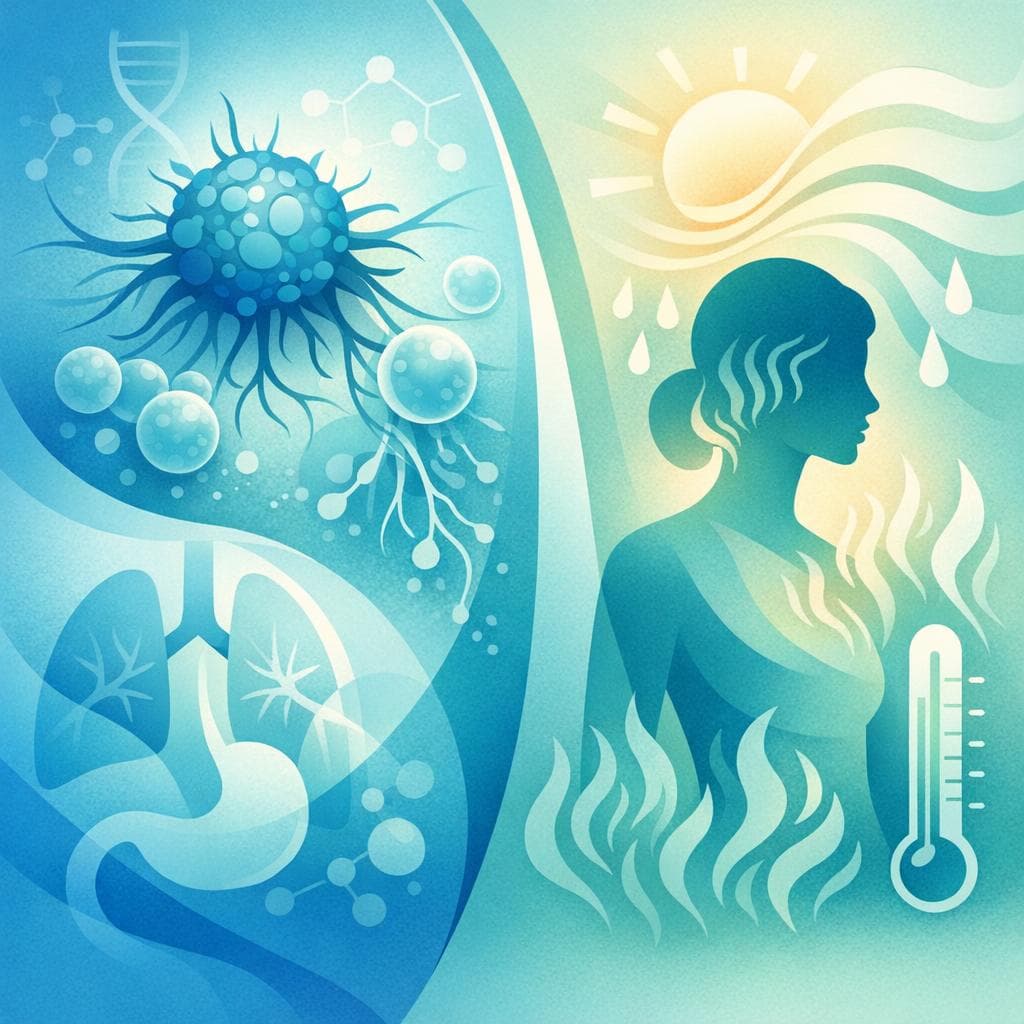
Hot flashes are not typically a direct sign of cancer; they are most often related to menopause or to the effects of cancer treatments that change hormone levels. [1] Hot flashes and night sweats can occur in people with cancer, especially when treatments such as chemotherapy, radiation, hormone therapy, or certain surgeries affect estrogen or testosterone. [2] [3] They can persist after treatment and are common in those treated for breast or prostate cancer. [4]
Are Hot Flashes a Symptom of Cancer?
- Hot flashes themselves are rarely caused by cancer. [1]
- Night sweats can sometimes be linked to specific cancers, with lymphoma being the most commonly associated. [3]
- In cancer care, hot flashes more often arise as a side effect of treatment, not from the cancer itself. [2] [4]
Key point: Most hot flashes in cancer settings are treatment-related rather than caused by the cancer itself. [2] [4]
What Causes Hot Flashes?
- Natural menopause changes the brain’s temperature control center (hypothalamus), triggering sudden heat sensations and sweating. [1]
- Cancer treatments that lower or block sex hormones (estrogens or androgens) can provoke vasomotor symptoms (hot flashes and night sweats). [5] [2]
- Specific triggers include:
Mechanism overview: Hormone level shifts narrow the body’s “thermal neutral zone,” making slight temperature changes feel extreme and trigger a hot flash. [1] [5]
Who Is Most Affected?
- Women undergoing breast cancer treatment often report more frequent and severe hot flashes than during natural menopause. [6]
- Men receiving androgen-deprivation therapy for prostate cancer commonly experience hot flashes. [6]
- Tamoxifen and other endocrine therapies increase hot flash incidence compared to no therapy. [7]
Practical note: The risk and intensity vary by treatment type and individual sensitivity. [8] [9]
How to Manage Hot Flashes
Management aims to reduce frequency and intensity while respecting cancer-specific safety considerations.
Lifestyle Strategies
- Keep cool: layered clothing, fans, breathable fabrics, and a cooler room at night. [2]
- Identify personal triggers: hot drinks, spicy foods, alcohol, stress, and warm environments. [2]
- Healthy habits: regular exercise, weight management, and paced breathing or relaxation techniques. [10]
- Sleep hygiene: consistent schedule, cooling bedding, and limiting evening caffeine/alcohol. [10]
First-line approach: Non-drug strategies are safe and often helpful, especially when hormone therapy is not advisable. [10]
Nonhormonal Medications
When lifestyle changes aren’t enough, several nonhormonal options can help reduce hot flashes:
- Certain antidepressants (e.g., SSRIs/SNRIs) may lessen frequency and severity; choice depends on cancer therapy interactions. [8] [9]
- Other agents (e.g., gabapentin) can be effective, particularly for night sweats, though side effects vary. [8] [9]
- Emerging therapies that target the hypothalamic thermoregulatory pathway (e.g., neurokinin 3 receptor antagonists such as fezolinetant) show promise for vasomotor symptoms. [5] [11]
Safety tip: Selection should consider your cancer type, current treatments, and potential drug interactions. [8]
Hormone Therapy: Usually Not an Option in Hormone‑Sensitive Cancers
- Estrogen therapy is the most effective general treatment for menopausal hot flashes but is usually avoided after breast cancer or other hormone-sensitive cancers. [12] [13]
- In those without contraindications, clinicians use the smallest effective dose for the shortest time based on risk–benefit. [13]
Important caveat: If your cancer care aims to lower hormones, taking hormone replacements can counteract treatment goals. [12]
Complementary Approaches
- Herbal supplements have not shown consistent benefit and may carry risks or interact with cancer therapies. [12]
- Mind–body techniques (relaxation, cognitive strategies) may offer modest relief and improve coping. [8] [9]
Balanced view: Discuss any supplement with your oncology team before starting. [12]
Quick Reference: Causes and Care
| Topic | What to Know | Why It Matters |
|---|---|---|
| Are hot flashes a cancer symptom? | Rarely; usually due to menopause or treatments. [1] [2] | Prevents unnecessary alarm and guides evaluation. |
| Night sweats and cancer | Lymphoma is the cancer most often linked to night sweats. [3] | Persistent, unexplained night sweats merit medical review. |
| Treatment triggers | Chemo, radiation, hormone therapy, ovary/testicle removal. [3] [4] | Identifies likely contributors to symptoms. |
| First-line management | Cooling strategies, trigger avoidance, sleep hygiene. [2] [10] | Low risk and often beneficial. |
| Nonhormonal meds | SSRIs/SNRIs, gabapentin; consider interactions. [8] [9] | Can reduce frequency/intensity when lifestyle isn’t enough. |
| Hormone therapy | Effective generally, but often contraindicated in hormone‑sensitive cancers. [12] [13] | Safety and cancer control take priority. |
| New options | Neurokinin 3 receptor antagonists (e.g., fezolinetant) emerging. [5] [11] | Potential future choices with targeted action. |
When to Seek Medical Advice
- New, severe, or persistent night sweats without a clear trigger. [1] [3]
- Hot flashes that interfere with sleep, daily function, or adherence to cancer therapy. [6]
- Considering medications or supplements to manage symptoms. [12] [8]
Bottom line: Hot flashes are common in cancer care due to treatment-related hormone changes and can usually be managed with a mix of lifestyle strategies and carefully chosen nonhormonal therapies. [2] [4] [8] [9]
Related Questions
Related Articles

Sources
- 1.^abcdefHot flashes-Hot flashes - Symptoms & causes - Mayo Clinic(mayoclinic.org)
- 2.^abcdefghiCancer treatment: dealing with hot flashes and night sweats: MedlinePlus Medical Encyclopedia(medlineplus.gov)
- 3.^abcdefgCancer treatment: dealing with hot flashes and night sweats: MedlinePlus Medical Encyclopedia(medlineplus.gov)
- 4.^abcdefCancer treatment: dealing with hot flashes and night sweats: MedlinePlus Medical Encyclopedia(medlineplus.gov)
- 5.^abcdManagement of vasomotor symptoms in cancer patients.(pubmed.ncbi.nlm.nih.gov)
- 6.^abcHot Flashes: Clinical Summary of the ONS Guidelines™ for Cancer Treatment-Related Hot Flashes in Women With Breast Cancer and Men With Prostate Cancer.(pubmed.ncbi.nlm.nih.gov)
- 7.^↑(dailymed.nlm.nih.gov)
- 8.^abcdefghONS Guidelines™ for Cancer Treatment-Related Hot Flashes in Women With Breast Cancer and Men With Prostate Cancer.(pubmed.ncbi.nlm.nih.gov)
- 9.^abcdefComparing Interventions for Management of Hot Flashes in Patients With Breast and Prostate Cancer: A Systematic Review With Meta-Analyses.(pubmed.ncbi.nlm.nih.gov)
- 10.^abcdManaging Your Hot Flashes Without Hormones(mskcc.org)
- 11.^ab[Hot flushes and breast cancer with positive hormone receptors: Mechanisms and management].(pubmed.ncbi.nlm.nih.gov)
- 12.^abcdefManaging Your Hot Flashes Without Hormones(mskcc.org)
- 13.^abcHot flashes-Hot flashes - Diagnosis & treatment - Mayo Clinic(mayoclinic.org)
Important Notice: This information is provided for educational purposes only and is not intended to replace professional medical advice, diagnosis, or treatment. Always consult with a qualified healthcare provider before making any medical decisions.