
 Persly Medical Team
Cancer and Back Pain: How Common, Causes, and Care
Is back pain a common symptom of cancer? What causes it and how can it be managed?
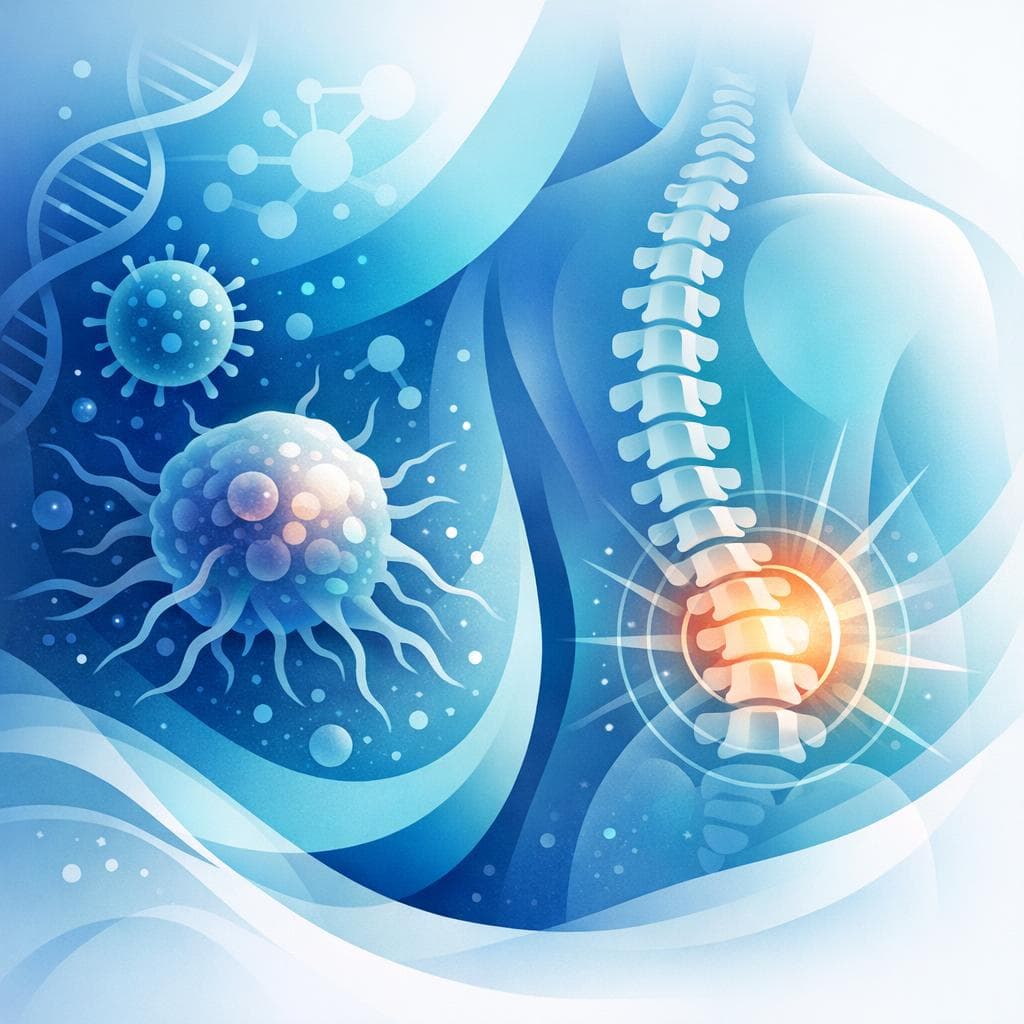
Back pain can be related to cancer, but it is not the most common reason for back pain overall. Most back pain comes from non-cancer causes like muscle strain or degenerative spine changes; however, certain cancers can cause back pain directly or by spreading to the spine and nerves. When back pain is new, persistent, worse at night, or accompanied by neurologic changes, it may be a warning sign that deserves prompt medical evaluation. [1]
How often cancer causes back pain
- Spinal tumors (often metastases) commonly present first with back pain, which may be persistent and progressive. [2]
- Cancer spreading to the spine can cause mechanical instability and nerve compression, leading to pain that is often worse at night or early morning. [2]
- Multiple myeloma frequently causes bone pain involving the spine and ribs, leading to backaches and sometimes shooting pain if the spine is affected. [3]
- Pancreatic cancer can cause lower back pain by irritating nearby nerves or spreading to the spine. [4] [5]
Why cancer can cause back pain
- Direct pressure or destruction of bone and soft tissue by a tumor can trigger nociceptive pain (the body’s response to tissue injury), often felt as aching or sharp pain in a specific area. [6] [7]
- Spinal metastases weaken vertebrae and can compress the spinal cord or nerve roots, producing pain and sometimes neurologic symptoms like numbness, weakness, or bowel/bladder changes. [8] [2]
- Neuropathic pain occurs when tumors press on or injure nerves, causing burning, shooting, or electric-like pain. [9]
- Visceral pain from internal organ involvement (for example, pancreas or liver) can refer pain to the back and may be hard to pinpoint. [7]
- Treatment-related pain (after surgery, or less commonly after chemotherapy, immunotherapy, or radiation) can also contribute. [10]
Red flags: when to seek urgent care
- Back pain that is worse at night or not relieved by rest. [1]
- New back pain in someone with a history of cancer. [1]
- Back pain with muscle weakness, numbness, tingling in the legs, or loss of bowel/bladder control, which may suggest spinal cord compression. [1]
- Persistent or progressive pain over weeks, especially with unexplained weight loss or systemic symptoms. [1]
In people with known cancer, new back pain should be assumed to be possible spinal metastasis until proven otherwise, especially if there are signs of cord compression. [11]
How cancer-related back pain is evaluated
- History and physical exam to characterize the pain (location, timing, night pain, neurologic symptoms) and identify red flags. [12]
- Imaging (MRI of the spine is preferred when cord or nerve compression is suspected; CT or bone scans may be used to assess bone integrity and metastases). Advances in imaging help identify pain causes more conclusively. [12]
- Laboratory tests and cancer-specific evaluations when conditions like multiple myeloma or pancreatic involvement are suspected, guided by symptoms and exam. [3] [4] [5]
Management options
Management depends on the cause (tumor location, type, presence of instability or nerve compression) and the dominant pain mechanism (nociceptive vs neuropathic). A multimodal approach is usually best. [13]
Treat the underlying cause
- Radiation therapy for painful bone metastases or spinal cord compression to shrink tumors and relieve pain. [8]
- Surgery (decompression, stabilization, or minimally invasive procedures like vertebroplasty) when there is mechanical instability, pathologic fracture, or progressive neurologic deficits. These interventions can relieve pain and preserve function in selected cases. [14] [15]
- Systemic therapy (chemotherapy, targeted therapy, immunotherapy, hormonal therapy) to control tumor burden and reduce pain. [12]
Relieve pain and improve function
- Analgesic medications tailored to pain type:
- Nociceptive pain: acetaminophen, NSAIDs, and, when necessary, opioids following oncology-specific guidance. Cancer pain often requires careful opioid use with monitoring and education. [16] [13]
- Neuropathic pain: agents like gabapentinoids (gabapentin/pregabalin), certain antidepressants (duloxetine, amitriptyline) for nerve-related pain. [9]
- Interventional pain procedures (nerve blocks, epidural steroids, vertebral augmentation) for selected patients with focal pain or instability. [8]
- Physical therapy and rehabilitation to reduce pain, restore mobility, improve posture, and prevent deconditioning; rehabilitation is crucial and can meaningfully improve quality of life in spinal metastasis. [17] [18]
- Supportive measures: bracing for spinal stability, bowel regimen when using opioids, and psychological support to manage the emotional burden of chronic pain. [13]
- Specialist pain care: Comprehensive cancer pain services can address severe, persistent, or complex pain and provide advanced therapies. Dedicated teams aim to keep you as comfortable as possible. [4]
Practical tips for differentiating cancer-related from mechanical back pain
- Cancer-related back pain is more likely if it is unrelenting, worse at night, or associated with neurologic signs, weight loss, or a known cancer history. [1]
- Mechanical pain typically improves with rest, posture changes, or gentle activity; pain mainly with standing or sitting may indicate spinal instability from a tumor. [2]
- Accurate pain typing visceral, somatic (bone), or neuropathic guides targeted therapy and improves outcomes. [7] [19]
Bottom line
- Most back pain is not due to cancer, but certain cancers commonly cause back pain, especially when they involve the spine or nearby nerves. [2]
- Recognizing red flags and getting timely evaluation (often with MRI) is essential, particularly in people with known cancer or new night pain. [1] [12]
- Management is individualized and often multimodal, combining tumor-directed treatments, pain medications, interventional procedures, and rehabilitation to reduce pain and maintain function. [8] [13] [17]
Related Questions
Related Articles
Sources
- 1.^abcdefgSymptoms and causes - Mayo Clinic(mayoclinic.org)
- 2.^abcdeSpine Tumors & Spinal Cancer(mskcc.org)
- 3.^abMultiple Myeloma Symptoms(mskcc.org)
- 4.^abcPancreatic Cancer Symptoms & Signs | Memorial Sloan Kettering Cancer Center(mskcc.org)
- 5.^abPancreatic Cancer Symptoms & Signs | Memorial Sloan Kettering Cancer Center(mskcc.org)
- 6.^↑Causes of Cancer Pain(mskcc.org)
- 7.^abcCauses of Cancer Pain(mskcc.org)
- 8.^abcdSpine Tumors & Spinal Cancer(mskcc.org)
- 9.^abCauses of Cancer Pain(mskcc.org)
- 10.^↑Causes of Cancer Pain(mskcc.org)
- 11.^↑Mitigating Morbidities with Modern Approaches to Spinal Metastases(mskcc.org)
- 12.^abcdCauses of Cancer Pain(mskcc.org)
- 13.^abcdPain Among Cancer Survivors(cdc.gov)
- 14.^↑Scoring Algorithms for Predicting Survival Prognosis in Patients With Metastatic Spinal Disease: The Current Status and Future Directions.(pubmed.ncbi.nlm.nih.gov)
- 15.^↑Patterns of Treatment for Metastatic Pathological Fractures of the Spine: The Efficacy of Each Treatment Modality.(pubmed.ncbi.nlm.nih.gov)
- 16.^↑Pain Among Cancer Survivors(cdc.gov)
- 17.^abRehabilitation: A Crucial Factor in Care of Patients with Spinal Metastasis(mskcc.org)
- 18.^↑Rehabilitation: A Crucial Factor in Care of Patients with Spinal Metastasis(mskcc.org)
- 19.^↑Causes of Cancer Pain(mskcc.org)
Important Notice: This information is provided for educational purposes only and is not intended to replace professional medical advice, diagnosis, or treatment. Always consult with a qualified healthcare provider before making any medical decisions.