
 Persly Medical Team
Based on PubMed | In advanced-stage bile duct cancer, how common is abdominal bloating and what are the typical causes?
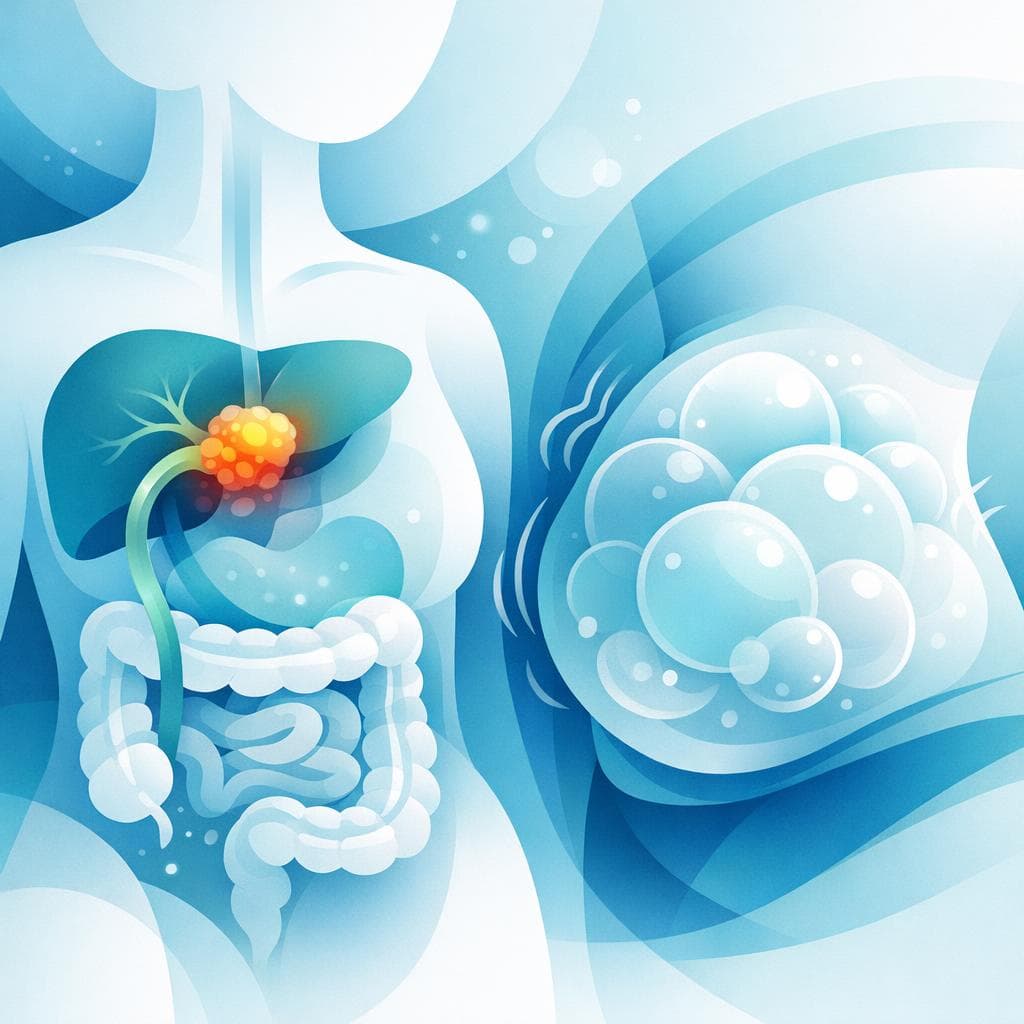
Abdominal bloating is fairly common in advanced bile duct cancer, though exact incidence is not well quantified. Typical drivers include ascites from peritoneal spread or portal hypertension, liver enlargement/dysfunction, partial or complete bowel obstruction, and constipation or treatment-related dysmotility; clinicians assess with exam and imaging (and paracentesis for ascites) and manage by draining fluid, relieving obstructions, optimizing biliary drainage, and using bowel regimens.
Abdominal bloating in advanced bile duct cancer
Abdominal bloating (the feeling of fullness or a visibly distended belly) is fairly common in advanced bile duct cancer, but exact percentages are not well documented in public-facing clinical references. Most advanced cases are diagnosed late and often come with symptoms like jaundice, pain, appetite loss, and weight loss, and bloating tends to arise as the disease spreads or complications develop. [1] [2] Because bile duct cancer is often advanced at diagnosis and can involve the liver and peritoneum (the abdominal lining), several mechanisms can lead to abdominal distension. [2] [3]
Why bloating happens
Multiple overlapping issues can cause or worsen abdominal bloating/distension in advanced bile duct cancer. [3]
- Ascites (fluid buildup in the abdomen): This is one of the most frequent causes of a “swollen” abdomen in advanced cancers of the abdomen, including biliary cancers. Ascites leads to abdominal distension, early fullness, nausea, shortness of breath, leg swelling, and weight gain. It can result from cancer spread to the peritoneum, blockage of lymphatic drainage, portal vein problems, or liver dysfunction. [4] In the context of advanced bile duct cancer, peritoneal carcinomatosis and liver-related portal hypertension are common pathways to ascites. [4]
- Enlarged liver (hepatomegaly) or liver failure: As the tumor grows within or near the liver, the liver can enlarge, adding to a sense of fullness and pressure. Advanced disease often centers on restoring bile flow and managing liver-related complications, highlighting how liver involvement can drive abdominal symptoms. [3]
- Bowel obstruction or partial blockage: Cancer spread, postoperative changes, or treatment effects can narrow parts of the bowel, causing trapped gas, distension, nausea, and vomiting. Intestinal obstruction is a recognized complication in advanced abdominal cancers and may require medical therapy or decompression when high-grade. [5] In cholangiocarcinoma, obstruction of adjacent gastrointestinal segments can occasionally occur and contribute to bloating. [6]
- Constipation and slowed gut movement: Pain medicines (especially opioids) and reduced activity commonly slow the bowel, leading to gas trapping and distension. Constipation is frequent and distressing in advanced cancer, with opioids being a major contributor, and it can markedly worsen bloating. [7]
- Biliary obstruction and cholangitis-related factors: Blocked bile ducts cause systemic illness and can limit chemotherapy options; treatments to drain bile are central to palliation and can indirectly affect gastrointestinal function and fluid balance. Managing malignant biliary obstruction (for example, with stents) is key to quality of life, though the obstruction itself does not directly cause gas bloating; associated illness and treatments may contribute to overall abdominal discomfort and fluid shifts. [8] [3]
- Treatment-related factors (chemotherapy, stents, locoregional therapy): Systemic therapy (such as gemcitabine/cisplatin) and locoregional treatments may cause nausea, reduced motility, or fluid retention in some individuals, which can present as bloating. Endoscopic biliary stenting is a mainstay for advanced cholangiocarcinoma to relieve jaundice; while it improves bile flow, coexisting factors like constipation or ascites can still lead to distension. [3] [8]
How common is it?
- Precise, population-level figures for “bloating” or “abdominal distension” in advanced bile duct cancer are not consistently reported in standard references. [1] [2] However, ascites and bowel motility problems are well-recognized in advanced intra-abdominal cancers and likely account for a substantial proportion of abdominal distension in advanced cholangiocarcinoma. [4] [5]
- Because cholangiocarcinoma is often diagnosed only after it has spread beyond the bile ducts, complications that drive bloating such as peritoneal involvement, liver dysfunction, and treatment-related constipation are not uncommon in the advanced setting. [2] [3]
What to look for
- Ascites clues: Progressive increase in abdominal girth, early satiety, weight gain despite poor appetite, ankle swelling, and shortness of breath when lying flat. [4]
- Bowel obstruction clues: Crampy abdominal pain, persistent vomiting, failure to pass gas or stool, and abdominal swelling especially if prior surgeries or known peritoneal disease are present. [5]
- Constipation clues: Fewer bowel movements, straining, hard stools, or a feeling of incomplete evacuation often in the context of opioid use. [7]
- Liver/biliary clues: Worsening jaundice (yellowing of eyes/skin), dark urine, pale/greasy stools, itching, fever (with cholangitis), and fatigue signs that biliary drainage and liver function need reassessment. [1] [9]
How clinicians evaluate bloating
- Clinical exam and imaging: Abdominal ultrasound or CT can identify ascites, liver enlargement, masses, or obstruction. These tests are routine for suspected cholangiocarcinoma complications and to check for blockages. [1]
- Paracentesis for ascites: Sampling fluid can distinguish malignant/peritoneal causes from portal hypertension and guide treatment. Key lab tests include cell counts, albumin/protein, and cytology to look for cancer cells. [4]
- Biliary assessment: Ultrasound, CT, MRCP, and procedures like ERCP are used to diagnose and relieve biliary obstruction when present. Effective drainage can improve overall status and may reduce downstream gastrointestinal issues. [1] [8]
Management approaches
- Ascites:
- Bowel obstruction:
- Constipation and dysmotility:
- Regular bowel regimen (stool softeners, stimulant laxatives), hydration, activity as tolerated; consider peripherally acting opioid antagonists when opioids are necessary. [7]
- Biliary obstruction:
- Cancer-directed therapy:
- In advanced cholangiocarcinoma, combinations like gemcitabine/cisplatin are standard, and locoregional therapies may be used for palliation; these can improve systemic symptoms even if they do not directly resolve bloating. [3]
Key takeaways
- Abdominal bloating/distension is common in advanced bile duct cancer, though precise rates are not clearly quantified in general medical references. [1] [2]
- The most typical causes are ascites, liver enlargement/failure, partial or complete bowel obstruction, treatment-related constipation, and overall reduced gut motility. [4] [5] [7] [3]
- Evaluation focuses on imaging and, for fluid, paracentesis; management targets the underlying cause draining fluid, relieving obstructions, optimizing biliary drainage, and controlling constipation. [4] [5] [8] [3]
Table: Common causes of bloating in advanced bile duct cancer and how they’re managed
-
Cause: Ascites
Typical signs: Increased abdominal girth, early satiety, dyspnea, leg edema
Usual evaluation: Ultrasound/CT, diagnostic paracentesis (albumin, protein, cytology)
Typical management: Paracentesis, diuretics when appropriate, cause-directed therapy [4] -
Cause: Enlarged liver/liver dysfunction
Typical signs: Fullness under right ribs, fatigue, jaundice
Usual evaluation: Imaging, liver tests
Typical management: Optimize biliary drainage, supportive liver care [3] -
Cause: Bowel obstruction (partial/complete)
Typical signs: Distension, crampy pain, vomiting, constipation/obstipation
Usual evaluation: Clinical exam, abdominal X-ray/CT
Typical management: Medical therapy; venting procedures or surgery for select cases [5] -
Cause: Constipation/dysmotility (often opioid-related)
Typical signs: Infrequent, hard stools; straining; bloating
Usual evaluation: History, exam; X-ray if unclear
Typical management: Laxatives, stool softeners, prokinetics, opioid antagonists as needed [7] -
Cause: Biliary obstruction and treatment dynamics
Typical signs: Jaundice, dark urine, pale stools, itching; systemic decline
Usual evaluation: Ultrasound/CT, MRCP/ERCP
Typical management: Endoscopic or percutaneous drainage/stenting; metal stents often preferred [8] [3]
References
- Cholangiocarcinoma symptoms, evaluation, and late presentation. [1] [2]
- Palliative strategies and stenting in advanced cholangiocarcinoma. [3] [8]
- Ascites in gastrointestinal malignancies: causes, symptoms, and evaluation. [4]
- Intestinal obstruction in advanced abdominal cancers: symptom control and procedures. [5]
- Constipation in advanced cancer: frequency and management. [7]
Related Questions
Related Articles



Sources
- 1.^abcdefgCholangiocarcinoma: MedlinePlus Medical Encyclopedia(medlineplus.gov)
- 2.^abcdefCholangiocarcinoma: MedlinePlus Genetics(medlineplus.gov)
- 3.^abcdefghijklmThe palliation of cholangiocarcinoma.(pubmed.ncbi.nlm.nih.gov)
- 4.^abcdefghijkManagement of ascites due to gastrointestinal malignancy.(pubmed.ncbi.nlm.nih.gov)
- 5.^abcdefghiIntestinal obstruction.(pubmed.ncbi.nlm.nih.gov)
- 6.^↑담관암(Cholangiocarcinoma) | 질환백과 | 의료정보 | 건강정보(amc.seoul.kr)
- 7.^abcdefConstipation in advanced cancer patients.(pubmed.ncbi.nlm.nih.gov)
- 8.^abcdefgCholangiocarcinoma of the Hepatic Hilum (Klatskin Tumor).(pubmed.ncbi.nlm.nih.gov)
- 9.^↑Bile Duct Cancer(medlineplus.gov)
Important Notice: This information is provided for educational purposes only and is not intended to replace professional medical advice, diagnosis, or treatment. Always consult with a qualified healthcare provider before making any medical decisions.