
 Persly Medical Team
Based on WHO | Is headache a possible symptom of adrenal cancer, and what underlying hormonal or blood pressure changes associated with adrenal tumors might cause it?
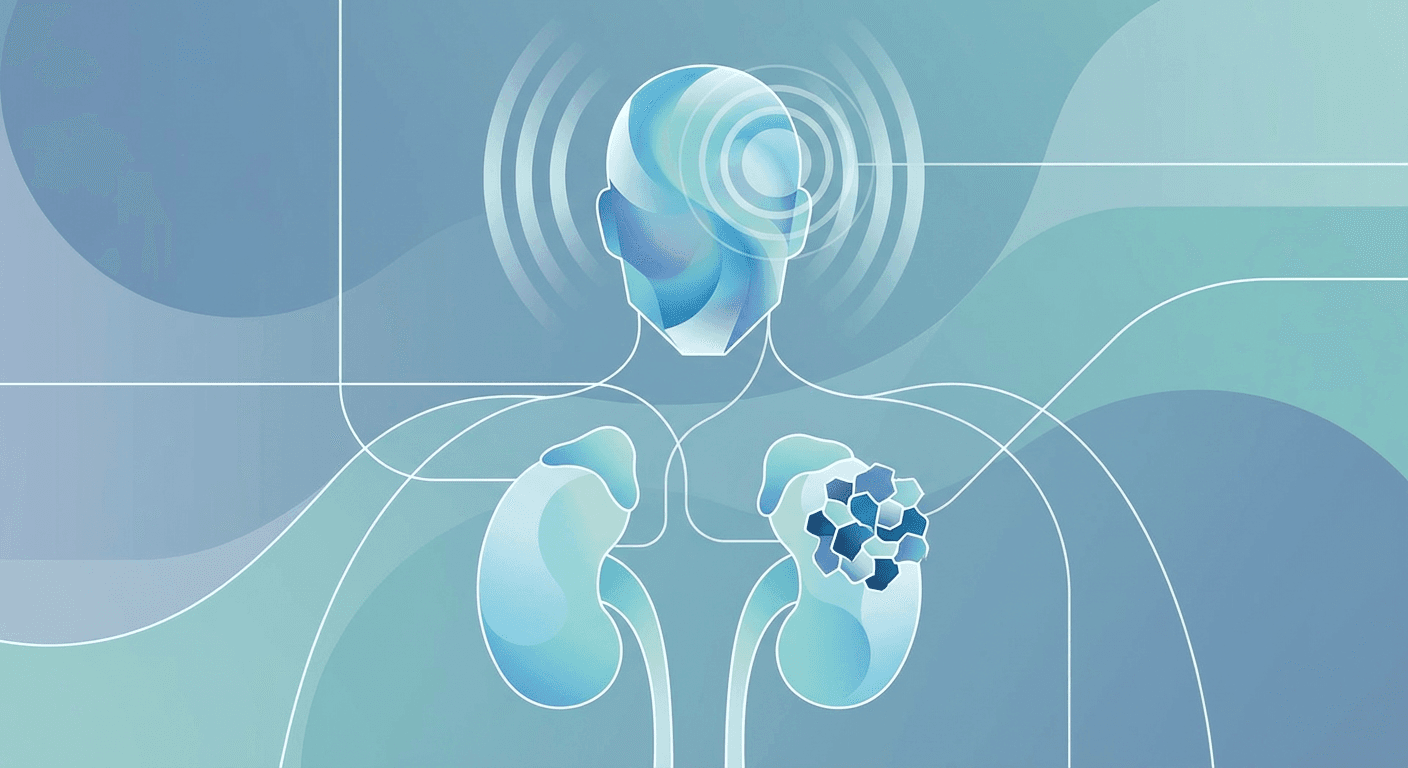
Headache can be a symptom of adrenal tumors, especially pheochromocytoma, where catecholamine surges trigger episodic spikes in blood pressure. Excess aldosterone or cortisol can cause sustained hypertension and electrolyte changes that contribute to headaches; treating the hormonal imbalance and blood pressure often reduces symptoms.
Overview
Headache can be a possible symptom associated with adrenal tumors, particularly those that increase certain hormones and raise blood pressure. [1] Adrenal tumors vary widely; some are benign and some are malignant (adrenocortical carcinoma), and the likelihood and mechanism of headache depend on the hormone(s) the tumor produces. [2] Two major pathways link adrenal tumors to headaches: catecholamine surges from pheochromocytoma and hypertension or electrolyte changes from excess aldosterone or cortisol. [3] [4]
How Adrenal Tumors Can Cause Headaches
-
Catecholamine excess (pheochromocytoma): Tumors in the adrenal medulla can release large amounts of epinephrine and norepinephrine, causing episodic spikes in blood pressure, rapid heartbeat, sweating, anxiety, and severe headaches. [1] These headaches often occur with “attacks” marked by high blood pressure, heavy sweating, and a fast heartbeat. [3] Headaches in pheochromocytoma are classically linked to sudden transient blood pressure rises and vasoconstriction in cranial vessels. [5]
-
Hypertension from aldosterone or cortisol: Some adrenal tumors increase aldosterone (primary aldosteronism, Conn syndrome) or cortisol (Cushing syndrome), leading to sustained high blood pressure, which can contribute to headaches over time. [4] Aldosterone-producing tumors typically cause high blood pressure with low potassium and can include headache among symptoms. [6] Sustained hypertension itself is a well-known trigger for pressure-type headaches. [7]
-
Systemic stress response: Excess adrenal hormones amplify the body’s stress response (fight-or-flight), which may lead to vascular changes, muscle tension, and dehydration that can manifest as headaches. [1] In pheochromocytoma, this heightened stress hormone state frequently presents with headaches alongside palpitations and sweating. [3]
Symptom Patterns by Tumor Type
Pheochromocytoma (Adrenal Medulla Tumor)
- Common symptoms: Headaches, high blood pressure, heavy sweating, palpitations, anxiety, and pallor. [3] [8]
- Mechanism: Excess catecholamines (epinephrine, norepinephrine) causing rapid, episodic hypertension and vasoconstriction of cranial vessels. [9] [5]
- Clinical note: Nearly all patients are symptomatic; headaches are one of the most frequent complaints. [10] Biochemical tests typically show elevated catecholamines or their metabolites. [11]
Aldosterone-Producing Tumor (Conn Syndrome)
- Common symptoms: High blood pressure, low potassium, weakness, increased thirst/urination; headache can occur due to the hypertension. [12] [6]
- Mechanism: Aldosterone makes kidneys retain salt and water, raising blood pressure and lowering potassium, which can contribute to neuromuscular symptoms and headaches. [7] [6]
Adrenocortical Carcinoma (ACC) or Cortisol-Producing Tumors
- Common symptoms: Features of Cushing syndrome weight gain, muscle weakness, easy bruising, high blood pressure, and high blood sugar. [4]
- Mechanism: Excess cortisol increases blood pressure and alters vascular reactivity; secondary hypertension may lead to headaches. [4] ACC can also produce sex hormones, and more rarely aldosterone, further affecting blood pressure and electrolytes. [13]
Diagnostic Clues and Testing
-
Biochemical testing:
-
Imaging: CT or MRI of adrenal glands; functional imaging (e.g., MIBG) for catecholamine-producing tumors when needed. [11]
-
Genetic considerations: A proportion of pheochromocytomas and paragangliomas are hereditary; genetic screening may be recommended. [14] Hereditary forms often present with headaches, palpitations, and sweating due to catecholamine excess. [15]
Management and Impact on Headaches
-
Pheochromocytoma: Surgical removal after preoperative alpha-blockade often normalizes blood pressure and reduces headaches. [3] Controlling catecholamine surges typically resolves episodic headaches. [11]
-
Hyperaldosteronism (Conn syndrome): Treating the aldosterone excess (surgery for aldosteronoma or medical therapy) improves blood pressure and may lessen headaches. [12] Addressing low potassium is important for symptom relief. [6]
-
Cortisol-producing tumors/ACC: Managing hormonal excess and treating the tumor can reduce hypertension-related headaches; ACC may require surgery, mitotane, and other therapies when resection is not feasible. [4] Persistent hormone excess in ACC warrants aggressive hormone-blocking strategies to mitigate complications. [16]
Quick Comparison Table
| Adrenal tumor type | Typical hormones | Blood pressure effect | Headache tendency | Key associated symptoms |
|---|---|---|---|---|
| Pheochromocytoma | Catecholamines (epinephrine, norepinephrine) [9] | Sudden spikes (paroxysmal hypertension) [3] | Common and often severe [10] [5] | Sweating, palpitations, anxiety, pallor [3] [8] |
| Aldosteronoma (Conn syndrome) | Aldosterone [12] | Sustained hypertension; low potassium [6] | Possible via hypertension [6] | Weakness, thirst/urination, hypokalemia [12] |
| Cortisol-producing ACC | Cortisol (sometimes aldosterone or sex hormones) [4] [13] | Sustained hypertension [4] | Possible via hypertension [4] | Weight gain, muscle weakness, bruising, high blood sugar [4] |
Key Takeaways
- Headache can be a symptom of adrenal tumors, most notably in pheochromocytoma, where catecholamine surges cause episodic, severe headaches with sweating and palpitations. [3] [10]
- Sustained high blood pressure from cortisol or aldosterone excess can also contribute to headaches, even if they are less dramatic than pheochromocytoma attacks. [4] [6]
- Identifying the underlying hormone pattern (catecholamines, aldosterone, cortisol) guides testing and treatment, which often alleviates headache by normalizing blood pressure and hormone levels. [11] [3] [12] [4]
If you’d like help interpreting your symptoms or lab results, I can walk you through which tests and signs point toward each adrenal tumor type.
Related Questions
Related Articles
Sources
- 1.^abcAdrenal Tumors(nyulangone.org)
- 2.^↑Adrenal cancer - Symptoms and causes(mayoclinic.org)
- 3.^abcdefghiSymptoms and causes - Mayo Clinic(mayoclinic.org)
- 4.^abcdefghijklSymptoms and causes - Mayo Clinic(mayoclinic.org)
- 5.^abcSymptoms of pheochromocytoma, with particular reference to headache, correlated with catecholamine production.(pubmed.ncbi.nlm.nih.gov)
- 6.^abcdefghPrimary and secondary hyperaldosteronism: MedlinePlus Medical Encyclopedia(medlineplus.gov)
- 7.^abSecondary hypertension-Secondary hypertension - Symptoms & causes - Mayo Clinic(mayoclinic.org)
- 8.^abPheochromocytomas & Paragangliomas(mskcc.org)
- 9.^abPheochromocytomas & Paragangliomas(mskcc.org)
- 10.^abcDiagnosis and management of pheochromocytoma.(pubmed.ncbi.nlm.nih.gov)
- 11.^abcde[Pheochromocytoma - still a challenge].(pubmed.ncbi.nlm.nih.gov)
- 12.^abcdeAldosteronomas & Conn Syndrome(mskcc.org)
- 13.^abAdrenal cancer - Symptoms and causes(mayoclinic.org)
- 14.^↑Pheochromocytoma: a review.(pubmed.ncbi.nlm.nih.gov)
- 15.^↑Hereditary paraganglioma-pheochromocytoma: MedlinePlus Genetics(medlineplus.gov)
- 16.^↑Management of endocrine manifestations and the use of mitotane as a chemotherapeutic agent for adrenocortical carcinoma.(pubmed.ncbi.nlm.nih.gov)
Important Notice: This information is provided for educational purposes only and is not intended to replace professional medical advice, diagnosis, or treatment. Always consult with a qualified healthcare provider before making any medical decisions.