
 Persly Medical Team
Based on WHO | Can adrenal cancer cause back pain, and what features of the pain suggest it might be tumor-related rather than routine musculoskeletal strain?
Adrenal cancer can cause back pain via local mass effect from a large adrenal tumor or metastasis to the spine or ribs, and pain may improve after tumor removal. Red flags include persistent, progressive, non-mechanical or nighttime pain, a history of cancer, neurological deficits, and systemic/hormonal signs. These features warrant prompt medical evaluation and imaging.
Can Adrenal Cancer Cause Back Pain? Key Signs That Suggest Tumor-Related Pain
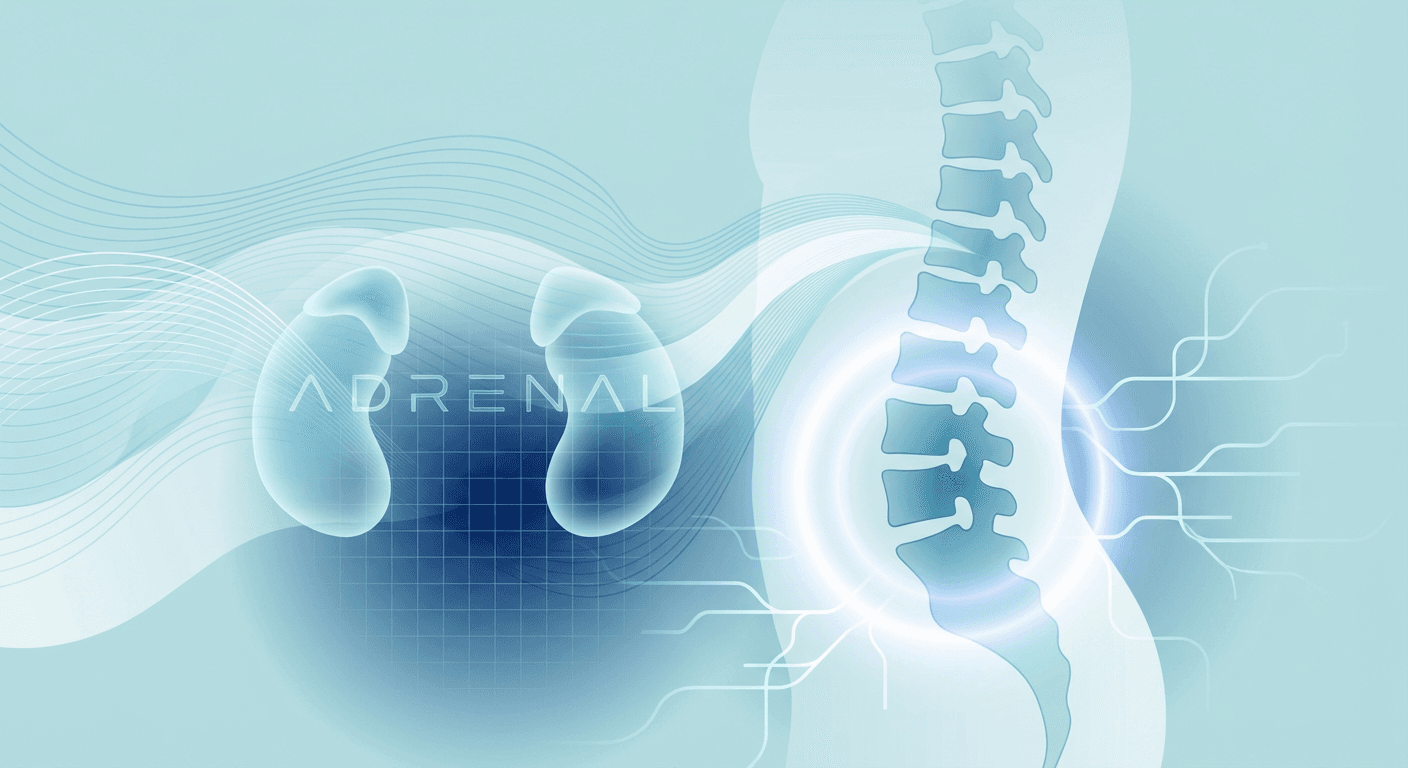
Yes, adrenal cancer can cause back pain, especially when the tumor grows large enough to press on nearby structures or when it spreads (metastasizes) to other areas such as the spine or ribs. Back pain is a recognized symptom of adrenal cancer alongside abdominal (belly) pain and unintended weight loss. [1] Back pain may improve after surgical removal of the tumor if the pain is due to mass effect, highlighting its link to tumor size and local invasion. [2] When adrenal tumors become large whether benign or malignant they can compress adjacent organs and tissues, leading to pain in the abdomen, side (flank), or back. [3]
How Adrenal Cancer Leads to Back Pain
- Local mass effect: Adrenal cancers often present late and can be large at diagnosis, which makes them more likely to push on nearby tissues and cause pain. [4] As tumors grow, surgery may be recommended to relieve symptoms such as belly and back pain caused by the tumor’s size and pressure effect. [5]
- Spread to bone (spine or ribs): Adrenocortical carcinoma can metastasize to bone, causing focal bone pain and sometimes fractures; bone metastases have been documented in case reports and series. [6] Bone metastases can occur very early after surgery in aggressive cases and present with chest or back pain. [7]
- Spinal involvement: When cancer spreads to the vertebrae, it can cause back pain that is often persistent and may worsen at night; it can also cause neurological symptoms if the spinal cord or nerves are compressed. [8] Back pain is commonly the first sign of spinal cord compression from vertebral tumors. [9]
Tumor-Related Back Pain vs. Routine Musculoskeletal Strain
While most back pain is due to common causes like muscle strain or disc issues, certain features raise concern for a tumor-related cause.
Features Suggesting Tumor-Related Pain
- Persistent, progressive pain: Pain that is constant and getting worse over time rather than improving with rest or typical care can signal a tumor. [8]
- Pain not tied to activity: Discomfort that doesn’t correlate with movement, lifting, or posture changes is more suspicious for non-mechanical causes. [8]
- Night pain: Pain that is worse at night or wakes you from sleep is a classic warning sign of vertebral tumors and spinal metastases. [8] [10]
- New back pain with a history of cancer: If you have (or previously had) a cancer diagnosis, new unexplained back pain carries a higher likelihood of malignancy and warrants prompt evaluation. [11] Systematic reviews show that a history of malignancy is the single most informative “red flag” for detecting spinal cancer among people presenting with low back pain. [12] [13]
- Neurological symptoms: Weakness, numbness, difficulty walking, or bowel/bladder changes suggest spinal cord or nerve compression and need urgent assessment. [11] Spinal cord compression from vertebral tumors often starts with back pain and can progress to these symptoms. [14]
- Systemic signs and hormonal changes: Unintended weight loss, loss of appetite, or features of hormone excess (for example, Cushing’s syndrome signs like easy bruising, high blood pressure, high blood sugar, or virilization) can accompany adrenal cancer. [15] Many adrenal cancers secrete excess hormones, and these endocrine clues together with back pain strengthen suspicion. [1]
Features Favoring Routine Musculoskeletal Strain
- Clear mechanical trigger: Pain that started after lifting, twisting, or exercise and improves with rest or gentle movement is more typical of strain.
- Short-lived course: Symptoms that steadily improve over days to a few weeks with conservative measures (heat, gentle stretching, over-the-counter analgesics) are less concerning.
- Positional variability: Pain that changes significantly with posture or activity and is relieved by certain positions often suggests a mechanical origin.
When to Seek Medical Attention
You should consider prompt medical evaluation if you notice any of the following:
- Constant back pain getting worse, especially at night or not linked to activity. [8] [10]
- New back pain with current or past cancer, including known adrenal tumors. [11] [12]
- Neurological red flags: New weakness in the arms or legs, numbness in the saddle area (groin and inner thighs), or loss of bowel/bladder control these require urgent care. [11]
- Systemic or endocrine signs: Unintended weight loss, loss of appetite, or signs of hormone excess alongside back pain. [15] [1]
How Doctors Evaluate Suspected Tumor-Related Back Pain
- Clinical assessment: A detailed history and physical exam look for red flags like night pain, neurological deficits, and a history of cancer, which meaningfully increases the probability of malignancy compared with other red flags. [13] [12]
- Imaging: If red flags are present, MRI of the spine is typically prioritized because it best shows tumors, spinal cord compression, and bone involvement. [16] Tumors in the adrenal gland are often large at presentation and are readily detected and staged with CT; MRI helps clarify vascular involvement. [17]
- Lab and endocrine workup: Because many adrenal cancers secrete hormones, testing for cortisol and androgen excess can support diagnosis and guide treatment. [18]
- Definitive management: Surgical removal of the adrenal tumor (adrenalectomy) is the primary treatment and can relieve mass-effect pain; further treatments may address spread to bone or other organs. [2] [5]
Practical Tips
- Track your symptoms: Note whether the pain is constant, wakes you at night, or is accompanied by weight loss or neurological changes these details help your clinician decide on urgent imaging and workup. [8] [11]
- Don’t ignore red flags: New back pain in someone with current or prior cancer warrants timely medical review because a prior malignancy substantially raises the chance of spinal cancer among people with back pain. [12] [13]
- Know that not all adrenal tumors are cancer: Many adrenal growths are benign (such as adrenal adenomas), but even benign tumors can grow large enough to cause compression-related back pain. [15] [3]
Summary Table: Pain Features Tumor-Related vs. Musculoskeletal
| Feature | Suggests Tumor-Related Pain | Suggests Musculoskeletal Strain |
|---|---|---|
| Pattern | Constant, progressively worsening pain [8] | Improves over days to weeks |
| Relation to activity | Not tied to movement or posture [8] | Clearly linked to lifting/twisting; positional |
| Night symptoms | Worse at night or wakes from sleep [8] [10] | Typically better at rest/sleep |
| Cancer history | New pain with current/past cancer increases likelihood of malignancy [11] [12] | No cancer history |
| Neuro signs | Weakness, numbness, bowel/bladder changes (urgent) [11] [14] | Absent |
| Systemic/endocrine signs | Weight loss, appetite loss, hormone excess signs with back pain [15] [1] | Absent |
| Imaging triggers | MRI/CT needed when red flags present [16] | Usually no imaging initially |
Bottom Line
Back pain can be a symptom of adrenal cancer, typically from a large adrenal mass or spread to the spine and bones. [1] Surgery can help relieve pain caused by tumor size and pressure, underscoring the link between mass effect and symptoms. [2] Persistent, non-mechanical, nighttime pain especially with a cancer history or neurological changes should prompt timely medical evaluation and imaging to rule out tumor-related causes. [8] [11] [10]
Related Questions
Related Articles

Sources
- 1.^abcdeSymptoms and causes - Mayo Clinic(mayoclinic.org)
- 2.^abcAdrenal cancer - Diagnosis and treatment(mayoclinic.org)
- 3.^abDiagnosing Adrenal Tumors(nyulangone.org)
- 4.^↑Adrenocortical carcinoma.(pubmed.ncbi.nlm.nih.gov)
- 5.^abAdrenal cancer - Diagnosis and treatment(mayoclinic.org)
- 6.^↑Adrenocortical carcinoma with skeletal metastases in a postmenopausal woman.(pubmed.ncbi.nlm.nih.gov)
- 7.^↑[Adrenocortical carcinoma with intratumoral hemorrhage detected from chest and back pain: a case report].(pubmed.ncbi.nlm.nih.gov)
- 8.^abcdefghijVertebral tumor - Symptoms and causes(mayoclinic.org)
- 9.^↑Symptoms and causes - Mayo Clinic(mayoclinic.org)
- 10.^abcdSymptoms and causes - Mayo Clinic(mayoclinic.org)
- 11.^abcdefghVertebral tumor - Symptoms and causes(mayoclinic.org)
- 12.^abcdeRed flags to screen for malignancy and fracture in patients with low back pain: systematic review.(pubmed.ncbi.nlm.nih.gov)
- 13.^abcRed flags to screen for malignancy in patients with low-back pain.(pubmed.ncbi.nlm.nih.gov)
- 14.^abVertebral tumor - Symptoms and causes(mayoclinic.org)
- 15.^abcdAdrenal cancer - Symptoms and causes(mayoclinic.org)
- 16.^abMRI and low back pain: MedlinePlus Medical Encyclopedia(medlineplus.gov)
- 17.^↑Adrenal carcinoma.(pubmed.ncbi.nlm.nih.gov)
- 18.^↑[Adrenocortical carcinoma].(pubmed.ncbi.nlm.nih.gov)
Important Notice: This information is provided for educational purposes only and is not intended to replace professional medical advice, diagnosis, or treatment. Always consult with a qualified healthcare provider before making any medical decisions.