
 Persly Medical Team
Based on NIH | Does drinking milk reduce the risk of osteoporosis in postmenopausal women?
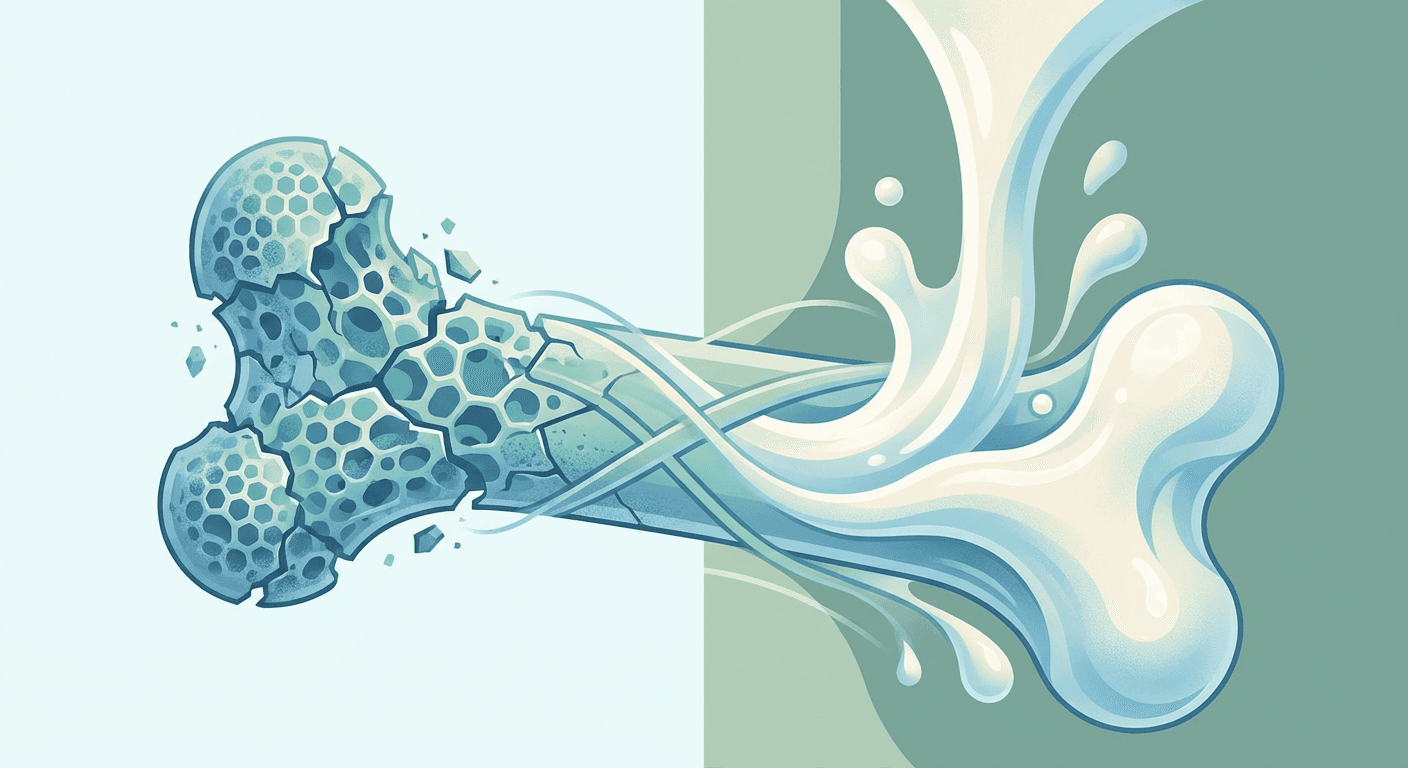
Milk can help postmenopausal women meet calcium needs and support bone health, especially with adequate vitamin D. However, milk alone has not consistently reduced fracture risk; benefits are stronger when dairy is fortified and combined with vitamin D. The best approach includes 1,200 mg calcium daily, sufficient vitamin D, weight-bearing exercise, and healthy lifestyle habits.
Milk can help you meet your calcium needs after menopause, which supports bone health, but simply “drinking milk” by itself has not consistently been shown to lower fracture risk in postmenopausal women. [1] [2]
What the evidence shows
- Calcium and vitamin D matter. After menopause, most guidelines recommend about 1,200 mg of calcium per day and adequate vitamin D to help the body absorb calcium, because estrogen loss accelerates bone loss. [3] [4]
- Milk is a convenient calcium source. Dairy foods such as milk, yogurt, and cheese provide easily absorbed calcium and other bone-supporting nutrients (protein, phosphorus; vitamin D when fortified). [5] [1]
- Fracture risk evidence is mixed. A large meta-analysis of cohort studies found no overall association between milk intake and hip fracture risk in women (risk per additional glass per day was essentially neutral). [2]
- Bone density may improve with dairy. Observational research links higher milk/yogurt intake with higher hip bone mineral density, though this did not translate into clear fracture reduction in the same cohorts. [6]
- Fortified dairy plus vitamin D can help markers and BMD. Small randomized interventions using fortified dairy delivering ~1,200 mg calcium plus vitamin D showed favorable changes in bone turnover and total body BMD in postmenopausal women. [7]
- Lifestyle is critical. Weight-bearing/resistance exercise, not smoking, and moderating alcohol are key alongside calcium/vitamin D, because bone health is multifactorial. [8] [3]
Bottom line
- Reasonable dairy intake can be part of an overall bone-health plan, helping you reach calcium targets and potentially supporting bone density, especially when vitamin D is adequate. [5] [7]
- Milk alone is unlikely to be a “silver bullet” for preventing fractures, based on current cohort evidence in women. [2]
- Aim for the broader strategy: enough calcium (from dairy or alternatives), vitamin D, exercise, and healthy habits; consider medications if you have osteoporosis or high fracture risk. [4] [3]
How much calcium and vitamin D do you need?
- Calcium: Women age 51+ generally need about 1,200 mg/day from food and/or supplements. [3]
- Vitamin D: Adults typically need enough vitamin D to maintain normal blood levels; guidance commonly suggests daily intake to support absorption, and supplements may be advised if levels are low. [9] [3]
Practical ways to use milk and alternatives
- Portion examples (typical calcium content can vary by brand/fortification): One cup of low‑fat milk provides roughly 275–305 mg of calcium, and calcium‑fortified soy milk can provide similar amounts. [10]
- Distribute intake across the day to improve absorption and tolerance, and choose low‑fat options if heart health is a concern. [5]
- If you don’t drink milk, consider yogurt, cheese, calcium‑fortified plant milks (e.g., soy), leafy greens, canned fish with bones, and tofu set with calcium. [1]
Not all dairy is equal
- Yogurt and milk have been associated with higher hip BMD in some studies, while cream (high in fat, low in calcium) may not benefit bone. [6]
When to consider supplements
- If you cannot meet 1,200 mg/day through diet, a calcium supplement (calcium citrate or carbonate) may be reasonable after discussing dose and tolerance with your clinician. [11]
- Supplements are most effective when vitamin D status is adequate, as vitamin D helps the gut absorb calcium. [3]
Exercise and lifestyle essentials
- Weight-bearing and resistance exercises (like brisk walking, stair climbing, and strength training) help maintain or improve bone density. [3]
- Avoid smoking and limit alcohol, which can weaken bones over time. [12] [3]
Quick comparison: milk’s role vs. overall bone-health strategy
| Aspect | Milk alone | Balanced diet + vitamin D | Exercise + lifestyle |
|---|---|---|---|
| Calcium intake | Helps reach daily target. [5] | Optimizes calcium intake and absorption. [3] | No calcium, but improves bone strength. [3] |
| Bone mineral density (BMD) | Linked to higher hip BMD in some cohorts. [6] | Fortified dairy + vitamin D improved BMD/markers in RCTs. [7] | Exercise reduces bone loss and fracture risk factors. [3] |
| Fracture risk | No clear reduction in women overall. [2] | May contribute indirectly by maintaining bone health. [4] | Independent benefit on falls and bone quality. [3] |
Takeaway for postmenopausal women
- Incorporating milk or other calcium-rich foods is a sensible step, especially if it helps you meet the 1,200 mg/day calcium goal with adequate vitamin D. [3] [5]
- Do not rely on milk alone to prevent osteoporosis or fractures; combine dietary calcium with vitamin D, regular weight-bearing exercise, and healthy lifestyle habits. [2] [3]
- If you already have low bone density or risk factors, ask your clinician about bone density testing and whether medication is appropriate, as pharmacotherapy can reduce fractures when indicated. [12]
Related Questions
Related Articles

Sources
- 1.^abcOsteoporosis - Symptoms and causes(mayoclinic.org)
- 2.^abcdeMilk intake and risk of hip fracture in men and women: a meta-analysis of prospective cohort studies.(pubmed.ncbi.nlm.nih.gov)
- 3.^abcdefghijklmnHow to keep your bones healthy(mayoclinic.org)
- 4.^abcManaging menopause at home: MedlinePlus Medical Encyclopedia(medlineplus.gov)
- 5.^abcdeCalcium, vitamin D, and your bones: MedlinePlus Medical Encyclopedia(medlineplus.gov)
- 6.^abcMilk and yogurt consumption are linked with higher bone mineral density but not with hip fracture: the Framingham Offspring Study.(pubmed.ncbi.nlm.nih.gov)
- 7.^abcCalcium and vitamin D supplementation through fortified dairy products counterbalances seasonal variations of bone metabolism indices: the Postmenopausal Health Study.(pubmed.ncbi.nlm.nih.gov)
- 8.^↑Fracture Prevention(stanfordhealthcare.org)
- 9.^↑Lifestyle Changes for Menopause(nyulangone.org)
- 10.^↑Osteoporosis, Osteopenia, and How to Improve Your Bone Health(mskcc.org)
- 11.^↑Lifestyle Changes for Osteoporosis & Low Bone Mass(nyulangone.org)
- 12.^abTest Your Osteoporosis Knowledge: MedlinePlus Medical Encyclopedia(medlineplus.gov)
Important Notice: This information is provided for educational purposes only and is not intended to replace professional medical advice, diagnosis, or treatment. Always consult with a qualified healthcare provider before making any medical decisions.