
 Persly Medical Team
Based on PubMed | Does heavy alcohol consumption increase the risk of developing hypertension?
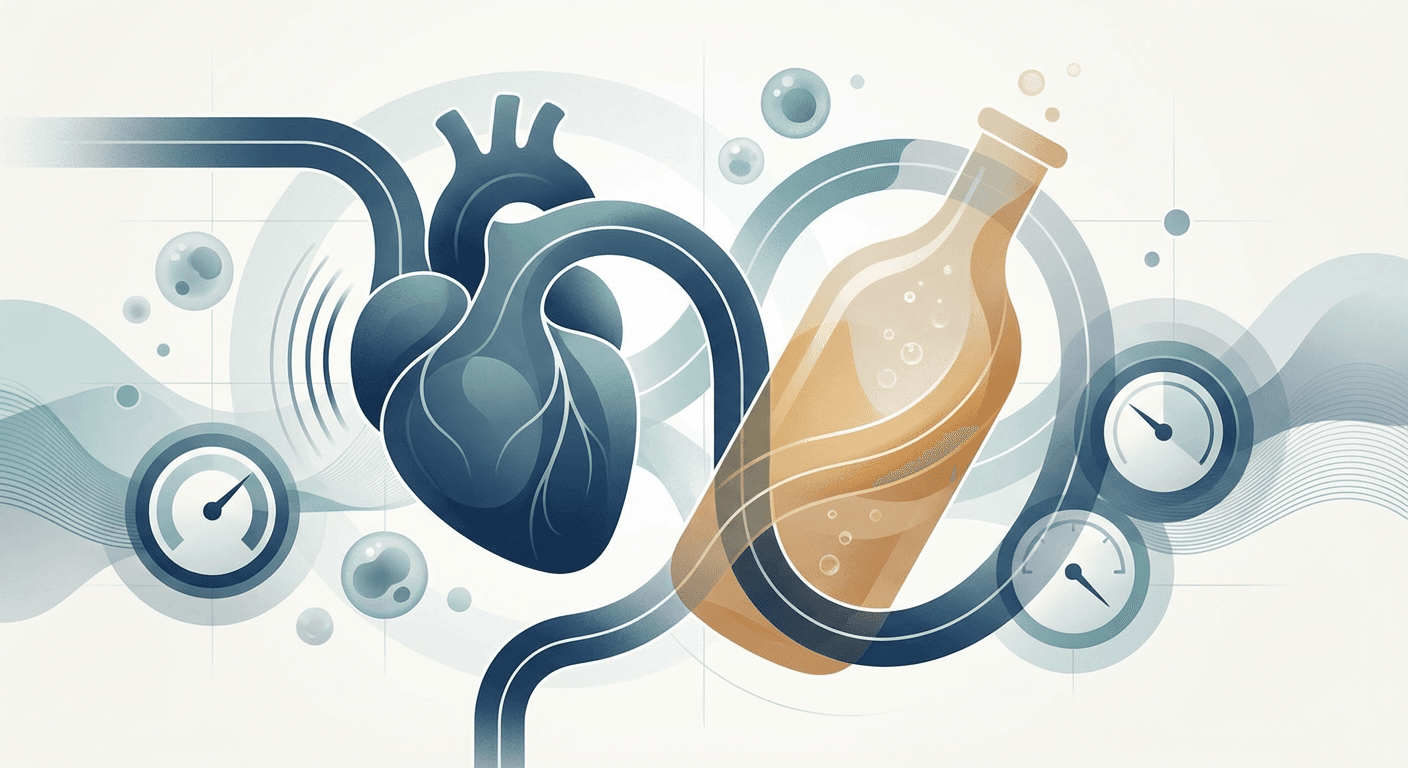
Heavy alcohol consumption increases the risk of developing hypertension, with risk rising as intake increases. Reducing heavy drinking lowers blood pressure by several mmHg and improves cardiovascular outcomes; aim for no more than 1 drink/day for women and 2 for men.
Heavy alcohol consumption and hypertension risk
Yes. Heavy alcohol consumption is consistently associated with a higher risk of developing high blood pressure (hypertension), and reducing heavy drinking can help lower blood pressure. [1] [2] This relationship has been shown in large prospective studies and meta-analyses, and health authorities recommend limiting alcohol to reduce hypertension risk. [3] [4]
What the evidence shows
-
Dose–response relationship: As average daily alcohol intake increases, the risk of hypertension rises in a generally linear fashion for men and at higher intakes for women. [3] In pooled cohort data, men drinking around 50 g of pure alcohol per day (about 3–4 standard drinks) had an estimated 57% higher relative risk of hypertension, and at 100 g/day (about 7–8 drinks) the risk was roughly 2.5 times higher. [3] Among women, risk begins to increase beyond very low intakes, with estimated relative risks of about 1.8 at 50 g/day and 2.8 at 100 g/day. [3]
-
Heavy drinking categories and risk: A systematic review found that men consuming 31–40 g/day (~2–3 drinks) had a 77% increased risk, and >50 g/day (>3–4 drinks) a 61% increased risk of incident hypertension versus nondrinkers. [5] In women, the same analysis found significantly higher risk at 31–40 g/day. [5]
-
Binge drinking and cardiovascular harm: Beyond average volume, binge patterns (≥6–12 drinks on one occasion) markedly amplify cardiovascular risk, especially when hypertension is present, with substantially higher cardiovascular mortality observed in long-term cohorts. [6]
-
Short‑term and long‑term effects: Alcohol acutely raises blood pressure via sympathetic activation and other mechanisms; with repeated heavy use, sustained elevations and blunted medication response may occur. Clinically, heavy drinkers who reduce intake to moderate levels can lower systolic blood pressure by about 5–6 mmHg and diastolic by about 4 mmHg. [7]
How much is “too much”?
-
General limits: Health guidance commonly defines moderate intake as up to one drink per day for women and up to two per day for men, and notes that drinking above these levels can raise blood pressure. [1] [2] One “standard drink” equals roughly 12 oz beer, 5 oz wine, or 1.5 oz of 80‑proof spirits. [8]
-
Risk at lower amounts: While some older studies suggested mixed patterns at low intakes, more comprehensive dose–response analyses indicate that the risk of hypertension increases as intake rises, with clearer harm at moderate to heavy levels and potential population differences. [3] Even “average” drinking can contribute to elevated blood pressure in some people. [2]
Practical benefits of cutting back
-
Blood pressure reduction: Reducing from heavy to moderate intake often lowers blood pressure by several points (about 5.5/4 mmHg), which can meaningfully reduce stroke and heart disease risk. [7]
-
Better medication effectiveness: Alcohol can interfere with the action and side‑effect profile of blood pressure medicines; lowering intake may improve treatment response. [8]
-
Broader health gains: Drinking too much increases risks for stroke, heart disease, liver disease, and certain cancers, so cutting back supports overall cardiovascular and metabolic health. [9]
Recommended limits and lifestyle context
-
Limit alcohol to no more than one drink per day for women and two for men to help prevent high blood pressure, and consider even less if your readings are elevated or you have other cardiovascular risks. [1] [2]
-
Combine alcohol reduction with other evidence‑based steps: maintain a healthy weight, stay active, eat a lower‑sodium, heart‑healthy diet, and avoid tobacco, all of which reduce blood pressure and cardiovascular risk. [2] [4]
Table: Alcohol intake and hypertension risk (selected findings)
- Men: Relative risk ≈1.57 at 50 g/day; ≈2.47 at 100 g/day (dose–response meta‑analysis). [3]
- Women: Relative risk ≈1.81 at 50 g/day; ≈2.81 at 100 g/day (dose–response meta‑analysis). [3]
- Heavy categories: Men 31–40 g/day RR ≈1.77; >50 g/day RR ≈1.61 (categorical meta‑analysis). [5]
- Blood pressure change with reduction: −5.5 mmHg systolic, −4 mmHg diastolic when heavy drinkers cut to average levels. [7]
- Recommended limits: ≤1 drink/day women; ≤2 drinks/day men. [1] [2]
- Standard drink: 12 oz beer, 5 oz wine, or 1.5 oz spirits. [8]
Key takeaway
Heavy alcohol use clearly increases the risk of developing hypertension, and cutting back meaningfully lowers blood pressure and improves heart health. [3] [1] Adhering to recommended drinking limits no more than one drink per day for women and two for men is a practical, evidence‑based step to prevent high blood pressure. [2] [4]
Related Questions
Related Articles

Sources
- 1.^abcdeHigh Blood Pressure Risk Factors(cdc.gov)
- 2.^abcdefgHow to Prevent High Blood Pressure(medlineplus.gov)
- 3.^abcdefghAlcohol and hypertension: gender differences in dose-response relationships determined through systematic review and meta-analysis.(pubmed.ncbi.nlm.nih.gov)
- 4.^abcHigh blood pressure in adults - hypertension: MedlinePlus Medical Encyclopedia(medlineplus.gov)
- 5.^abcAlcohol consumption and the risk of hypertension in men and women: a systematic review and meta-analysis.(pubmed.ncbi.nlm.nih.gov)
- 6.^↑Binge drinking and hypertension on cardiovascular disease mortality in Korean men and women: a Kangwha cohort study.(pubmed.ncbi.nlm.nih.gov)
- 7.^abcAlcohol: Does it affect blood pressure?(mayoclinic.org)
- 8.^abcAlcohol: Does it affect blood pressure?(mayoclinic.org)
- 9.^↑Preventing Chronic Diseases: What You Can Do Now(cdc.gov)
Important Notice: This information is provided for educational purposes only and is not intended to replace professional medical advice, diagnosis, or treatment. Always consult with a qualified healthcare provider before making any medical decisions.