
 Persly Medical Team
Based on PubMed | Is it true that eating spicy foods can worsen symptoms or trigger flare-ups in people with Hashimoto's thyroiditis?
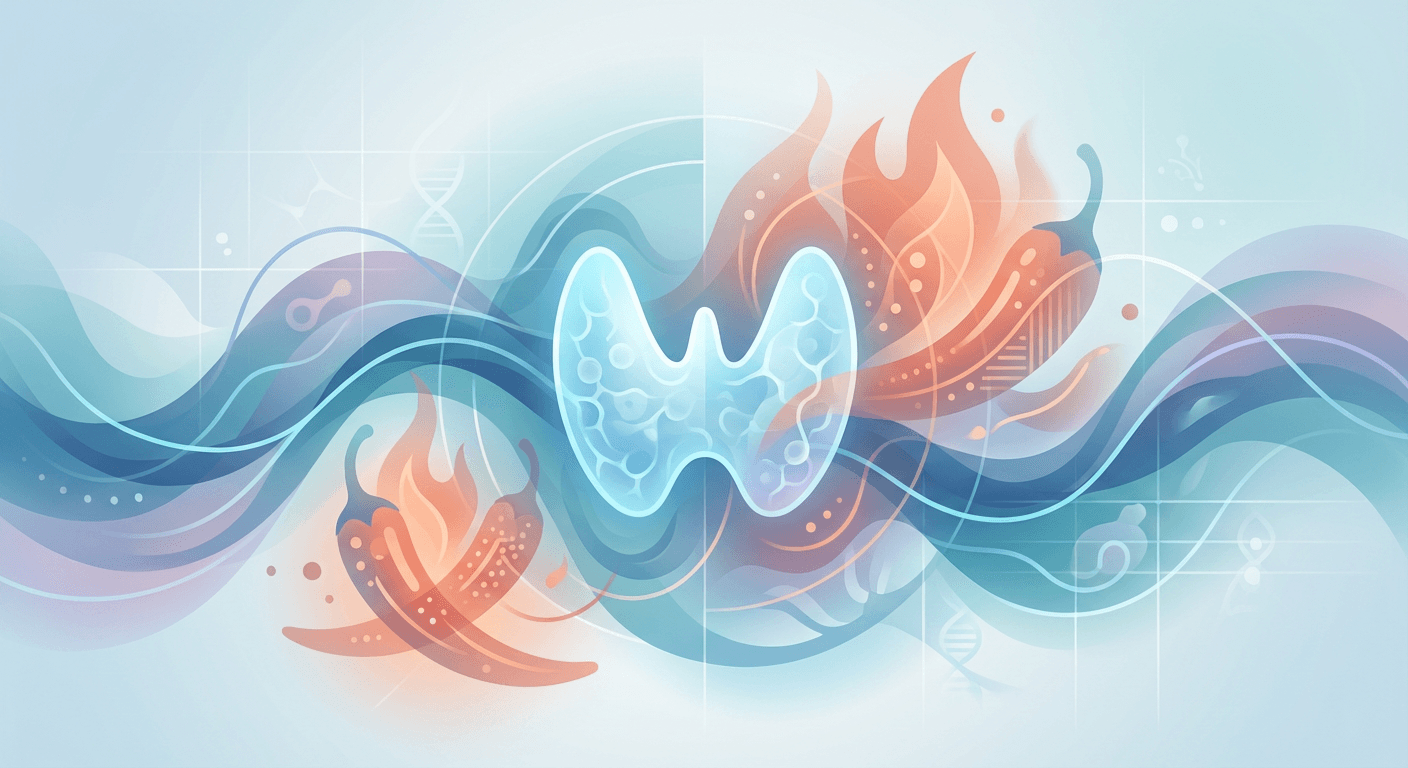
Spicy foods are not known to worsen Hashimoto’s thyroiditis or trigger autoimmune flares, and no major guidelines link capsaicin to thyroid autoimmunity. The most relevant dietary risks are excess iodine and food–drug interactions that impair levothyroxine absorption. If spicy meals bother your stomach or cause reflux, adjust intake based on personal tolerance.
Eating spicy foods is not known to directly worsen Hashimoto’s thyroiditis or trigger autoimmune “flare‑ups” for most people. There is no high‑quality clinical evidence or major guideline that links capsaicin (the active component in chili peppers) or spicy dishes to increased thyroid autoimmunity or Hashimoto’s activity. Instead, the best‑established dietary factor that can aggravate autoimmune thyroiditis is excessive iodine intake in susceptible individuals, not spice level. [1] [2]
What we know from medical guidance
- Hashimoto’s thyroiditis is driven by a mix of genetics and environmental triggers such as infections, stress, radiation exposure, and especially too much iodine; spicy foods are not listed among recognized triggers. [3] [1]
- Authoritative patient guidance highlights practical diet interactions mainly around levothyroxine absorption (soy, high‑fiber foods, iron or calcium supplements, certain antacids), rather than spice content. [4]
- Established environmental contributors under study include high iodine intake, selenium deficiency, tobacco smoke, some pollutants, and certain medications; again, spicy foods are not identified. [2]
What the research says about spicy compounds and immunity
- Experimental and animal studies of capsaicin show mixed, context‑dependent immune effects; in some models, oral capsaicin can tilt immune responses toward anti‑inflammatory activity, but these findings are not specific to thyroid disease and have not been translated into clinical recommendations for Hashimoto’s. [5] [6]
- Population data on diet and thyroid disease occasionally note associations between spice patterns and goiter prevalence in iodine‑deficient settings, but such observations are not proof of cause and are not specific to autoimmune Hashimoto’s; iodine status remains the dominant factor. [7]
Individual sensitivity and symptoms
- While spicy foods are not recognized triggers of thyroid autoimmunity, they can irritate the stomach or esophagus, worsen acid reflux, or cause palpitations in some people, which may be confused with thyroid‑related symptoms like fatigue or heart awareness.
- People with Hashimoto’s who experience gastrointestinal reflux, irritable bowel symptoms, or oral burning may feel worse after spicy meals due to these non‑thyroid effects; this is a personal sensitivity rather than an autoimmune flare.
Practical guidance for those with Hashimoto’s
- Focus on proven factors: Avoid excessive iodine (e.g., large amounts of kelp or iodine supplements) unless your clinician specifically advises otherwise, as too much iodine can promote thyroid inflammation in susceptible individuals. [1] [2]
- If you take levothyroxine, separate it by at least four hours from iron or calcium supplements and be aware that soy and very high‑fiber meals can reduce absorption. [4]
- Ensure adequate (but not excessive) selenium intake through food, and maintain a generally balanced diet; these steps support overall thyroid health though they do not “cure” Hashimoto’s. [2]
- Use a personal approach: If spicy foods trigger reflux, stomach upset, or uncomfortable palpitations for you, it’s reasonable to cut back or choose milder options; if you tolerate them well, there is no evidence you must avoid them specifically for Hashimoto’s.
Quick reference table
| Topic | Evidence‑based impact on Hashimoto’s | Practical take |
|---|---|---|
| Spicy foods/capsaicin | No clinical evidence of triggering autoimmune flares; not listed in major risk factors | Optional moderation based on personal tolerance |
| Excess iodine | Can trigger/worsen autoimmune thyroiditis in susceptible people | Avoid high‑iodine supplements/seaweed excess; use normal iodized salt prudently [1] [2] |
| Levothyroxine absorption | Affected by iron, calcium, soy, some antacids, high‑fiber meals | Take on empty stomach; separate by ≥4 hours from iron/calcium/antacids [4] |
| Selenium and other nutrients | Low selenium has been implicated in thyroid inflammation; evidence supports sufficiency, not megadoses | Aim for balanced diet, consider food‑based selenium; avoid high‑dose self‑supplementation without guidance [2] |
Bottom line
- There is no solid evidence that spicy foods cause Hashimoto’s flare‑ups, and major medical resources do not list spicy foods as a trigger. [3] [1]
- The most consistent dietary concern for autoimmune thyroiditis is excessive iodine intake, along with medication–food interactions that affect thyroid hormone replacement. [4] [1]
- Tailor spice intake to your personal comfort; if it upsets your stomach or sleep, reduce or avoid it, but if you feel fine, you generally do not need to restrict spicy foods specifically for Hashimoto’s.
Related Questions
Related Articles
Sources
- 1.^abcdefHashimoto's disease-Hashimoto's disease - Symptoms & causes - Mayo Clinic(mayoclinic.org)
- 2.^abcdefEnvironmental factors and autoimmune thyroiditis.(pubmed.ncbi.nlm.nih.gov)
- 3.^abHashimoto's disease-Hashimoto's disease - Symptoms & causes - Mayo Clinic(mayoclinic.org)
- 4.^abcdHashimoto's disease-Hashimoto's disease - Diagnosis & treatment - Mayo Clinic(mayoclinic.org)
- 5.^↑Oral ingestion of Capsaicin, the pungent component of chili pepper, enhances a discreet population of macrophages and confers protection from autoimmune diabetes.(pubmed.ncbi.nlm.nih.gov)
- 6.^↑Effects on immune responses in rats after neuromanipulation with capsaicin.(pubmed.ncbi.nlm.nih.gov)
- 7.^↑Turmeric use is associated with reduced goitrogenesis: Thyroid disorder prevalence in Pakistan (THYPAK) study.(pubmed.ncbi.nlm.nih.gov)
Important Notice: This information is provided for educational purposes only and is not intended to replace professional medical advice, diagnosis, or treatment. Always consult with a qualified healthcare provider before making any medical decisions.