
 Persly Medical Team
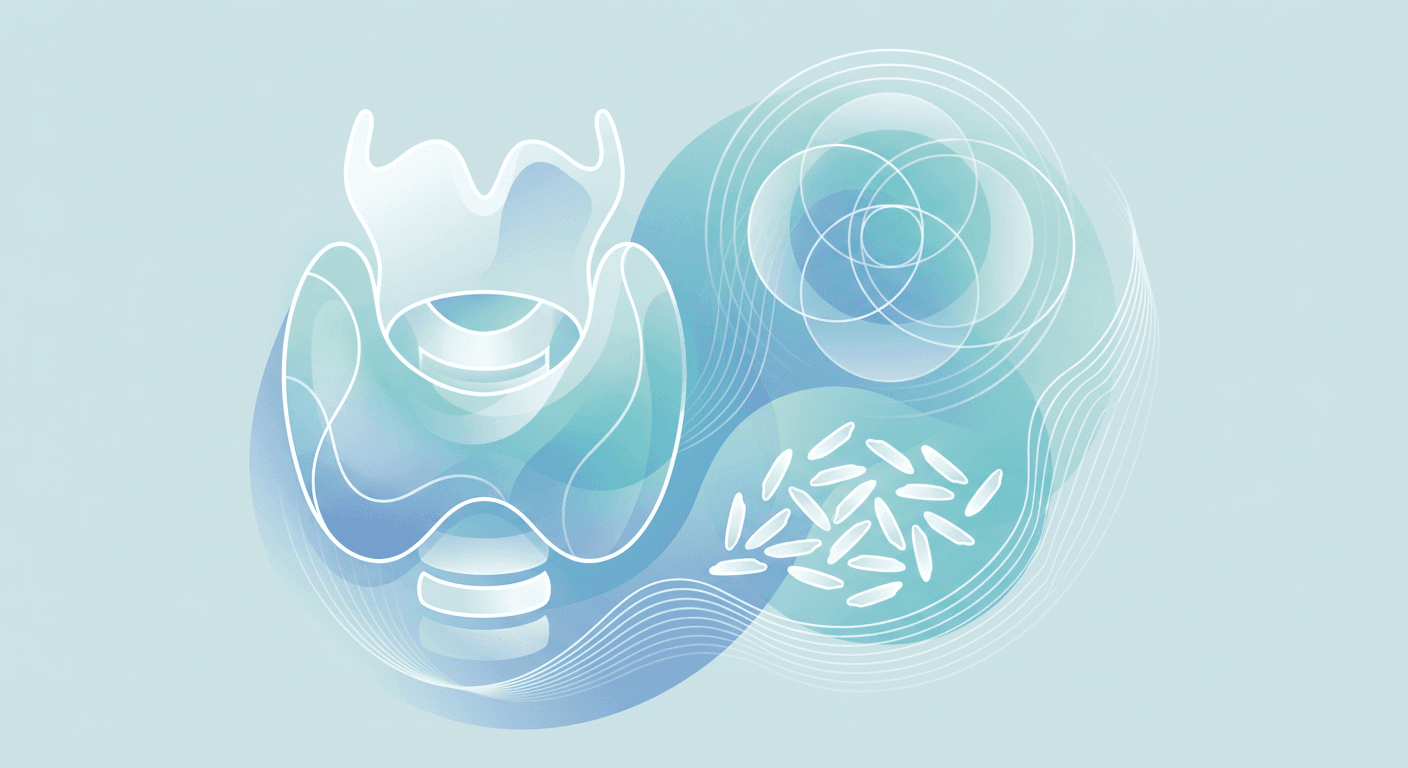
Based on PubMed | Is it true that people with Hashimoto's thyroiditis should avoid rice because it contains gluten and can trigger autoimmune flares?
Rice does not contain gluten, so people with Hashimoto’s thyroiditis do not need to avoid plain white, brown, or wild rice. Gluten avoidance is only necessary if celiac disease or medically diagnosed gluten sensitivity is present; some seasoned rice mixes may contain gluten, so check labels.
People with Hashimoto’s thyroiditis do not need to avoid rice because of gluten. Rice is naturally gluten‑free, and standard white, brown, and wild rice do not contain gluten; only certain processed “seasoned rice mixes” may include gluten-containing additives. [1] [2] For most people with Hashimoto’s, there is no medical requirement to eliminate plain rice, and it can be part of a balanced diet. [1]
Key points at a glance
- Rice is gluten‑free. Plain rice and wild rice are permitted on gluten‑free diets. [1]
- Hashimoto’s ≠ automatic gluten restriction. Routine gluten avoidance is not universally recommended for Hashimoto’s unless there is celiac disease or medically diagnosed gluten sensitivity. [3] [4]
- Be cautious with processed rice mixes. Some boxed or seasoned rice products can contain gluten additives; check labels for wheat, barley, or rye. [2]
Hashimoto’s, gluten, and rice: What the evidence suggests
Is rice a source of gluten?
No. Gluten is the storage protein found in wheat, barley, and rye not in rice. Gluten‑free diet guidelines list rice and wild rice among allowed grains and starches. [1] The only caveat is that some processed rice products (for example, flavored pilafs or mixes) may include gluten-containing seasonings or sauces, so label reading is important. [2]
Do all people with Hashimoto’s need a gluten‑free diet?
Not necessarily. A strict gluten‑free diet is the cornerstone treatment for celiac disease, an autoimmune condition in which gluten damages the small intestine. [5] People without celiac disease generally do not need to avoid gluten for thyroid health, and going gluten‑free for non‑celiac reasons has unproven benefits. [4] That said, celiac disease and autoimmune thyroid disease often occur together more than by chance, so clinicians sometimes screen for celiac disease in those with autoimmune thyroiditis. [6] [7] If celiac disease is confirmed, gluten must be eliminated, but rice remains allowed because it is naturally gluten‑free. [5]
What about autoimmunity “flares” and gluten?
Research shows an association between celiac disease and autoimmune thyroiditis, likely related to shared immune genetics, but whether gluten itself worsens thyroid autoimmunity in people without celiac disease remains unclear. [6] [7] Prospective data in celiac cohorts are mixed and do not prove that gluten‑free eating reverses thyroid autoimmunity once established. [8] In short, for Hashimoto’s without celiac disease, evidence that gluten triggers thyroid “flares” is limited, and routine gluten elimination isn’t a standard thyroid treatment. [8] [4]
Practical guidance for those with Hashimoto’s
1) Keep rice on the menu
- Plain white, brown, or wild rice is appropriate and naturally gluten‑free. [1]
- Avoid or carefully check labels on “seasoned rice mixes/pilafs” as these can contain gluten. [2]
2) Consider celiac screening if symptoms or risk factors exist
Because thyroid autoimmunity and celiac disease can cluster, clinicians may consider screening if you have symptoms such as chronic diarrhea, iron‑deficiency anemia, weight loss, or a strong family history. [6] [7] If celiac disease is diagnosed, a lifelong gluten‑free diet is required, and rice remains a safe staple. [5]
3) Focus on consistent thyroid care
- If you are on levothyroxine (thyroid hormone), some foods and supplements can interfere with absorption when taken too close to the dose; examples include soy, high‑fiber meals, iron, and calcium. [3] [9] Taking levothyroxine on an empty stomach and separating it from these items by several hours is generally advised. [3] [9]
- There is no requirement to avoid rice for medication reasons. [3]
Frequently asked questions
Is “gluten‑free” automatically healthier for Hashimoto’s?
Not by default. Gluten‑free processed products can have more sugar and fewer nutrients, and they are not necessary unless celiac disease or a medically diagnosed gluten sensitivity is present. [10] [11]
If I feel better avoiding gluten, is that a problem?
Individual responses vary. Some people report symptom improvement when lowering gluten for reasons unrelated to thyroid autoimmunity, but this is personal and not a universal medical rule. [4] If you choose to try a gluten‑free pattern, keep nutrition balanced and discuss it with your clinician, especially to avoid nutrient gaps. [10]
Bottom line
- Rice does not contain gluten and does not need to be avoided for Hashimoto’s. [1]
- Gluten avoidance is medically necessary for celiac disease, which is more common among those with autoimmune thyroid conditions, but this does not mean everyone with Hashimoto’s must avoid gluten. [5] [6]
- Plain rice is compatible with both standard and gluten‑free diets, while some processed rice mixes may include gluten-containing additives so read labels. [1] [2]
Related Questions
Related Articles
Sources
- 1.^abcdefgCeliac disease - Diagnosis and treatment(mayoclinic.org)
- 2.^abcdefree diet - Mayo Clinic(mayoclinic.org)
- 3.^abcdHashimoto's disease-Hashimoto's disease - Diagnosis & treatment - Mayo Clinic(mayoclinic.org)
- 4.^abcdThe good news is that you don't have to go completely grain-free.(mayoclinic.org)
- 5.^abcdDiagnosis and treatment - Mayo Clinic(mayoclinic.org)
- 6.^abcdCeliac disease: pathophysiology, clinical manifestations, and associated autoimmune conditions.(pubmed.ncbi.nlm.nih.gov)
- 7.^abcCeliac disease and endocrine autoimmunity.(pubmed.ncbi.nlm.nih.gov)
- 8.^abGluten-free diet and autoimmune thyroiditis in patients with celiac disease. A prospective controlled study.(pubmed.ncbi.nlm.nih.gov)
- 9.^abHashimoto's disease-Hashimoto's disease - Diagnosis & treatment - Mayo Clinic(mayoclinic.org)
- 10.^abThe good news is that you don't have to go completely grain-free.(mayoclinic.org)
- 11.^↑Learn about gluten-free diets: MedlinePlus Medical Encyclopedia(medlineplus.gov)
Important Notice: This information is provided for educational purposes only and is not intended to replace professional medical advice, diagnosis, or treatment. Always consult with a qualified healthcare provider before making any medical decisions.