
 Persly Medical Team
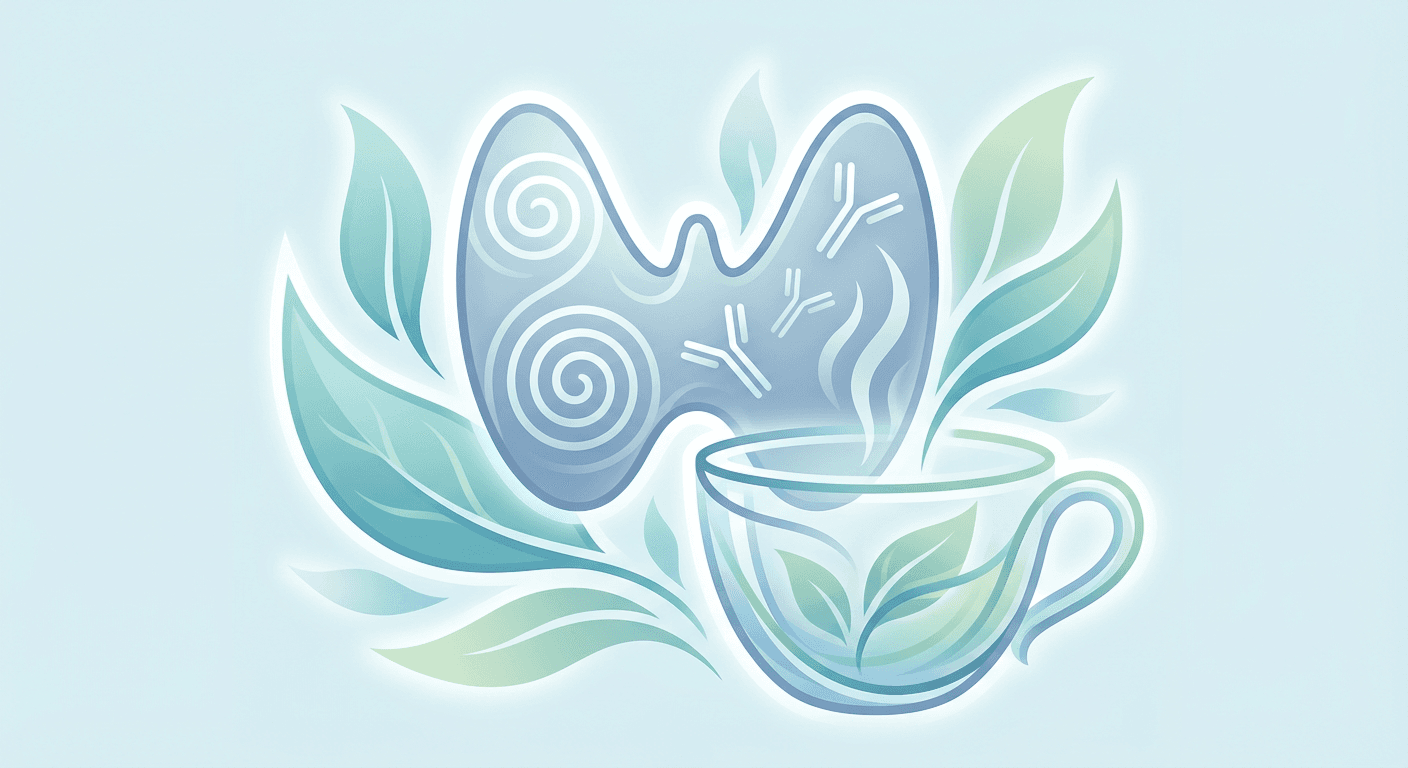
Based on NIH | Does drinking green tea worsen Hashimoto's thyroiditis or interfere with thyroid hormone medication?
Key Takeaway:
Current evidence does not show that drinking green tea worsens Hashimoto’s thyroiditis. It isn’t a major blocker of levothyroxine, but take your thyroid pill with water on an empty stomach and avoid tea at the same time to protect absorption. If sensitive to caffeine or using high-dose extracts, separate them and monitor symptoms.
Green tea and Hashimoto’s: what we know
- There’s no solid human evidence that drinking green tea worsens Hashimoto’s thyroiditis. Animal and lab studies show mixed or neutral effects on thyroid autoimmunity, and clinical data in people are lacking. [1] [2]
- Green tea does not appear to directly interfere with the thyroid gland’s function in Hashimoto’s at typical beverage amounts, but the caffeine in tea can mimic or worsen palpitations or anxiety in some people once thyroid hormone is optimized.
- For thyroid medication (levothyroxine), the main concern is timing and absorption: take levothyroxine on an empty stomach 30–60 minutes before breakfast with water, and separate it from foods/supplements that affect absorption by at least 4 hours. [3] [4] [5]
- While green tea itself isn’t specifically listed among major blockers like iron, calcium, antacids, or bile acid binders, any beverage other than water taken with levothyroxine can unpredictably reduce absorption, so it’s best to avoid tea at the medication dose and drink it later. [3] [4] [5]
Autoimmunity and green tea
- Research in a mouse model of Hashimoto’s found that green tea polyphenols (GTPs) did not prevent iodine‑induced autoimmune thyroiditis and did not alter thyroxine levels. This suggests no clear benefit or harm to thyroid autoimmunity in that model. [1]
- Broader immunology reviews note that epigallocatechin‑3‑gallate (EGCG), a key green tea catechin, can modulate immune cells in ways that might help some autoimmune conditions, but these findings largely come from animal and cell studies, and meaningful evidence in humans is still limited. [2]
Thyroid hormone medication: absorption basics
- Levothyroxine works best when taken consistently on an empty stomach. Guidelines advise taking it as a single daily dose with a full glass of water, 30–60 minutes before breakfast, and at least 4 hours apart from agents known to interfere with absorption (iron, calcium, antacids, sucralfate, bile‑acid sequestrants). [3] [4] [6] [5]
- Gastric acidity facilitates levothyroxine absorption, so drugs that reduce stomach acid (e.g., proton‑pump inhibitors) can impair it, sometimes requiring dose adjustments. [6]
Does green tea interact with levothyroxine?
- Green tea is not a listed high‑risk blocker of levothyroxine like iron or calcium, and there is no direct clinical evidence that green tea at typical beverage amounts reliably reduces levothyroxine absorption if taken separately. [3] [4] [5]
- However, tea contains polyphenols and tannins that can bind certain drugs; reviews show tea catechins can affect drug absorption and metabolism in vitro and animals, with fewer proven effects in humans at normal drinking levels. [7] [8]
- Practical takeaway: do not take levothyroxine with green tea (or any beverage other than water); keep tea at least 30–60 minutes after the dose or, more conservatively, enjoy it later with breakfast, and avoid taking it within the 4‑hour window used for known interferers if you want to be extra cautious. [3] [4] [5]
Caffeine considerations
- If your thyroid hormone dose is appropriate, green tea’s caffeine can still cause jitters, palpitations, or anxiety in some people, which may be confused with hyperthyroid symptoms. Consider decaf green tea if sensitive.
Iodine and Hashimoto’s
- In Hashimoto’s, excess iodine can aggravate thyroid dysfunction in some individuals, so avoid very high iodine supplements or seaweed “teas”; normal dietary iodine intake is usually appropriate unless your clinician advises otherwise. [9] [10]
Practical guidance
- Keep levothyroxine and tea separate:
- Watch symptoms: If you notice new palpitations, anxiety, or sleep trouble after adding green tea, try decaf or reduce intake and discuss with your clinician.
- Supplements vs. beverage: Green tea extracts (capsules) provide higher catechin doses than brewed tea and may pose greater interaction potential; avoid taking extracts near your thyroid pill and review any supplements with your clinician. [7] [8]
Quick reference table
| Topic | What the evidence suggests | What to do |
|---|---|---|
| Green tea and Hashimoto’s autoimmunity | No human data showing worsening; animal model showed no prevention or hormone change | Moderate consumption is generally reasonable |
| Levothyroxine timing | Empty stomach, water only, 30–60 min before breakfast; avoid known blockers within 4 hours | Take pill with water only; be consistent [3] [4] [5] |
| Green tea with levothyroxine | Not a listed major blocker; theoretical binding by polyphenols possible | Do not take together; have tea after breakfast [3] [4] [5] [7] |
| Drug metabolism | Tea catechins can affect drug handling in models; limited human evidence at normal intake | Be cautious with high‑dose extracts; separate from meds [7] [8] |
| Iodine in Hashimoto’s | Excess iodine may be harmful in autoimmune thyroid disease | Avoid high‑iodine seaweed “teas” and supplements [9] [10] |
Bottom line
- Green tea in typical beverage amounts is unlikely to worsen Hashimoto’s or meaningfully affect thyroid function. [1] [2]
- To protect levothyroxine absorption, take your thyroid pill with water on an empty stomach and enjoy green tea later, not at the same time. [3] [4] [5]
- If you use high‑dose green tea extracts, have multiple medications, or notice symptom changes, review your routine with your healthcare provider and monitor thyroid labs for any needed dose adjustments.
Related Questions
Related Articles
Sources
- 1.^abcEffects of green tea polyphenols on iodide-induced autoimmune thyroiditis in nonobese diabetic mice.(pubmed.ncbi.nlm.nih.gov)
- 2.^abcImmunomodulating effects of epigallocatechin-3-gallate from green tea: mechanisms and applications.(pubmed.ncbi.nlm.nih.gov)
- 3.^abcdefghilevothyroxin sodium(dailymed.nlm.nih.gov)
- 4.^abcdefghilevothyroxin sodium(dailymed.nlm.nih.gov)
- 5.^abcdefghiDailyMed - LEVOTHYROXINE SODIUM tablet(dailymed.nlm.nih.gov)
- 6.^ablevothyroxin sodium(dailymed.nlm.nih.gov)
- 7.^abcdThe effects of green tea polyphenols on drug metabolism.(pubmed.ncbi.nlm.nih.gov)
- 8.^abcThe effects of green tea polyphenols on drug metabolism.(pubmed.ncbi.nlm.nih.gov)
- 9.^abHypothyroidism(medlineplus.gov)
- 10.^ab갑상선기능저하증 | 식사요법 | 의료정보 | 건강정보(amc.seoul.kr)
Important Notice: This information is provided for educational purposes only and is not intended to replace professional medical advice, diagnosis, or treatment. Always consult with a qualified healthcare provider before making any medical decisions.