
 Persly Medical Team
Based on PubMed | Does eating bread or gluten increase the risk of developing Hashimoto's thyroiditis?
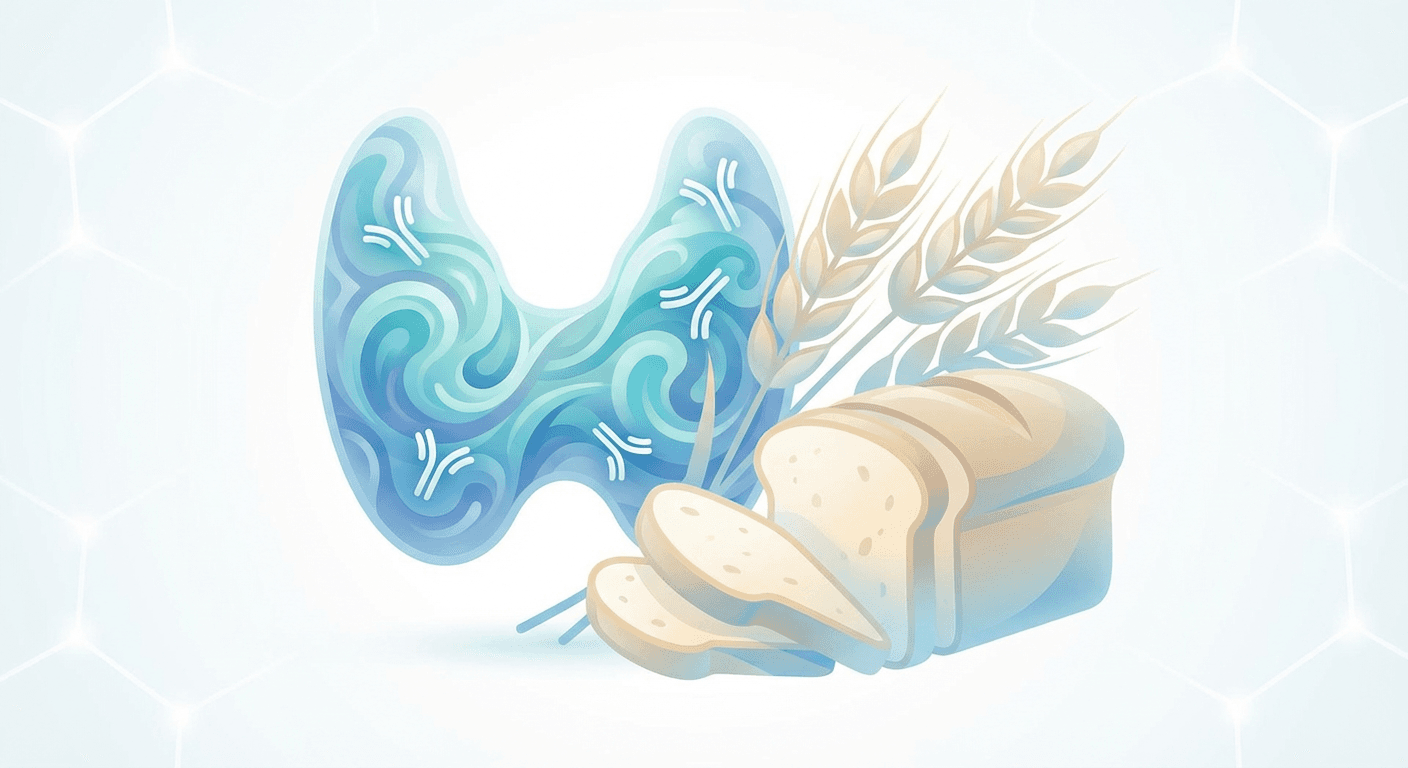
In people without celiac disease, eating gluten or bread has not been shown to cause Hashimoto's thyroiditis. There is a well-documented overlap between celiac disease and autoimmune thyroiditis due to shared autoimmunity, not proof that gluten triggers Hashimoto's. A strict gluten-free diet is essential for celiac disease but may not prevent thyroid autoimmunity; consider celiac screening in Hashimoto's when appropriate.
Eating gluten or bread does not appear to cause Hashimoto’s thyroiditis in the general population, but there is a well‑documented overlap between celiac disease (an autoimmune reaction to gluten) and autoimmune thyroid diseases, including Hashimoto’s. In other words, gluten itself hasn’t been proven to trigger Hashimoto’s in people without celiac disease, but people with celiac disease have a higher chance of thyroid autoimmunity and vice versa. [1] [2]
What the research shows
- Autoimmune overlap: Studies suggest a bidirectional association: celiac disease is more common in people with autoimmune thyroiditis, and thyroid autoimmunity is more common in people with celiac disease. This likely reflects shared genetic and immune pathways rather than gluten “causing” thyroid disease by itself. [1]
- Gluten‑free diet effects are mixed: In adults newly diagnosed with celiac disease, a prospective controlled study found an increased risk of thyroid autoimmune disorders compared with controls and observed that thyroid gland atrophy progressed over one year despite a gluten‑free diet. This suggests that, at least in established celiac disease, going gluten‑free may not reverse thyroid autoimmunity in the short term, though longer‑term data are limited and mixed. [2]
Key takeaways for different groups
- If you do not have celiac disease: There is no high‑quality evidence that eating gluten increases your risk of developing Hashimoto’s. Routine gluten avoidance solely to prevent Hashimoto’s is not supported by current evidence.
- If you have celiac disease: You are at higher risk for other autoimmune conditions, including thyroid disorders. A strict gluten‑free diet is essential for celiac disease management and overall health, but it may not fully prevent thyroid autoimmunity, especially over short follow‑up periods. [2]
- If you have Hashimoto’s: Undiagnosed celiac disease can coexist. Some clinics advocate considering celiac screening in individuals with autoimmune thyroid disease, given the frequent association and the need for strict gluten avoidance if celiac disease is confirmed. [3] [4]
How celiac disease and thyroid autoimmunity intersect
- Shared autoimmunity: Celiac disease and autoimmune thyroiditis commonly cluster in the same person, likely due to shared genes (such as HLA‑DQ2/DQ8) and immune mechanisms. Some research hypothesizes that celiac‑related antibodies (e.g., tissue transglutaminase) may play a role in thyroid dysfunction, but causation is not proven. [1]
- Clinical practice implications: Because of this overlap, gastroenterology and endocrinology clinics often coordinate care to screen for thyroid problems in celiac patients and to consider celiac evaluation in those with autoimmune thyroid disease when appropriate. This integrated approach aims to catch conditions early and tailor nutritional and hormonal treatment. [4]
Practical guidance
- Don’t eliminate gluten without a reason: If you don’t have confirmed celiac disease, routinely cutting gluten to prevent Hashimoto’s is unlikely to help and may reduce diet quality.
- Consider celiac testing when indicated: If you have Hashimoto’s plus digestive symptoms (chronic diarrhea, bloating, weight loss), iron‑deficiency anemia, unexplained nutrient deficiencies, or a strong family history, a clinician may suggest celiac serology while you are still eating gluten. [3]
- If celiac is diagnosed: Follow a strict gluten‑free diet to protect your small intestine and reduce long‑term complications, and keep regular thyroid monitoring since thyroid autoimmunity can coexist. Even with good gluten control, thyroid antibody activity may persist, so ongoing endocrine follow‑up is important. [2]
Bottom line
- Gluten intake by itself has not been shown to increase the risk of Hashimoto’s in people without celiac disease.
- There is a clear association between celiac disease and autoimmune thyroiditis, meaning people with one condition are more likely to have the other, but this reflects shared autoimmunity rather than proof that gluten causes Hashimoto’s. [1]
- For those with celiac disease, a gluten‑free diet is essential; however, current data do not guarantee prevention or reversal of thyroid autoimmunity, especially in the short term. [2]
References
- Increased co‑prevalence and potential mechanistic links between celiac disease and autoimmune thyroiditis. [1]
- Prospective controlled study showing increased thyroid autoimmunity risk in celiac disease and progression despite one year of gluten‑free diet. [2]
- Clinical programs highlighting screening and coordinated care for thyroid dysfunction in celiac disease. [4]
- Educational resources noting the frequent association of celiac disease with Hashimoto’s thyroiditis. [3]
Related Questions
Related Articles
Sources
- 1.^abcdeDoes celiac disease trigger autoimmune thyroiditis?(pubmed.ncbi.nlm.nih.gov)
- 2.^abcdefGluten-free diet and autoimmune thyroiditis in patients with celiac disease. A prospective controlled study.(pubmed.ncbi.nlm.nih.gov)
- 3.^abcDiagnosing Celiac Disease & Gluten Sensitivity(nyulangone.org)
- 4.^abcCeliac Disease Program(stanfordhealthcare.org)
Important Notice: This information is provided for educational purposes only and is not intended to replace professional medical advice, diagnosis, or treatment. Always consult with a qualified healthcare provider before making any medical decisions.