
 Persly Medical Team
Based on PubMed | For patients with gastritis, does taking turmeric on an empty stomach increase symptom irritation compared with taking it with meals?
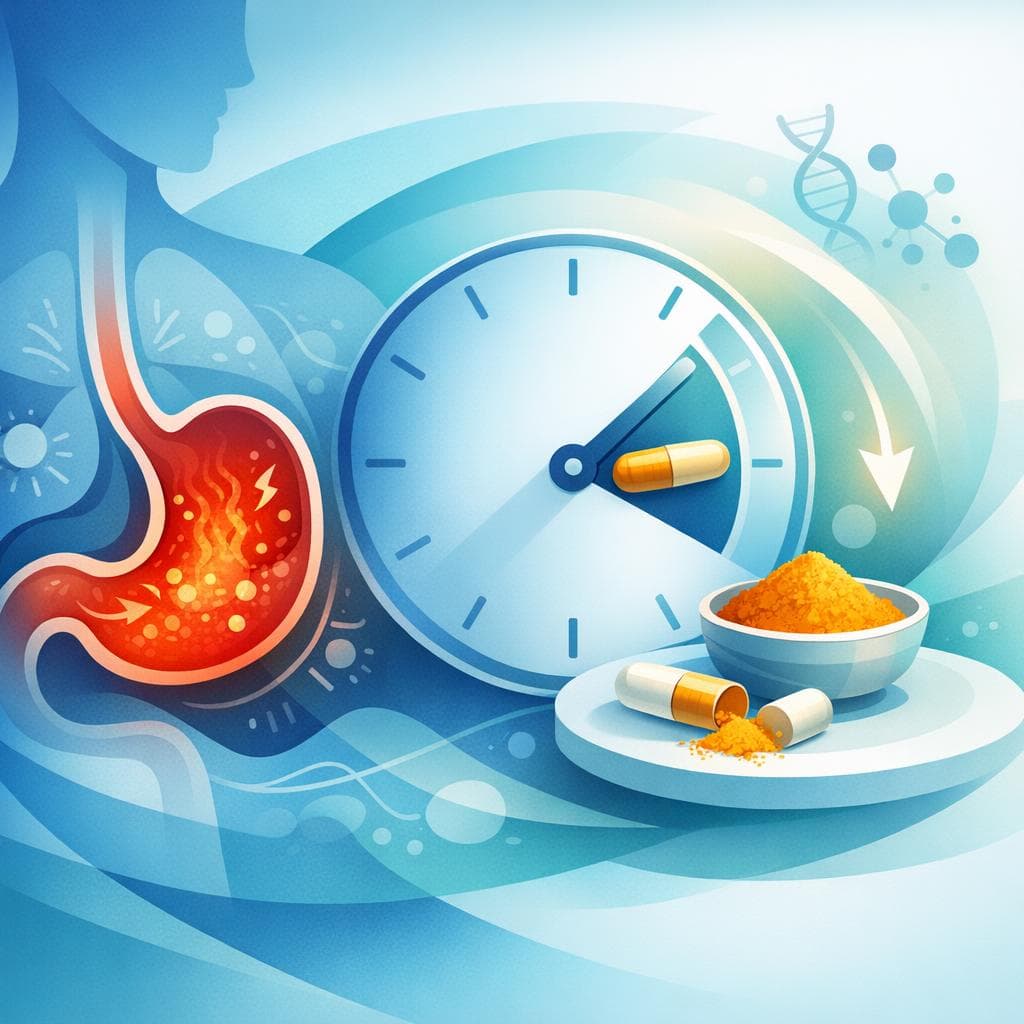
Evidence does not show that turmeric/curcumin routinely worsens gastritis symptoms, and no studies directly compare empty-stomach vs with-meal dosing for irritation. Overall it is well tolerated with occasional mild GI effects; taking it with meals and starting at a modest dose is a practical way to minimize stomach upset.
Most evidence does not show that turmeric (or curcumin, its key component) routinely worsens gastritis symptoms when taken with or without food, but direct head‑to‑head trials comparing “empty stomach” versus “with meals” for symptom irritation in gastritis are lacking. Instead, available human data suggest turmeric/curcumin is generally well tolerated, with occasional mild gastrointestinal side effects like nausea or diarrhea, and practical guidance often favors taking it with food to minimize stomach upset in sensitive individuals. [1] [2]
What the evidence shows
-
Limited clinical data in digestive conditions: Reviews of turmeric for digestive disorders (including dyspepsia and peptic ulcer disease) report that turmeric appears safe overall, but study quality is variable and efficacy results are mixed. These reviews do not provide direct comparisons of fasting versus fed intake for tolerability. [1] [3]
-
Safety profile: Clinical summaries consistently note that curcumin is well tolerated; the most common gastrointestinal side effects reported are mild, such as nausea and diarrhea. These reports again do not differentiate fasting from fed administration in a way that quantifies symptom differences. [4] [5]
-
Historical dosing in peptic ulcer: A small phase II trial administered turmeric capsules before meals and at bedtime to people with peptic ulcers and found symptom improvement and ulcer healing over weeks; the study did not contain a “with meals” comparison arm, so it cannot answer whether fasting worsens irritation relative to fed dosing. [6]
-
General product information: Labeling for a multinutrient capsule containing turmeric acknowledges that curcumin has a low toxicity profile with only occasional minor GI complaints reported in trials; it does not specify a required timing with food for tolerability. [7] [8]
Why timing may matter (physiology and practice)
-
Food often cushions the stomach: For many agents that can cause upper GI upset, taking them with food can reduce direct contact of the compound with the gastric mucosa and may blunt acid-related irritation hence the common, pragmatic advice to take potentially irritating supplements with meals if upset occurs. While this principle is well established for various drugs, it has not been directly proven specific to turmeric in gastritis through randomized comparisons. [9]
-
Curcumin bioavailability considerations: Curcumin has poor natural absorption; some formulations or taking with fats can improve uptake. These pharmacokinetic studies are typically conducted under defined conditions (often fasting) to measure absorption and do not address symptom irritation differences by meal timing in gastritis. [10] [11]
Practical guidance for users with gastritis
Given the absence of direct comparative trials and the generally good tolerability profile:
-
It is reasonable to start turmeric/curcumin at a modest dose and take it with meals to reduce the chance of stomach upset, especially if you have active gastritis symptoms. This practical approach aligns with broad tolerability strategies used for other agents that sometimes cause GI discomfort, even though specific head‑to‑head turmeric timing data are not available. [1] [4]
-
If you do not experience stomach upset with meals and wish to optimize consistency, keeping dosing at the same time each day is sensible. If any epigastric pain, nausea, or worsening heartburn occurs after dosing, shifting to take with a more substantial meal or reducing the dose may help. These steps reflect general GI‑sparing strategies rather than turmeric‑specific randomized evidence. [1] [2]
-
Watch for warning signs that need medical attention regardless of supplement timing, such as persistent upper abdominal pain, black stools, or vomiting blood signs that can indicate bleeding and require prompt evaluation and standard medical therapy for gastritis or ulcers. [12] [13]
Evidence table
| Question | What we have | What we don’t have | Takeaway |
|---|---|---|---|
| Does empty-stomach turmeric worsen gastritis symptoms vs with meals? | Reviews show turmeric is generally safe; mild GI effects occur in some people. No signal that timing strongly changes tolerability has been quantified. [1] [4] | No randomized or comparative trials directly testing fasting vs fed turmeric in gastritis for symptom irritation. [14] | No definitive answer; prudent to try with meals to minimize potential irritation. |
| Is turmeric effective for gastritis/dyspepsia? | Mixed and low‑quality evidence across digestive disorders; appears safe, efficacy inconsistent. [1] [2] | High‑quality, large RCTs in gastritis with clear outcomes and timing stratification. | Consider turmeric as adjunctive, not primary therapy; follow standard gastritis care. |
| Safety profile | Generally well tolerated; most common GI AEs are mild (nausea, diarrhea). [4] [5] | Quantified comparison of AEs by fasting vs fed state in gastritis. | Start low, take with meals if sensitive, monitor symptoms. |
Bottom line
- There is no direct clinical evidence that taking turmeric on an empty stomach causes more gastritis symptom irritation than taking it with meals. [1] [2]
- Turmeric/curcumin appears generally safe with occasional mild GI side effects, and many clinicians suggest taking with food if stomach upset occurs, even though turmeric‑specific timing trials in gastritis are lacking. [4] [1]
- Anyone with ongoing or severe symptoms should rely on standard, proven therapies for gastritis and seek evaluation for red‑flag signs such as bleeding or persistent pain. [15] [13]
Important reminders for gastritis care
- Standard treatments that reduce stomach acid (antacids, H2 blockers, proton pump inhibitors, and newer acid blockers) are commonly used based on cause and severity. These therapies have established benefits in symptom control and mucosal healing. If symptoms persist or worsen, medical evaluation is recommended. [15]
- Seek urgent care for black or tarry stools, vomiting blood, or persistent severe upper belly pain. These can be signs of bleeding or complications. [12] [13]
👍 In summary, if you wish to try turmeric and have gastritis, taking it with meals is a reasonable, stomach‑friendly approach, but current evidence does not prove that fasting use is more irritating than fed use. Monitor your symptoms, start with a low dose, and prioritize guideline‑supported gastritis treatments when needed. [1] [2]
Related Questions
Related Articles

Sources
- 1.^abcdefghiA systematic review of the efficacy and safety of turmeric in the treatment of digestive disorders.(pubmed.ncbi.nlm.nih.gov)
- 2.^abcdeA systematic review of the efficacy and safety of turmeric in the treatment of digestive disorders.(pubmed.ncbi.nlm.nih.gov)
- 3.^↑A systematic review of the efficacy and safety of turmeric in the treatment of digestive disorders.(pubmed.ncbi.nlm.nih.gov)
- 4.^abcdeClinical utility of curcumin extract.(pubmed.ncbi.nlm.nih.gov)
- 5.^abClinical utility of curcumin extract.(pubmed.ncbi.nlm.nih.gov)
- 6.^↑Phase II clinical trial on effect of the long turmeric (Curcuma longa Linn) on healing of peptic ulcer.(pubmed.ncbi.nlm.nih.gov)
- 7.^↑LORMATE- levomefolate calcium, methylcobalamin, and turmeric capsule(dailymed.nlm.nih.gov)
- 8.^↑LORMATE- levomefolate calcium, methylcobalamin, and turmeric capsule(dailymed.nlm.nih.gov)
- 9.^↑Indigestion(medlineplus.gov)
- 10.^↑Beyond Yellow Curry: Assessing Commercial Curcumin Absorption Technologies.(pubmed.ncbi.nlm.nih.gov)
- 11.^↑Pharmacokinetics of curcumin conjugate metabolites in healthy human subjects.(pubmed.ncbi.nlm.nih.gov)
- 12.^abGastritis: MedlinePlus Medical Encyclopedia(medlineplus.gov)
- 13.^abcGastritis: MedlinePlus Medical Encyclopedia(medlineplus.gov)
- 14.^↑Use of food and food-derived products in the treatment of gastritis: A systematic review.(pubmed.ncbi.nlm.nih.gov)
- 15.^abGastritis: MedlinePlus Medical Encyclopedia(medlineplus.gov)
Important Notice: This information is provided for educational purposes only and is not intended to replace professional medical advice, diagnosis, or treatment. Always consult with a qualified healthcare provider before making any medical decisions.