
 Persly Medical Team
Based on NIH | Does turmeric help relieve gastritis symptoms, or can it make them worse?
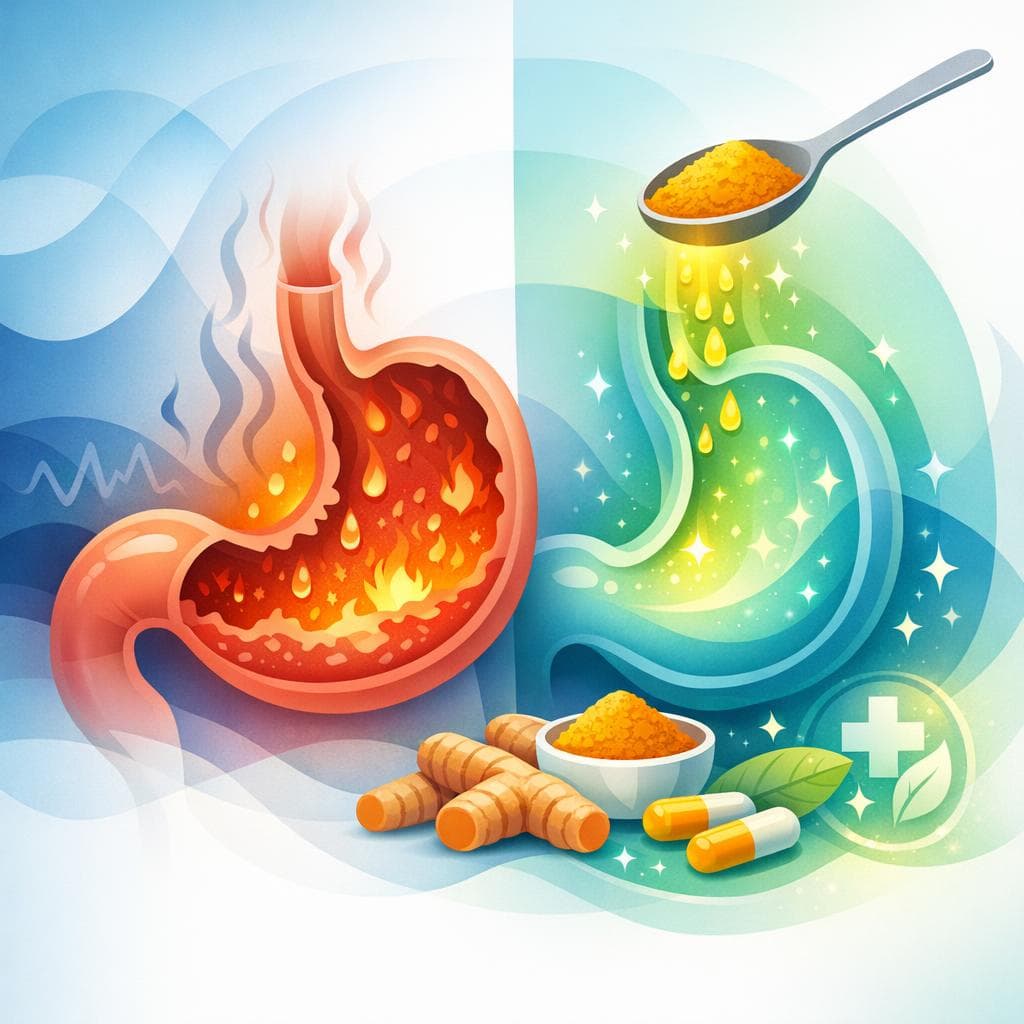
Turmeric/curcumin may ease gastritis-like discomfort for some due to anti-inflammatory effects, but it can also irritate the stomach and worsen symptoms, especially at higher supplement doses. Evidence for benefit is mixed and low quality; try only low, food-level amounts, avoid other irritants, and consult a clinician if you have active gastritis, ulcers, bleeding risks, or red-flag symptoms.
Turmeric may help some people with stomach discomfort, but it can also irritate the stomach in others. Evidence suggests curcumin (the main active compound in turmeric) has anti‑inflammatory and antioxidant actions that may protect the stomach lining, yet minor gastrointestinal side effects like nausea, abdominal discomfort, or dyspepsia have also been reported. [1] [2]
What gastritis feels like
Gastritis is inflammation of the stomach lining and can cause upper abdominal pain, nausea, vomiting, and loss of appetite, and sometimes black or tarry stools if bleeding occurs. [3] These symptoms can persist or worsen if the lining is irritated by medications like aspirin and other anti‑inflammatory drugs or by alcohol. [4]
What the research says about turmeric
- Potential benefits: Curcumin has shown gastroprotective properties in laboratory and early clinical settings, likely by reducing oxidative stress and inflammatory signaling in the stomach. This suggests it could help prevent or lessen ulcer or gastritis‑type injury in some contexts, though real‑world effectiveness remains uncertain. [5]
- Quality of evidence: A recent systematic review of turmeric for digestive disorders (including dyspepsia, reflux, ulcers, IBD, and IBS) found that while turmeric appears generally safe, study results were mixed and at high risk of bias, so its benefits for conditions like dyspepsia or peptic ulcer disease are still unclear. [1]
Can turmeric make symptoms worse?
Yes, in some people. Human studies and product safety summaries note that turmeric/curcumin is usually well tolerated but can cause minor gastrointestinal complaints (for example, stomach upset or dyspepsia). [2] At higher doses or in sensitive individuals, any compound that stimulates the gut can feel irritating, which may aggravate gastritis‑like symptoms. [2]
Who should be cautious
- Those with active gastritis, ulcers, or recent GI bleeding should be cautious with any new supplement that can upset the stomach, even if “natural.” Irritants, including some supplements and NSAIDs, can worsen symptoms or bleeding. [4]
- People on blood thinners or with bleeding risks should use caution because curcumin may have antiplatelet effects in lab studies, potentially adding to bleeding risk, though clinical relevance is not fully defined. [2]
Practical guidance
- Start low and go slow: If you wish to try turmeric for symptom relief, consider a low dose and assess tolerance over several days, since minor GI upset can occur. [2]
- Prefer food‑based amounts: Culinary use (as a spice in meals) is less likely to irritate than high‑dose supplements for many users. [2]
- Avoid known irritants: Regardless of turmeric use, limiting stomach irritants like aspirin, ibuprofen, naproxen, and alcohol can help reduce gastritis flares. [4]
- Know when to seek care: Ongoing upper abdominal pain, vomiting, black stools, or vomiting blood warrant medical evaluation to check for bleeding or other causes. [6]
Bottom line
- Turmeric/curcumin may offer stomach‑lining protection and symptom relief for some, but the current human evidence is mixed and not definitive. [1]
- It can also cause mild stomach irritation in some users, especially at higher doses, so responses vary. [2]
- If you have active gastritis or a history of ulcers, it may be reasonable to try only small, food‑level amounts and avoid high‑dose supplements unless your clinician agrees, while focusing on proven measures like reducing known irritants and using standard therapies when indicated. [4]
Related Questions
Related Articles

Sources
- 1.^abcA systematic review of the efficacy and safety of turmeric in the treatment of digestive disorders.(pubmed.ncbi.nlm.nih.gov)
- 2.^abcdefgLORMATE- levomefolate calcium, methylcobalamin, and turmeric capsule(dailymed.nlm.nih.gov)
- 3.^↑Gastritis: MedlinePlus Medical Encyclopedia(medlineplus.gov)
- 4.^abcdGastritis: MedlinePlus Medical Encyclopedia(medlineplus.gov)
- 5.^↑Turmeric (curcumin) remedies gastroprotective action.(pubmed.ncbi.nlm.nih.gov)
- 6.^↑Gastritis: MedlinePlus Medical Encyclopedia(medlineplus.gov)
Important Notice: This information is provided for educational purposes only and is not intended to replace professional medical advice, diagnosis, or treatment. Always consult with a qualified healthcare provider before making any medical decisions.