
 Persly Medical Team
Based on NIH | Does eating spicy food cause gastritis or make existing gastritis worse?
Spicy foods rarely cause gastritis, but they can worsen symptoms for some people. The main causes are H. pylori infection, long-term NSAID use, and alcohol. Focus on identifying personal triggers and treating the underlying cause if symptoms persist or alarm features appear.
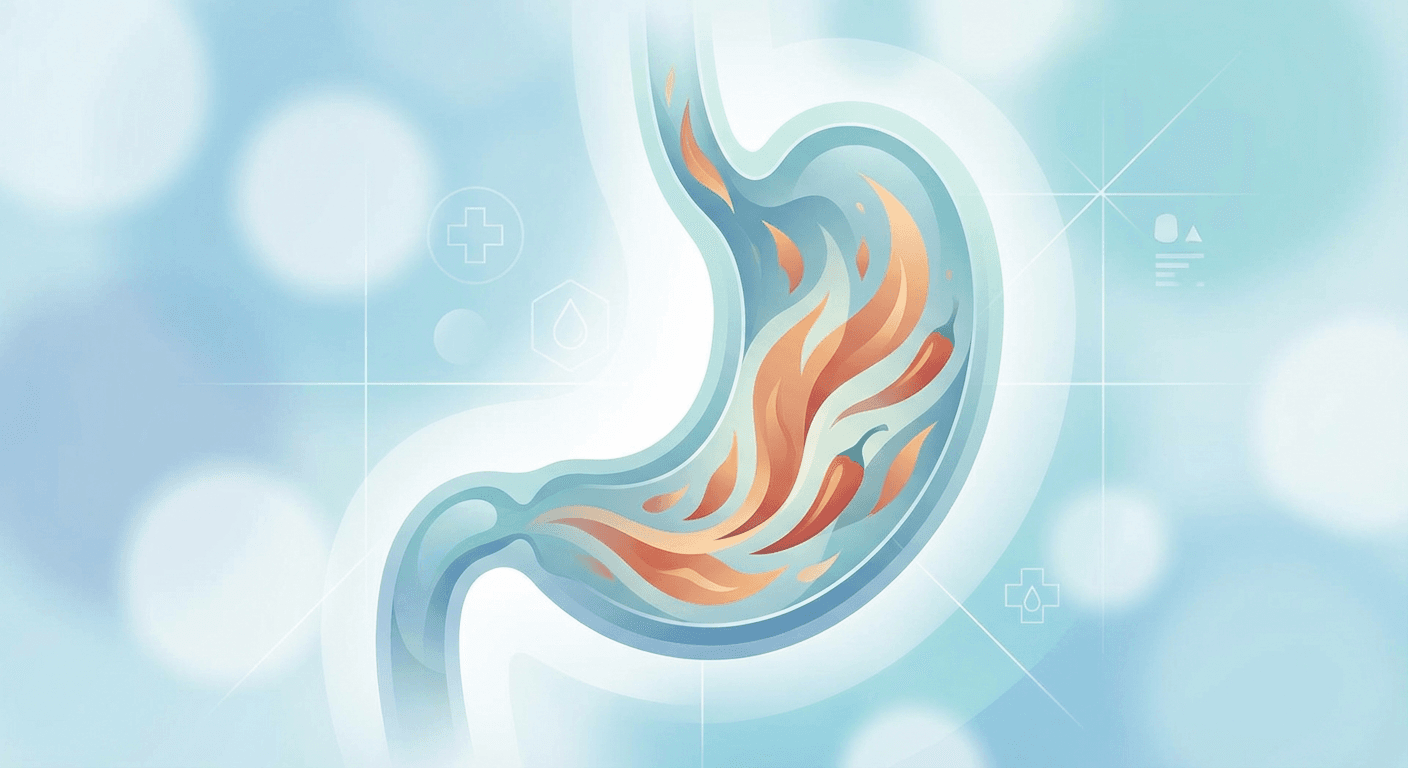
Spicy food does not usually cause gastritis, but it can trigger or worsen symptoms in some people. Most gastritis is caused by Helicobacter pylori infection, long‑term NSAID use, or alcohol, not by spicy foods themselves. [1] [2] Spicy foods may irritate a sensitive stomach and can aggravate discomfort for some individuals with active gastritis, so it’s reasonable to limit them if they seem to bother you. [3]
What actually causes gastritis
- H. pylori infection: A common stomach germ that can inflame the lining and lead to gastritis and ulcers in some people. [1] [4]
- Medications and alcohol: Regular use of nonsteroidal anti‑inflammatory drugs (NSAIDs) like ibuprofen or aspirin and heavy alcohol intake can inflame the stomach lining. [2]
- Other contributors: Autoimmune conditions and other illnesses can also play a role, but spices are not recognized as a primary cause. [1]
Do spicy foods damage the stomach lining?
- In a small endoscopy study of healthy adults, a very spicy meal (including 30 g jalapeño) did not produce visible stomach or duodenal injury, whereas aspirin produced multiple erosions in most participants. [5] In a related test, placing blended jalapeño directly into the stomach did not show visible damage after 24 hours. [5]
- Another controlled study found that red and black pepper increased acid and pepsin secretion and produced microscopic mucosal bleeding in some volunteers, though the long‑term significance of this finding is uncertain. [6] These results suggest that while capsaicin can stimulate the stomach, the degree of actual injury in typical eating is limited in healthy people. [6]
- Interestingly, a human trial showed that eating chili before aspirin reduced aspirin‑induced gastroduodenal injury, suggesting a potential protective effect (possibly via nerve‑mediated “preconditioning”). [7]
Why symptoms can still feel worse with spice
Even if spicy foods don’t “cause” gastritis, they can amplify symptoms like burning, pain, or nausea in people with an already inflamed or sensitive stomach, similar to how acidic or fatty foods may aggravate dyspepsia. [3] Guidance from major clinical resources often advises avoiding foods that personally trigger symptoms, including spicy, acidic, fried, or fatty items not because they cause the condition, but to improve comfort. [3] For peptic ulcers, stress and spicy foods don’t cause ulcers but can make symptoms worse, a principle that often applies to gastritis symptoms as well. [8] [9]
Practical advice if you have gastritis symptoms
- Identify your triggers: Keep a simple food‑symptom diary to see whether chili, black pepper, acidic foods, caffeine, carbonated drinks, or alcohol worsen your pain, nausea, or indigestion. Avoid or reduce only what clearly bothers you. [3]
- Adopt gentler eating habits: Smaller, more frequent meals; avoid late‑night eating; chew slowly; and avoid very hot‑temperature foods. These steps can reduce stomach irritation. [10] [11]
- Limit alcohol and NSAIDs: Alcohol and NSAIDs are well‑established irritants; consider alternatives such as acetaminophen if appropriate and discuss with a clinician. This change often helps more than removing spices. [2] [12]
- Treat the cause: If symptoms persist beyond a week, or you have alarm features (vomiting, weight loss, black stools, vomiting blood), seek medical care. Testing and treating H. pylori or adjusting medications can resolve the underlying inflammation. [13] [1]
Bottom line
- Spicy foods are not a common cause of gastritis. The leading causes are H. pylori infection, NSAIDs, and alcohol. [1] [2]
- Spice can worsen symptoms in some people, so a personalized approach avoiding foods that trigger your discomfort is sensible. [3]
- In healthy individuals, spicy meals rarely cause visible stomach injury, and chili may even protect against certain drug‑induced damage in research settings. [5] [7]
Related Questions
Related Articles

Sources
- 1.^abcdeGastritis - Symptoms and causes(mayoclinic.org)
- 2.^abcdGastritis: MedlinePlus Medical Encyclopedia(medlineplus.gov)
- 3.^abcdeGastritis - Diagnosis and treatment(mayoclinic.org)
- 4.^↑Helicobacter Pylori Infections(medlineplus.gov)
- 5.^abcSpicy food and the stomach. Evaluation by videoendoscopy.(pubmed.ncbi.nlm.nih.gov)
- 6.^abEffect of red pepper and black pepper on the stomach.(pubmed.ncbi.nlm.nih.gov)
- 7.^abChili protects against aspirin-induced gastroduodenal mucosal injury in humans.(pubmed.ncbi.nlm.nih.gov)
- 8.^↑Peptic Ulcer(medlineplus.gov)
- 9.^↑Symptoms and causes - Mayo Clinic(mayoclinic.org)
- 10.^↑만성 위염(Chronic gastritis) | 질환백과 | 의료정보 | 건강정보(amc.seoul.kr)
- 11.^↑만성 위염(Chronic gastritis) | 질환백과 | 의료정보 | 건강정보(amc.seoul.kr)
- 12.^↑Gastritis - Diagnosis and treatment(mayoclinic.org)
- 13.^↑Gastritis - Symptoms and causes(mayoclinic.org)
Important Notice: This information is provided for educational purposes only and is not intended to replace professional medical advice, diagnosis, or treatment. Always consult with a qualified healthcare provider before making any medical decisions.