
 Persly Medical Team
Based on PubMed | Does eating spicy food cause diabetes?
Spicy foods do not cause diabetes; they are not a recognized risk factor for type 1, type 2, or gestational diabetes. Diabetes risk is driven by genetics and lifestyle (excess weight, inactivity, age, and overall diet quality), so prevention focuses on healthy eating patterns, regular physical activity, and weight management.
Eating spicy food does not cause diabetes. There is no evidence that chili peppers or capsaicin directly cause type 1 or type 2 diabetes, and major health resources do not list spicy foods as a risk factor. [1] [2] In fact, the well‑known myth that “eating sugar causes diabetes” is also incorrect; type 2 diabetes arises from a mix of genetics and lifestyle factors like excess weight, inactivity, and age, not from any single food such as sugar or spices. [3] [1]
What actually causes diabetes
- Type 1 diabetes is an autoimmune condition driven by genes and environmental triggers; it is not caused by diet or spicy foods. [2]
- Type 2 diabetes develops due to a combination of genetics and lifestyle factors, especially excess body weight and physical inactivity; older age also raises risk. [2] [1]
- Gestational diabetes occurs in pregnancy and is linked to the body’s increased insulin demands; it can often be reduced by healthy weight, diet, and activity before and during pregnancy. [4]
Spicy foods and blood sugar: what research suggests
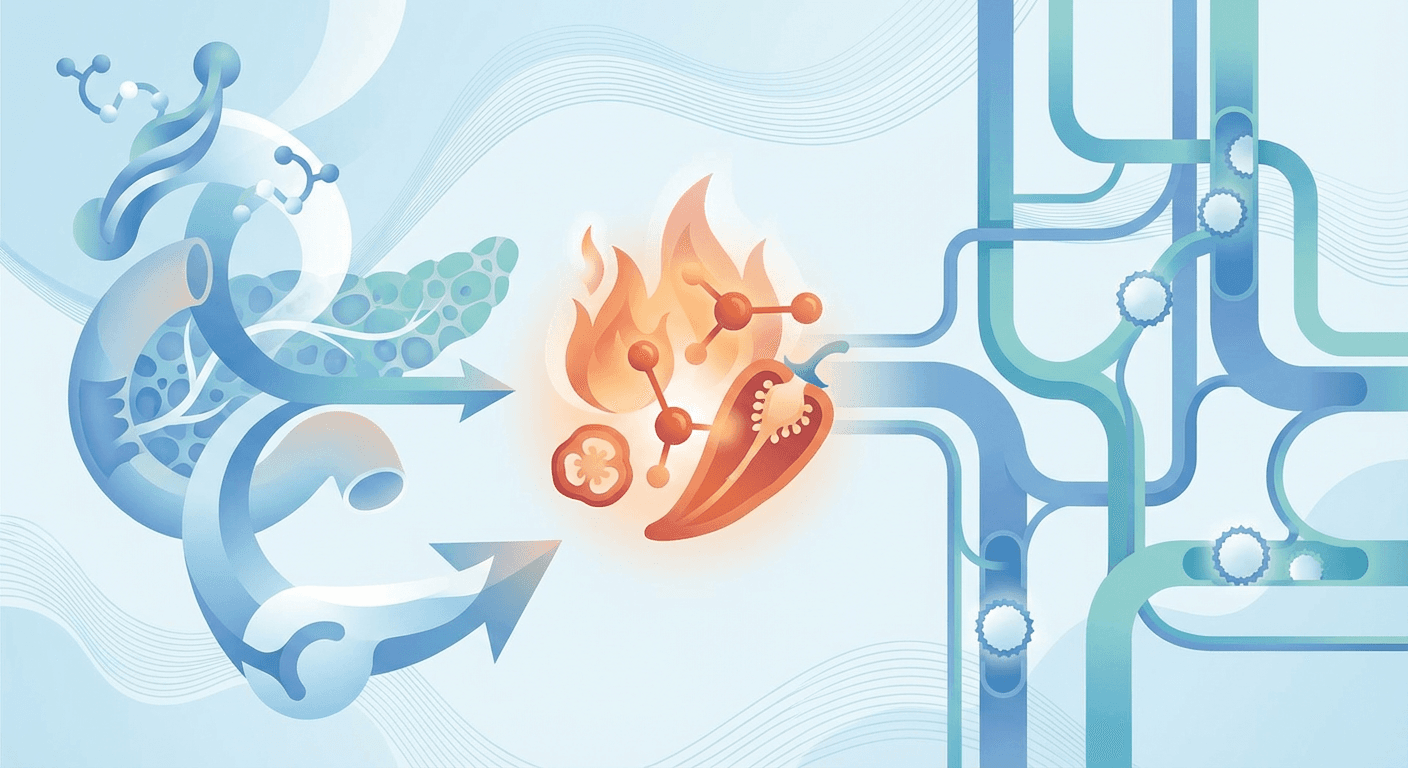
Human guidance from trusted sources does not identify spicy foods as a diabetes risk. Some animal studies suggest capsaicin (the “heat” in chili peppers) may actually improve glucose metabolism and insulin signaling, but these findings are preclinical and cannot be taken as direct advice for people. [5] [6] Other animal data show capsaicin can stimulate gut hormones that help blood sugar control, again in mice, not humans. [7] [8]
Large human nutrition studies focus on overall dietary patterns (more vegetables, fruits, whole grains; fewer refined carbs and processed foods) to lower diabetes risk, rather than on spices. Healthy dietary patterns are linked with lower type 2 diabetes risk, while “unhealthy” patterns increase risk. [9] Greater fruit and vegetable intake is associated with modestly lower diabetes risk. [10]
Clearing up common myths
- Myth: Spicy food causes diabetes. Fact: It doesn’t. Diabetes risk is tied to weight, physical activity, age, family history, and overall diet quality not spice level. [1] [2]
- Myth: I need a “diabetes diet.” Fact: People with or without diabetes can eat the same general healthy foods; the focus is on balanced meals and carbohydrate quality, not eliminating specific flavors like spice. [11]
Practical takeaways for prevention
- Maintain a healthy weight and stay active, which can delay or prevent type 2 diabetes and also help prevent some cases of gestational diabetes. [4] [1]
- Choose an overall healthy eating pattern rich in vegetables, fruits, whole grains, lean proteins, and healthy fats; this pattern is consistently linked to lower diabetes risk. [9] [10]
- Enjoy spices for flavor they can help you cut back on salt, sugar, or heavy sauces, which may support healthier eating, although the spices themselves are not a diabetes risk factor. (General culinary advice; not a cited medical directive.)
When to be cautious with spicy foods
Spicy foods can trigger heartburn or digestive discomfort in some people, and very spicy meals may transiently affect appetite or gastrointestinal comfort. These effects are not the same as causing diabetes and do not change diabetes risk. [3]
Bottom line
Eating spicy food does not cause diabetes, and it is not a recognized risk factor for type 1, type 2, or gestational diabetes. [1] [2] Focus on overall diet quality, physical activity, and healthy weight to meaningfully lower diabetes risk. [4] [9] [10]
Related Questions
Related Articles


Sources
- 1.^abcdefDiabetes(medlineplus.gov)
- 2.^abcdeDiabetes(medlineplus.gov)
- 3.^abDiabetes myths and facts: MedlinePlus Medical Encyclopedia(medlineplus.gov)
- 4.^abcDiabetes(medlineplus.gov)
- 5.^↑Dietary capsaicin attenuates metabolic dysregulation in genetically obese diabetic mice.(pubmed.ncbi.nlm.nih.gov)
- 6.^↑Capsiate improves glucose metabolism by improving insulin sensitivity better than capsaicin in diabetic rats.(pubmed.ncbi.nlm.nih.gov)
- 7.^↑Transient receptor potential vanilloid 1 activation enhances gut glucagon-like peptide-1 secretion and improves glucose homeostasis.(pubmed.ncbi.nlm.nih.gov)
- 8.^↑Transient receptor potential vanilloid 1 activation enhances gut glucagon-like peptide-1 secretion and improves glucose homeostasis.(pubmed.ncbi.nlm.nih.gov)
- 9.^abcThe association between dietary patterns and type 2 diabetes: a systematic review and meta-analysis of cohort studies.(pubmed.ncbi.nlm.nih.gov)
- 10.^abcFruit and vegetable consumption and risk of type 2 diabetes mellitus: a dose-response meta-analysis of prospective cohort studies.(pubmed.ncbi.nlm.nih.gov)
- 11.^↑Diabetes myths and facts: MedlinePlus Medical Encyclopedia(medlineplus.gov)
Important Notice: This information is provided for educational purposes only and is not intended to replace professional medical advice, diagnosis, or treatment. Always consult with a qualified healthcare provider before making any medical decisions.