
 Persly Medical Team
Based on PubMed | Is it true that dark chocolate can improve insulin sensitivity and help control blood sugar in people with type 2 diabetes?
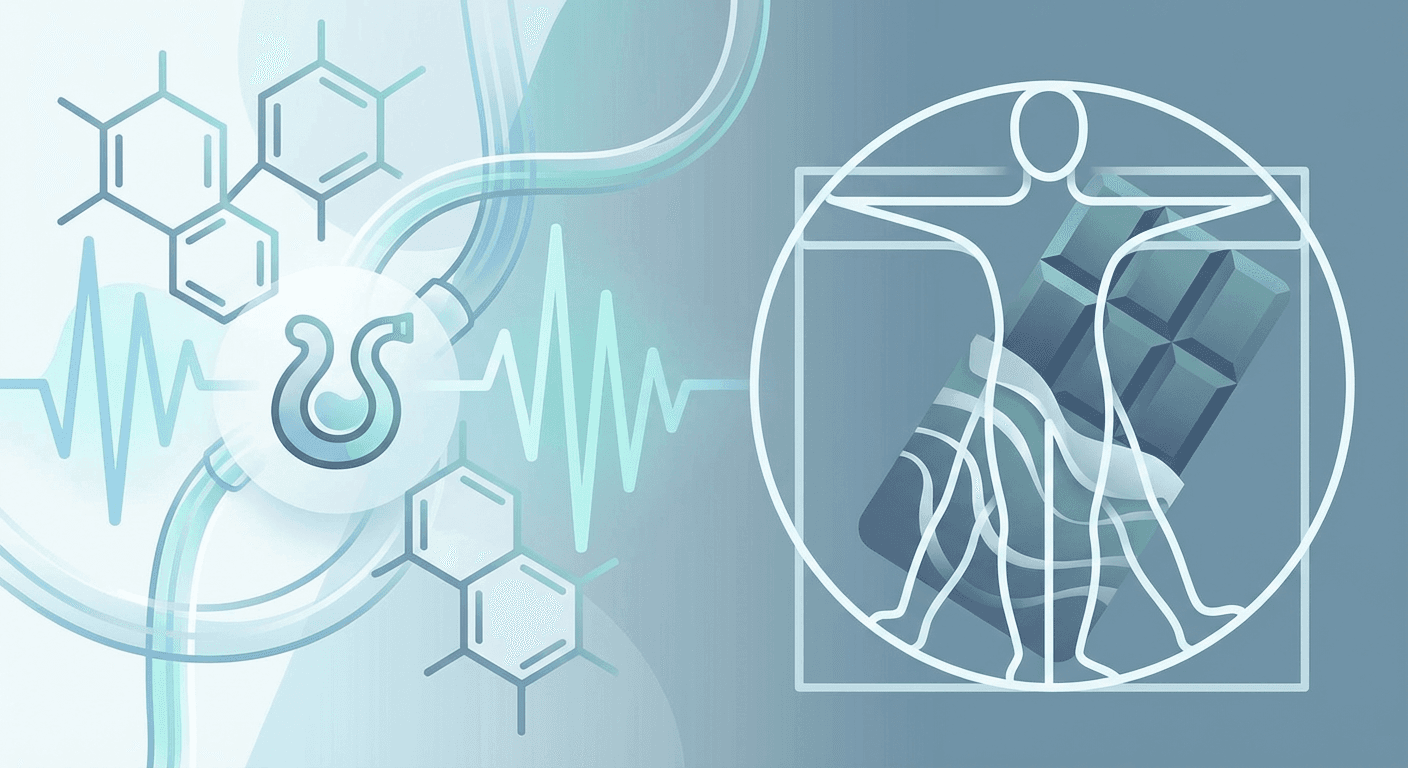
Dark chocolate rich in cocoa flavanols may modestly improve insulin sensitivity and some vascular/lipid markers, but it does not consistently lower blood sugar or HbA1c in type 2 diabetes. It can be enjoyed in small portions as part of a balanced diet, not used as a primary strategy for glycemic control.
Can Dark Chocolate Improve Insulin Sensitivity in Type 2 Diabetes?
Dark chocolate (rich in cocoa flavanols) may modestly improve markers of insulin sensitivity and vascular health, but it does not consistently lower blood sugar (glucose) or HbA1c in people with type 2 diabetes. Evidence suggests potential benefits for insulin resistance and cholesterol, yet these effects are small and should be weighed against calories, fats, and sugars in chocolate products. [1] [2]
What the Evidence Shows
-
Insulin sensitivity: A double‑blind, randomized, controlled trial in postmenopausal women with type 2 diabetes found that daily flavonoid‑enriched chocolate for one year led to a small improvement in insulin sensitivity (lower HOMA‑IR, higher QUICKI) mainly by reducing fasting insulin levels. There was no lowering of HbA1c or fasting glucose. [1]
-
Endothelial function: Reviews of randomized trials report that cocoa flavanols can improve endothelial function (the health of the blood vessel lining), partly by boosting nitric oxide availability, which is linked to better insulin signaling. These mechanisms may support insulin sensitivity, but clinical glucose reductions are inconsistent. [3] [2] [4]
-
Blood lipids: Small randomized trials in people with type 2 diabetes show improvements in HDL (“good”) cholesterol and total cholesterol:HDL ratio with high‑polyphenol chocolate, without changes in weight, HbA1c, or inflammatory markers. This suggests cardiovascular benefits rather than direct glycemic control. [5]
-
Observational data: Meta‑analyses of observational studies associate higher chocolate intake with lower cardiometabolic risk, but such studies cannot prove cause‑and‑effect and include varying chocolate types and amounts. Randomized trials are needed to confirm long‑term clinical benefits. [6]
Practical Takeaways
-
Blood sugar control: Current trials do not show meaningful reductions in HbA1c or fasting glucose from dark chocolate alone. It should not be used as a strategy to lower blood sugar; established diet and exercise approaches remain primary. [1] [5]
-
Possible insulin sensitivity benefit: Cocoa flavanols may modestly improve insulin resistance markers and endothelial function, which could support overall cardiometabolic health over time. However, effects are modest and variable across studies. [3] [2]
-
Cardiovascular profile: Improvements in HDL cholesterol and modest LDL reductions have been observed in some trials of flavanol‑rich chocolate. These changes may contribute to cardiovascular risk reduction independent of glucose control. [1] [5]
How to Include Dark Chocolate Safely
-
Choose high‑cocoa, low‑sugar options: Opt for chocolate with ≥70% cocoa to increase flavanol content and reduce sugar. Milk and white chocolate have less flavanols and more sugar. [7]
-
Mind portion sizes: For diabetes meal planning, chocolate is categorized among sweets, and typical guidance equates about 1¾ oz of chocolate to roughly 30 grams of carbohydrates (2 “carb choices”). Keeping portions small helps limit glucose spikes. [8]
-
Enjoy with meals: If you choose dessert, having a small amount right after a balanced meal can blunt post‑dessert sugar spikes compared to eating it alone. This approach supports moderation while managing blood sugar impact. [9]
-
Supplements and add‑ons: Major diabetes guidance notes that, without deficiency, herbal or non‑herbal supplements are not proven to lower blood sugar. Focus on whole‑food patterns rather than cocoa supplements for glycemic control. [10]
Evidence Summary Table
| Question | What Trials/Reviews Show | Glycemic Outcome | Other Cardiometabolic Effects |
|---|---|---|---|
| Does dark chocolate improve insulin sensitivity? | Flavonoid‑enriched chocolate for 1 year improved insulin sensitivity indices (HOMA‑IR, QUICKI) in medicated postmenopausal women with type 2 diabetes. [1] | No HbA1c or fasting glucose reduction. [1] | Lower LDL and total cholesterol:HDL ratio; reduced estimated 10‑year CHD risk. [1] |
| Does cocoa help vascular health? | Cocoa flavanols enhance endothelial nitric oxide, supporting vascular function. [3] [4] | Glycemic effects inconsistent. [3] [4] | Improved endothelial function; potential cardiovascular protection. [3] [4] |
| Does high‑polyphenol chocolate improve lipids in type 2 diabetes? | Randomized crossover trial: increased HDL and improved cholesterol:HDL ratio with high‑polyphenol chocolate; no change in weight or HbA1c. [5] | No change in glycemic control. [5] | Better HDL profile; no inflammatory marker improvement. [5] |
| Is higher chocolate intake linked to lower cardiometabolic risk? | Observational meta‑analysis associates higher intake with lower CVD and stroke risk. [6] | Not intervention data; cannot confirm blood sugar improvement. [6] | Suggestive of risk reduction but requires randomized trials. [6] |
Where Dark Chocolate Fits in Diabetes Care
-
Adjunct, not a treatment: Dark chocolate can be a small, enjoyable part of a balanced diet, potentially contributing to vascular and lipid benefits, but it should not replace proven strategies for glucose control like structured meal planning, physical activity, weight management, and medications when needed. [2] [7]
-
Standard guidance: People with diabetes can include desserts in moderation; choosing less sweet options like dark chocolate and portioning carefully helps manage blood sugar. This aligns with healthy eating practices for diabetes. [9] [8]
-
Lifestyle first for insulin resistance: Improving insulin sensitivity is most reliably achieved through physical activity and weight loss, along with a balanced eating pattern rich in vegetables, whole grains, lean proteins, and controlled carbohydrates. These strategies have stronger evidence than chocolate alone. [11] [12]
Bottom Line
Dark chocolate rich in cocoa flavanols may modestly improve insulin sensitivity and vascular markers, and it can slightly improve cholesterol profiles in some people with type 2 diabetes, but it does not reliably lower blood sugar or HbA1c. If you enjoy dark chocolate, choose high‑cocoa options, keep portions small, and fit it into your overall meal plan rather than using it as a blood‑sugar tool. [1] [5] [9] [8] [11] [12]
Related Questions
Related Articles


Sources
- 1.^abcdefghChronic ingestion of flavan-3-ols and isoflavones improves insulin sensitivity and lipoprotein status and attenuates estimated 10-year CVD risk in medicated postmenopausal women with type 2 diabetes: a 1-year, double-blind, randomized, controlled trial.(pubmed.ncbi.nlm.nih.gov)
- 2.^abcdCocoa and chocolate in human health and disease.(pubmed.ncbi.nlm.nih.gov)
- 3.^abcdeProtective effects of dark chocolate on endothelial function and diabetes.(pubmed.ncbi.nlm.nih.gov)
- 4.^abcdProtective effects of dark chocolate on endothelial function and diabetes.(pubmed.ncbi.nlm.nih.gov)
- 5.^abcdefgHigh-cocoa polyphenol-rich chocolate improves HDL cholesterol in Type 2 diabetes patients.(pubmed.ncbi.nlm.nih.gov)
- 6.^abcdChocolate consumption and cardiometabolic disorders: systematic review and meta-analysis.(pubmed.ncbi.nlm.nih.gov)
- 7.^abThe impact of chocolate on cardiovascular health.(pubmed.ncbi.nlm.nih.gov)
- 8.^abcCarb Choices(cdc.gov)
- 9.^abcCan People With Diabetes Have Dessert?(cdc.gov)
- 10.^↑Vitamins & Supplements for Diabetes(diabetes.org)
- 11.^abAbout Insulin Resistance and Type 2 Diabetes(cdc.gov)
- 12.^abAbout Insulin Resistance and Type 2 Diabetes(cdc.gov)
Important Notice: This information is provided for educational purposes only and is not intended to replace professional medical advice, diagnosis, or treatment. Always consult with a qualified healthcare provider before making any medical decisions.