
 Persly Medical Team
Based on PubMed | Is it true that eating peanuts or other nuts can trigger asthma attacks in people with nut allergies?
Yes. In people with peanut or tree-nut allergies, eating the allergen can cause severe reactions with breathing symptoms that can precipitate asthma attacks. Coexisting asthma heightens the risk and severity; strict avoidance, carrying epinephrine, and clear allergy/asthma action plans are essential.
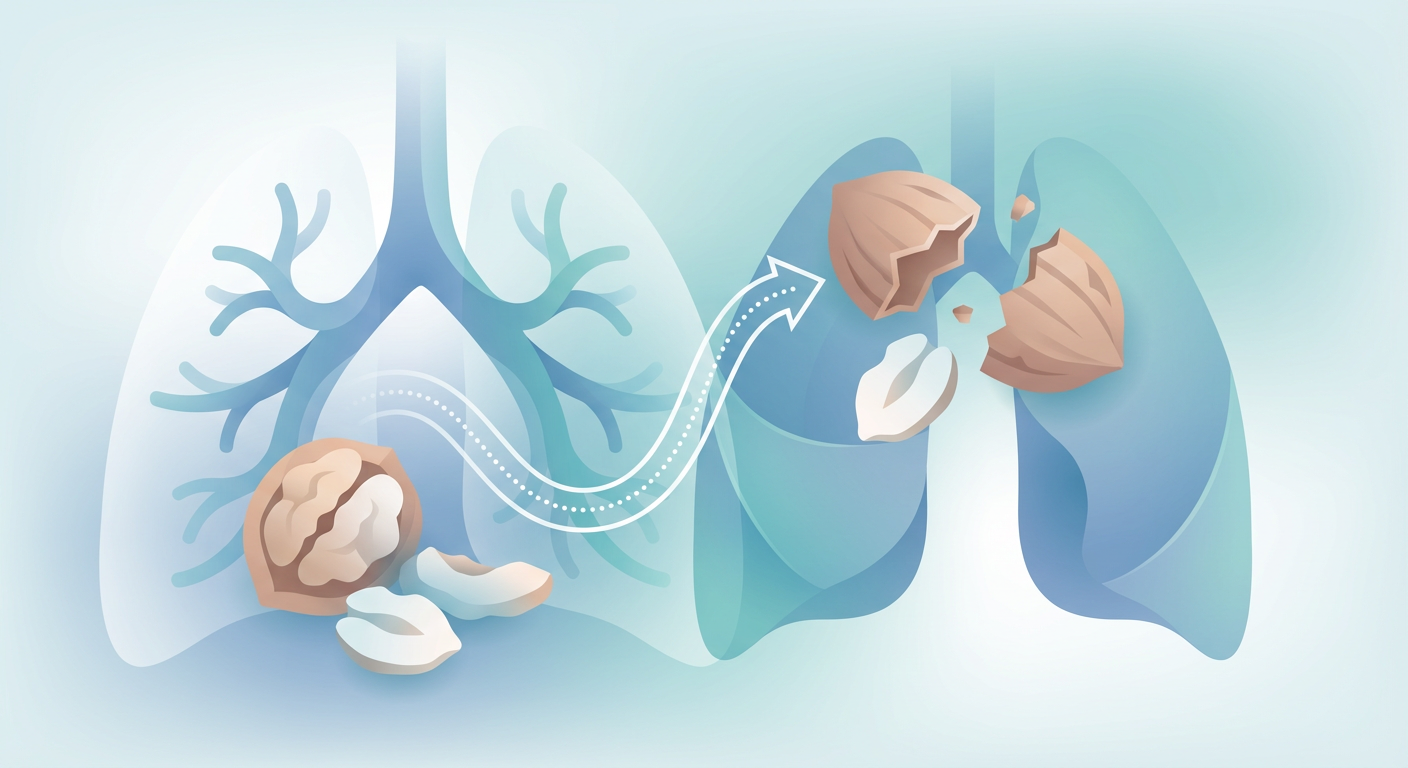
Yes eating peanuts or tree nuts can trigger severe allergic reactions that include breathing symptoms and can precipitate asthma attacks in people who are allergic to those nuts. In people who have both food allergy and asthma, reactions tend to be more severe, and breathing problems can escalate quickly. [1] [2]
How food allergy can trigger asthma symptoms
- When someone with a peanut or tree‑nut allergy eats (or sometimes inhales particles from) that allergen, the immune system can release chemicals like histamine that cause swelling and tightening of the airways. This can lead to wheezing, coughing, chest tightness, and shortness of breath symptoms that overlap with an asthma attack. [3]
- Food allergy and asthma often occur together; when they coexist, both the food reaction and asthma symptoms are more likely to be severe than either condition alone. [1] [2]
What makes this dangerous
- Severe food reactions (anaphylaxis) commonly involve the lungs, and having a history of asthma increases the risk of a severe anaphylactic reaction. This means that in someone with asthma, an accidental nut exposure can more readily tip into life‑threatening breathing problems. [1] [2]
- Guidance for people managing both conditions emphasizes that if you’re unsure whether breathing trouble is from an asthma flare or an allergic reaction, it’s safer to treat it as anaphylaxis and use epinephrine first, then follow your emergency plan and call emergency services. [4]
How common are food‑triggered asthma flares?
- Food is not among the most common day‑to‑day asthma triggers (compared to pollen, dust mites, or viral infections). However, in people who are food‑allergic, eating the culprit food can acutely worsen asthma symptoms as part of the allergic reaction. [5] [6]
- Some evidence links food allergy especially to common allergens such as peanut and tree nuts with more severe asthma outcomes in children, including higher hospitalization rates and intensive care admissions, suggesting food allergy is a risk factor for severe asthma morbidity. [7] [8] [9]
Practical prevention and emergency steps
- Strict avoidance of known nut allergens and careful label reading are key. [10]
- Always carry two epinephrine auto‑injectors if you have a nut allergy, and make sure close contacts know how to use them. [3]
- Have both an Anaphylaxis Action Plan and an Asthma Action Plan, and review them with your clinician regularly. [3] [4]
- If exposure occurs and you develop breathing symptoms, use epinephrine immediately, then call emergency services; follow your asthma plan (such as inhaled short‑acting bronchodilator) after epinephrine as instructed by your clinician. [4]
Special notes for management
- Some asthma medications and food allergy treatments may interact with risk. For example, certain oral immunotherapy approaches for peanut allergy can worsen asthma symptoms if asthma is not well controlled, so clinicians generally avoid or defer them in uncontrolled asthma. [11]
- Keeping asthma well controlled with daily controller therapy when indicated may reduce the severity of respiratory symptoms during an accidental food reaction, although it does not replace epinephrine in anaphylaxis. [5]
Quick reference: Food allergy and asthma risk factors
| Factor | What it means for risk | Why it matters |
|---|---|---|
| Food allergy to peanut/tree nuts | Higher chance of severe reactions with respiratory symptoms | Nut allergens are common causes of anaphylaxis with airway involvement. [1] [2] |
| Coexisting asthma | Greater severity of food reactions and higher anaphylaxis risk | Asthma increases the danger of breathing complications during reactions. [1] [2] |
| Poorly controlled asthma | Higher likelihood of severe outcomes | Unstable airways may respond more severely to allergic mediators. [5] |
| Delayed epinephrine use | Increased anaphylaxis complications | Early epinephrine improves outcomes; delay increases risk. [1] [2] |
Key takeaways
- Yes, in nut‑allergic individuals, eating peanuts or tree nuts can trigger breathing problems and even full asthma attacks as part of an allergic reaction. [1] [2]
- Coexisting asthma raises the risk that a nut reaction becomes severe and life‑threatening. [1] [2]
- Avoidance, carrying epinephrine, and having clear action plans for both allergy and asthma are essential to reduce risk and respond quickly. [3] [4]
Related Questions
Related Articles



Sources
- 1.^abcdefghFood allergy - Symptoms and causes(mayoclinic.org)
- 2.^abcdefghSymptoms and causes - Mayo Clinic(mayoclinic.org)
- 3.^abcdAsthma & Allergy Foundation of America Food Can Affect Asthma(aafa.org)
- 4.^abcdAsthma & Allergy Foundation of America Food Can Affect Asthma(aafa.org)
- 5.^abcAsthma Triggers(aafa.org)
- 6.^↑Food(aafa.org)
- 7.^↑Association between peanut allergy and asthma morbidity.(pubmed.ncbi.nlm.nih.gov)
- 8.^↑Food allergy is associated with potentially fatal childhood asthma.(pubmed.ncbi.nlm.nih.gov)
- 9.^↑Food allergy is associated with potentially fatal childhood asthma.(pubmed.ncbi.nlm.nih.gov)
- 10.^↑Nut allergies: MedlinePlus Medical Encyclopedia(medlineplus.gov)
- 11.^↑Food allergy - Diagnosis and treatment(mayoclinic.org)
Important Notice: This information is provided for educational purposes only and is not intended to replace professional medical advice, diagnosis, or treatment. Always consult with a qualified healthcare provider before making any medical decisions.