
 Persly Medical Team
Based on PubMed | Is it true that drinking coffee can help relieve asthma symptoms due to its caffeine content?
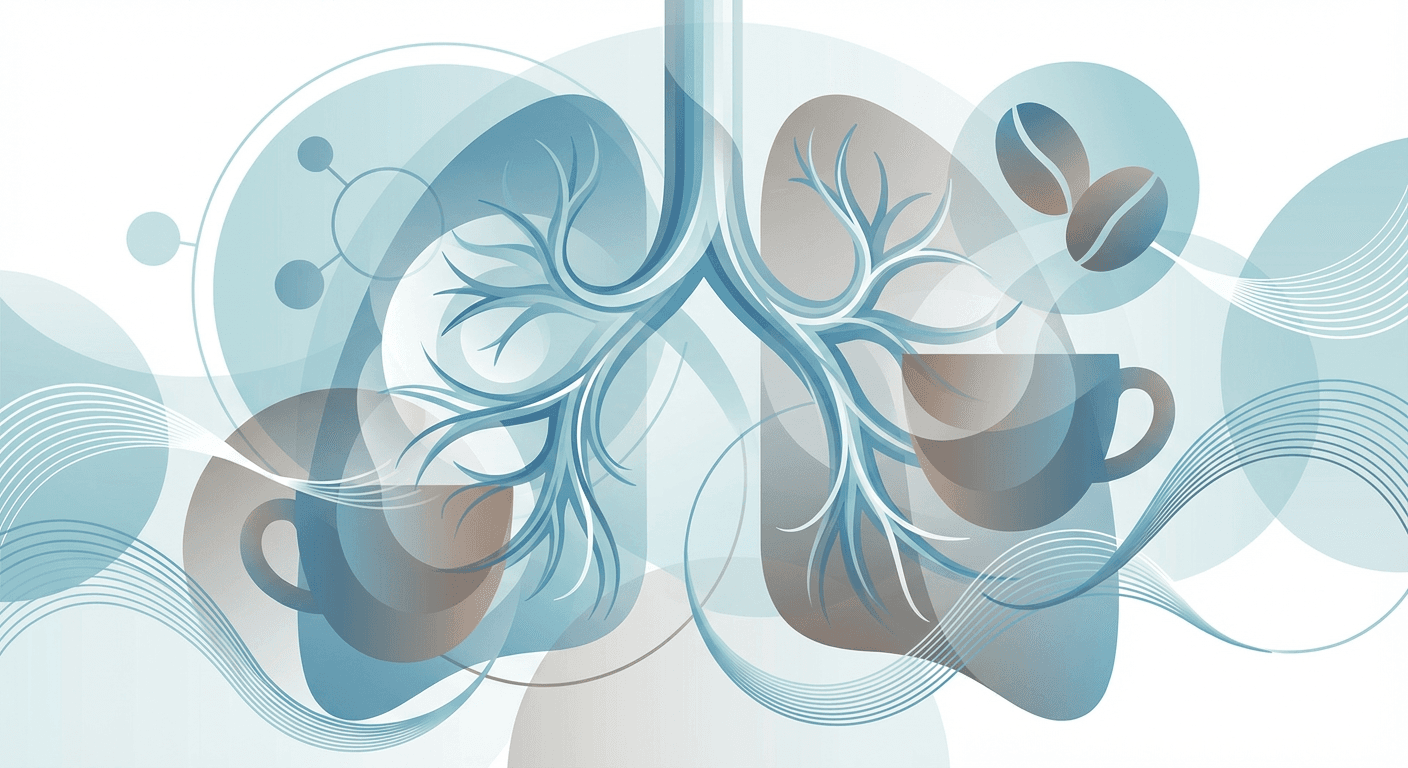
Caffeine in coffee has a mild bronchodilator effect that can modestly improve lung function and ease asthma symptoms for a few hours. It should not replace fast-acting inhalers or controller medicines, and clinics advise avoiding caffeine for at least 4 hours before spirometry.
Coffee’s caffeine can provide modest, short‑term breathing relief in asthma, but it is not a substitute for prescribed inhalers or controller medicines. Several controlled studies show that caffeine has a weak bronchodilator effect (it relaxes airway muscles) and can slightly improve lung function for a few hours, yet the benefit is small compared with standard asthma treatments. [1] [2]
What the evidence shows
- Small improvement in lung function: In adults with mild to moderate asthma, caffeine at low doses (less than 5 mg/kg body weight) led to a modest rise in FEV1 (the amount of air exhaled in the first second), averaging about a 5% increase, with some studies reporting 12–18% in certain participants. These effects typically lasted up to 2–4 hours. [1]
- Time course: Peak improvement has been observed around 1.5 hours after ingestion for some measures, with mid‑expiratory flow improvements lasting up to 4 hours. [2]
- Mechanism: Caffeine is chemically related to theophylline, an older asthma drug, and acts as a mild bronchodilator and may reduce respiratory muscle fatigue, explaining the short‑term relief some people feel after coffee. [1]
What this means for day‑to‑day management
- Helpful in a pinch, but not primary therapy: While a cup of coffee may slightly ease chest tightness or wheeze for a short period, it should not replace a fast‑acting inhaler (short‑acting beta agonist) or your prescribed controller medication, which are proven to provide stronger and more reliable relief. [1]
- Testing considerations: Because caffeine can modestly improve lung function, clinics often recommend avoiding caffeine for at least 4 hours before lung function tests to prevent skewed results. [1]
- Natural remedy context: Some reputable health resources list caffeine among natural options that may help improve asthma symptoms for some people, highlighting that potential benefits are limited and individualized. [3]
Safety, limits, and special situations
- Side effects: Caffeine can cause jitteriness, fast heart rate, anxiety, and sleep problems, which may be uncomfortable and could complicate symptom perception. [1]
- GERD connection: If you also have acid reflux (GERD), coffee and caffeine can aggravate reflux, which in turn may worsen asthma control in some people; managing reflux (e.g., avoiding caffeine when it triggers symptoms) can help overall asthma management. [4] [5]
Practical guidance
- If you choose to use coffee: One regular cup may offer mild, short‑term ease, but carry and use your quick‑relief inhaler as directed for sudden symptoms, and follow your personalized asthma action plan. [1]
- Before spirometry: Skip caffeinated drinks for at least 4 hours prior to lung function testing to ensure accurate measurements. [1]
- Discuss with your clinician: If you notice consistent benefit or side effects from caffeine, share this with your healthcare professional to tailor your plan.
Summary Table: Caffeine/coffee and asthma
| Aspect | Findings |
|---|---|
| Bronchodilation | Weak but measurable; small increases in FEV1 and flow rates in mild–moderate asthma. [1] [2] |
| Onset & duration | Peak around 1–1.5 hours; effects up to ~2–4 hours depending on measure. [1] [2] |
| Clinical role | Possible adjunct for mild, short‑term relief; not a replacement for inhaled bronchodilators or controllers. [1] |
| Testing implications | Avoid caffeine ≥4 hours before lung function tests to prevent overestimating lung capacity. [1] |
| Special considerations | May worsen GERD, which can undermine asthma control in some individuals. [4] [5] |
| Natural remedies context | Listed among options that may help some people, but with limited effect size. [3] |
In short, caffeine from coffee can modestly open the airways for a few hours, but standard asthma medications remain the safest and most effective way to control symptoms and prevent attacks. [1] [2] [3]
Related Questions
Related Articles

Sources
- 1.^abcdefghijklmCaffeine for asthma.(pubmed.ncbi.nlm.nih.gov)
- 2.^abcdeThe bronchodilator effect of caffeine in adult asthmatics.(pubmed.ncbi.nlm.nih.gov)
- 3.^abcAsthma - Diagnosis and treatment(mayoclinic.org)
- 4.^abAsthma and acid reflux: Are they linked?(mayoclinic.org)
- 5.^abAsthma and acid reflux: Are they linked?(mayoclinic.org)
Important Notice: This information is provided for educational purposes only and is not intended to replace professional medical advice, diagnosis, or treatment. Always consult with a qualified healthcare provider before making any medical decisions.