
 Persly Medical Team
Elevated liver enzymes in melanoma: what it means
Elevated Liver Enzymes in Melanoma: What It Means and When to Worry
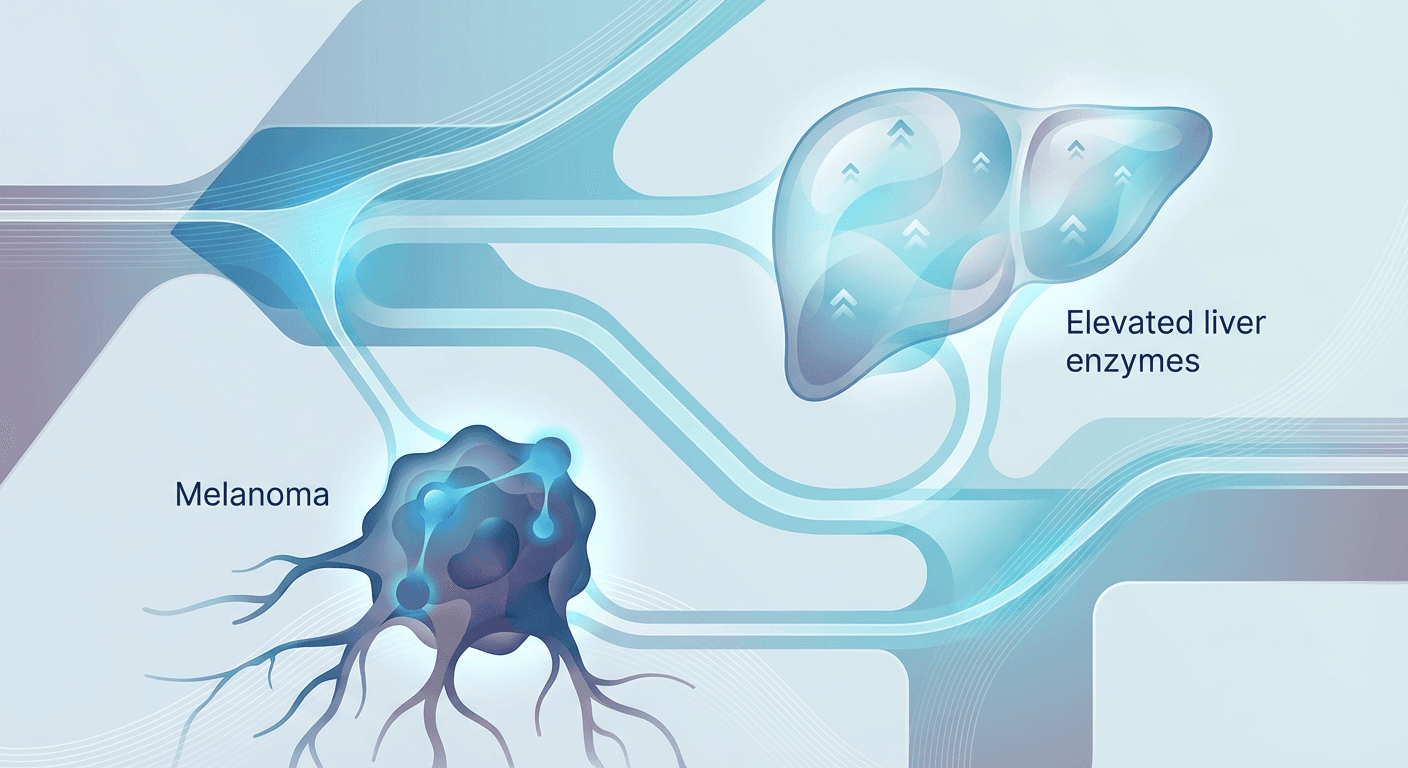
Elevated liver enzymes (like ALT, AST, ALP, and bilirubin) can happen in people with melanoma for a few different reasons, and the level of concern depends on the context, severity, and symptoms. The most common causes include treatment effects, liver metastases, or unrelated liver conditions such as viral hepatitis or fatty liver. Elevated results often prompt repeat labs and sometimes imaging to see what’s going on.
Why Liver Enzymes Rise in Melanoma
-
Cancer treatments (targeted therapy): BRAF/MEK inhibitors (such as vemurafenib, cobimetinib, encorafenib, binimetinib) can raise liver enzymes and sometimes require dose holds or reductions depending on grade. For mild (Grade 1) changes, treatment is usually continued, while moderate to severe elevations often lead to temporary interruption and dose adjustment. [1] In combinations like cobimetinib plus vemurafenib, liver test abnormalities are among the most common reasons for stopping therapy. [2] For vemurafenib alone, similar rules apply: mild changes are monitored; higher grades usually mean pausing and lowering the dose once values improve. [3]
-
Immunotherapy (checkpoint inhibitors): Drugs like nivolumab, pembrolizumab, ipilimumab, and combinations can trigger immune‑related hepatitis. These therapies don’t use dose reductions; instead, clinicians adjust by holding or discontinuing and treating the inflammation, often with steroids when elevations are significant. [4] Because immunotherapy can cause autoimmune‑type hepatitis, baseline screening for hepatitis B/C is recommended and caution is used in chronic liver disease. [5]
-
Melanoma metastasis to the liver: Elevations (especially ALP and bilirubin) can be due to liver involvement rather than the medicine itself, and this pattern has been observed across cancers with liver metastases. [6] In datasets of other cancers, most patients with high transaminases or ALP had liver metastases at baseline, highlighting that tumor spread can be a major driver of abnormal tests. [7] [8] [9] [10] [11]
How Serious Is It?
-
Grade 1 (mild) elevations often don’t cause symptoms and can be watched with continued therapy and closer monitoring. Protocols typically allow continuation at the same dose for mild changes on BRAF/MEK therapies. [1] [3]
-
Grade 2–3 (moderate to severe) elevations may need therapy to be withheld and resumed at a lower dose after improvement for targeted treatments. This stepwise approach is standard in combinations like encorafenib/binimetinib and vemurafenib/cobimetinib. [12] [1] [3]
-
Immune‑related hepatitis management differs: dose reductions aren’t used; instead, clinicians pause treatment and start corticosteroids for more significant elevations, following established irAE (immune‑related adverse event) guidance. [4] Real‑world experience with ipilimumab has shown higher‑than‑trial rates of transaminitis, emphasizing the need for close monitoring during therapy. [13]
Warning Signs You Shouldn’t Ignore
- Yellowing of the eyes/skin (jaundice), dark urine, itching, right‑upper abdominal pain, nausea/vomiting, or loss of appetite can signal liver injury. Patient education materials for these melanoma therapies advise contacting the care team promptly if these occur. [14] Similar advice is given for the combination of cobimetinib and vemurafenib, with regular blood tests to check liver function. [15]
What Your Team May Do Next
-
Repeat labs and trend the values (ALT, AST, ALP, bilirubin). If values are mild, monitoring often continues with the same dose on targeted therapy. [1] [3]
-
Adjust treatment:
-
Assess causes: imaging for liver involvement, screen for hepatitis B/C before or during immunotherapy because underlying viral hepatitis can complicate management and carries a reactivation risk. [5] [16]
Practical Tips for You
- Keep a symptom diary (energy levels, appetite, abdominal pain, urine color, skin/eye color).
- Ask about your “grade” of elevation and the plan (watchful waiting vs hold/reduce vs steroids).
- Stay on schedule for blood tests, especially when starting or changing therapy; these drugs come with regular monitoring plans to catch issues early. [15]
Bottom Line
Elevated liver enzymes in melanoma can be due to the medicine, the disease, or unrelated liver conditions. Mild elevations are often manageable with close monitoring, while higher levels may need treatment pauses, dose changes, or steroids depending on the therapy type. [12] [4] [1] [3] Alert symptoms like jaundice, dark urine, or abdominal pain should prompt quick contact with your care team. [14] [15] With timely monitoring and tailored management, many people continue effective melanoma treatment safely. [2] [13]
Related Questions
Related Articles


Sources
- 1.^abcdef2037-Melanoma metastatic cOBIMEtinib and vemurafenib(eviq.org.au)
- 2.^ab2037-Melanoma metastatic cOBIMEtinib and vemurafenib(eviq.org.au)
- 3.^abcdef1308-Melanoma metastatic vemurafenib SUPERSEDED | eviQ(eviq.org.au)
- 4.^abcd3469-Melanoma adjuvant nivolumab (weight based dosing) SUPERSEDED(eviq.org.au)
- 5.^ab3469-Melanoma adjuvant nivolumab (weight based dosing) SUPERSEDED(eviq.org.au)
- 6.^↑(dailymed.nlm.nih.gov)
- 7.^↑CAPECITABINE 500MG- capecitabine tablet, film coated(dailymed.nlm.nih.gov)
- 8.^↑DailyMed - CAPECITABINE tablet, film coated(dailymed.nlm.nih.gov)
- 9.^↑DailyMed - CAPECITABINE tablet, film coated(dailymed.nlm.nih.gov)
- 10.^↑XELODA- capecitabine tablet, film coated(dailymed.nlm.nih.gov)
- 11.^↑XELODA- capecitabine tablet, film coated(dailymed.nlm.nih.gov)
- 12.^abc3600-Melanoma metastatic biNIMEtinib and encorafenib(eviq.org.au)
- 13.^abElevated rates of transaminitis during ipilimumab therapy for metastatic melanoma.(pubmed.ncbi.nlm.nih.gov)
- 14.^abPatient information - Melanoma metastatic - Vemurafenib(eviq.org.au)
- 15.^abcPatient information - Melanoma metastatic - Cobimetinib and vemurafenib(eviq.org.au)
- 16.^↑Reconsidering the management of patients with cancer with viral hepatitis in the era of immunotherapy.(pubmed.ncbi.nlm.nih.gov)
Important Notice: This information is provided for educational purposes only and is not intended to replace professional medical advice, diagnosis, or treatment. Always consult with a qualified healthcare provider before making any medical decisions.