
 Persly Medical Team
Based on NIH | What does a low hemoglobin level indicate in someone with endometrial cancer, and what further evaluation or treatment is recommended?
Low hemoglobin (anemia) in endometrial cancer often reflects tumor-related bleeding, cancer-associated inflammation, or treatment effects. Evaluation should include CBC, iron studies, B12/folate, reticulocyte count, and assessment of bleeding and treatment status. Management may involve controlling bleeding, iron replacement (oral or IV), transfusion for Hgb <8 g/dL or symptomatic cases, and ESAs during chemotherapy, with preoperative optimization to improve outcomes.
Overview
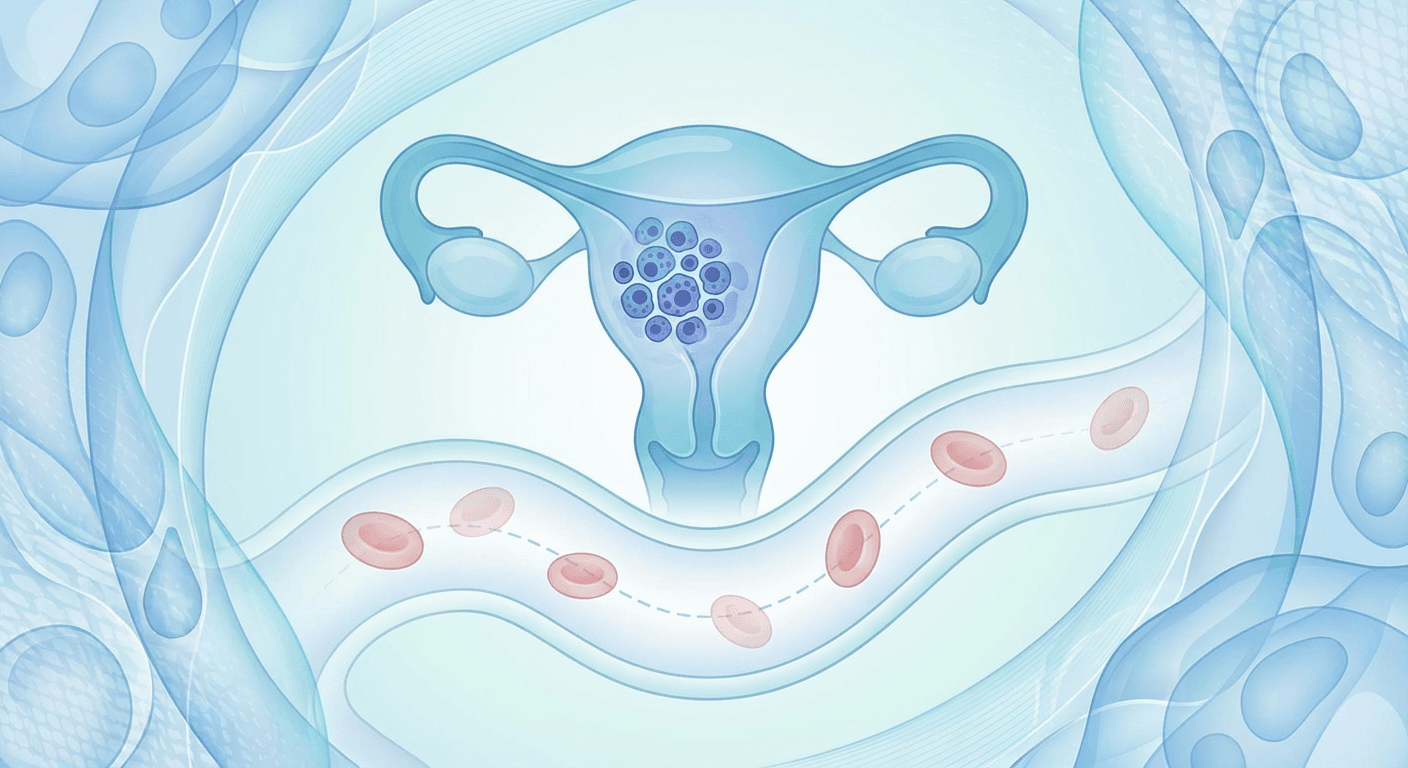
A low hemoglobin level (anemia) in someone with endometrial cancer can have several meanings. It often reflects blood loss from abnormal uterine bleeding before diagnosis, but it may also be related to advanced disease biology, nutritional deficiencies (iron, B12, folate), or treatment effects such as chemotherapy or radiation that suppress red blood cell production. Anemia is common in gynecologic cancers and can affect symptoms, surgical risk, and overall outcomes, so a structured evaluation and tailored treatment plan are recommended. [1] [2]
Why hemoglobin can be low
- Bleeding from the tumor: Endometrial cancers frequently present with abnormal bleeding, which can lead to iron‑deficiency anemia and low hemoglobin. Pre‑diagnosis blood loss is a well‑recognized complication. [1]
- Cancer‑related inflammation and marrow effects: Cancer can change how the body uses iron and produces red blood cells, contributing to anemia even without heavy bleeding. This can coexist with iron deficiency. [2]
- Treatment effects: Chemotherapy and high‑dose radiation can suppress bone marrow or reduce erythropoietin (the hormone that helps make red blood cells), causing anemia during or after treatment. [3] [4]
What low hemoglobin may indicate for prognosis
- Association with more aggressive features: Pretreatment hemoglobin below ~12 g/dL has been linked with higher rates of advanced stage, lymphovascular invasion, cervical/adnexal involvement, and nodal spread. These are markers of more aggressive disease biology. [5]
- Worse survival in some studies: Lower preoperative hemoglobin has been associated with lower 5‑year disease‑free and overall survival; in larger prospective cohorts, lower hemoglobin and higher platelets were independently associated with poorer disease‑specific survival. [5] [6]
- Not always independent: In multivariable models, anemia may reflect the presence of adverse pathology rather than being a stand‑alone driver; histology and invasion patterns can outweigh hemoglobin itself as independent predictors. [5]
Symptoms to watch for
- Typical anemia symptoms include fatigue, shortness of breath, dizziness, light‑headedness, and pallor. These symptoms may intensify with ongoing bleeding or during chemotherapy. [7] [8]
- When to seek urgent care: If you are fainting, severely short of breath, or having heavy bleeding with weakness, you may need urgent evaluation and possibly transfusion. [7]
Recommended evaluation
A focused workup helps identify cause(s) and guide treatment:
- Complete blood count (CBC): Confirms hemoglobin level and looks at red cell indices (MCV), white cells, platelets. This establishes severity and pattern. [9]
- Iron studies: Ferritin, serum iron, transferrin saturation; ferritin is the iron storage marker and is low in iron‑deficiency anemia associated with bleeding. [10]
- B12 and folate: Check if macrocytosis or risk factors; deficiencies can coexist with cancer‑related anemia. [2]
- Reticulocyte count: Assesses bone marrow response; low reticulocytes suggest under‑production (marrow suppression), high suggests ongoing blood loss. [2]
- Assess bleeding source and burden: Review bleeding history, pelvic exam, and imaging or pathology findings; ongoing uterine bleeding will perpetuate iron loss. [1]
- Treatment status review: Document chemotherapy, radiation, and surgical timing; these influence anemia mechanisms and management thresholds. [3] [4]
How anemia is graded and when treatment is needed
- Grading (CTCAE):
- Grade 1: Hgb < lower limit of normal to 10 g/dL
- Grade 2: Hgb 10–8 g/dL
- Grade 3: Hgb <8 g/dL; transfusion usually indicated
- Grade 4: Life‑threatening consequences [11]
- Transfusion thresholds: In oncology, transfusion is commonly considered for Hgb below ~8 g/dL or higher if there are significant symptoms or cardiovascular disease; the goal is to relieve symptoms and stabilize before surgery or ongoing therapy. [12]
- Erythropoiesis‑stimulating agents (ESAs): In those on chemotherapy with hemoglobin <10 g/dL and expected to continue treatment for at least two months, ESAs (epoetin alfa, darbepoetin) may be used to reduce transfusion needs, using the lowest dose to avoid Hgb >12 g/dL due to safety concerns. [13] [14] [15]
Treatment options
- Treat the bleeding source: Managing the endometrial tumor (surgery, radiation, medical therapy) can reduce blood loss and help hemoglobin recover. [1]
- Iron replacement:
- Oral iron is suitable when bleeding is controlled and absorption is adequate. It replenishes iron but works over weeks. [16]
- Intravenous iron may be chosen if oral iron is not tolerated, rapid repletion is needed before surgery, or inflammation limits absorption; it can raise hemoglobin faster and reduce transfusion needs. [16]
- Transfusion of red blood cells: For severe anemia (often Hgb <8 g/dL) or symptomatic cases, transfusion quickly raises hemoglobin; however, transfusions carry risks including infection, thrombosis, and higher perioperative morbidity, so they are used judiciously. [11] [17] [18]
- ESAs during chemotherapy: When appropriate, ESAs can reduce transfusion requirements in chemotherapy‑related anemia, with careful dosing and monitoring to avoid exceeding 12 g/dL. [14] [15] [13]
- Nutritional support: Ensure adequate intake of iron, folate, and B12 during recovery and treatment; dietary measures complement medical therapy but do not replace iron supplementation when deficiency is present. [19]
Surgical and perioperative considerations
- Preoperative optimization: Correcting anemia before surgery is associated with better outcomes; preoperative anemia is linked to higher postoperative complications, and transfusion itself is associated with increased surgical site infection, morbidity, and mortality in gynecologic oncology. A prehabilitation plan (IV iron, ESA when indicated, minimizing transfusions) can improve recovery. [18] [17]
- Plan timing: When feasible, allow time for iron replacement to raise hemoglobin ahead of elective procedures while balancing the urgency of cancer surgery. Shared decision‑making is important. [18] [16]
Practical action steps
- If hemoglobin is low:
- Get a CBC and iron studies (including ferritin) to confirm iron deficiency versus other causes. This directs therapy. [10] [9]
- Address ongoing uterine bleeding through definitive cancer treatment planning. Stopping blood loss is crucial. [1]
- Start iron therapy (oral or IV) if iron deficiency is present; consider B12/folate if indicated. This rebuilds red cell capacity. [16]
- For Hgb <8 g/dL or significant symptoms, discuss transfusion to stabilize, especially before surgery or during intensive therapy. Weigh benefits and risks. [11] [12] [17]
- If on chemotherapy with Hgb <10 g/dL and therapy will continue, consider ESAs under clinician guidance, targeting the lowest dose to avoid transfusions and keeping Hgb ≤12 g/dL. [14] [13] [15]
Quick reference thresholds
| Situation | Typical approach |
|---|---|
| Hgb 10–12 g/dL, mild/no symptoms | Evaluate cause; treat iron deficiency; monitor |
| Hgb 8–10 g/dL, symptomatic or upcoming surgery | IV iron if needed; consider ESA if on chemo; transfuse if symptoms significant or urgent surgery |
| Hgb <8 g/dL | Transfusion generally indicated; concurrently evaluate and treat underlying cause |
These ranges are general; individual plans vary based on symptoms, heart/lung comorbidities, and treatment timing. [11] [12]
Key takeaways
- Low hemoglobin in endometrial cancer often indicates blood loss from tumor‑related bleeding, but can also reflect advanced disease or treatment effects. [1] [3]
- Lower pretreatment hemoglobin is associated with more aggressive features and worse survival in several studies, though it may be a marker rather than an independent driver. It still warrants careful evaluation and correction. [5] [6]
- A structured workup and targeted therapy control bleeding, replace iron, use transfusions and ESAs thoughtfully can improve symptoms, safety, and outcomes. [10] [16] [14] [13] [17] [18]
Related Questions
Related Articles

Sources
- 1.^abcdefEndometrial cancer: MedlinePlus Medical Encyclopedia(medlineplus.gov)
- 2.^abcdAnemia(medlineplus.gov)
- 3.^abcAnemia and Cancer(mskcc.org)
- 4.^abAnemia and Cancer(mskcc.org)
- 5.^abcdPresence of anemia and poor prognostic factors in patients with endometrial carcinoma.(pubmed.ncbi.nlm.nih.gov)
- 6.^abPreoperative anemia, leukocytosis and thrombocytosis identify aggressive endometrial carcinomas.(pubmed.ncbi.nlm.nih.gov)
- 7.^abPatient information - Endometrial cancer recurrent or metastatic - Carboplatin, paclitaxel and dostarlimab(eviq.org.au)
- 8.^↑Patient information - Endometrial cancer recurrent or metastatic - AP (doxorubicin and cisplatin)(eviq.org.au)
- 9.^abLab Tests for Gynecologic Cancer(stanfordhealthcare.org)
- 10.^abcAnemia is a risk with heavy periods. Here's what to do(mayoclinic.org)
- 11.^abcdAnaemia | eviQ(eviq.org.au)
- 12.^abcLow blood cell counts: Side effects of cancer treatment(mayoclinic.org)
- 13.^abcdRETACRIT- epoetin alfa-epbx injection, solution(dailymed.nlm.nih.gov)
- 14.^abcdThese highlights do not include all the information needed to use ARANESP safely and effectively. See full prescribing information for ARANESP . ARANESP ® (darbepoetin alfa ) i njection, for intravenous or subcutaneous use Initial U.S. Approval: 2001(dailymed.nlm.nih.gov)
- 15.^abcThese highlights do not include all the information needed to use PROCRIT safely and effectively. See full prescribing information for PROCRIT. PROCRIT ®(epoetin alfa) injection, for intravenous or subcutaneous use Initial U.S. Approval: 1989(dailymed.nlm.nih.gov)
- 16.^abcdeIron deficiency anemia-Iron deficiency anemia - Diagnosis & treatment - Mayo Clinic(mayoclinic.org)
- 17.^abcdPerioperative blood transfusion in gynecologic oncology surgery: analysis of the National Surgical Quality Improvement Program Database.(pubmed.ncbi.nlm.nih.gov)
- 18.^abcdImpact of Preoperative Anaemia and Blood Transfusion on Postoperative Outcomes in Gynaecological Surgery.(pubmed.ncbi.nlm.nih.gov)
- 19.^↑Anemia and Cancer(mskcc.org)
Important Notice: This information is provided for educational purposes only and is not intended to replace professional medical advice, diagnosis, or treatment. Always consult with a qualified healthcare provider before making any medical decisions.