
 Persly Medical Team
Low Platelets in Breast Cancer: What It Means
Low Platelets in Breast Cancer: What It Means and What To Do
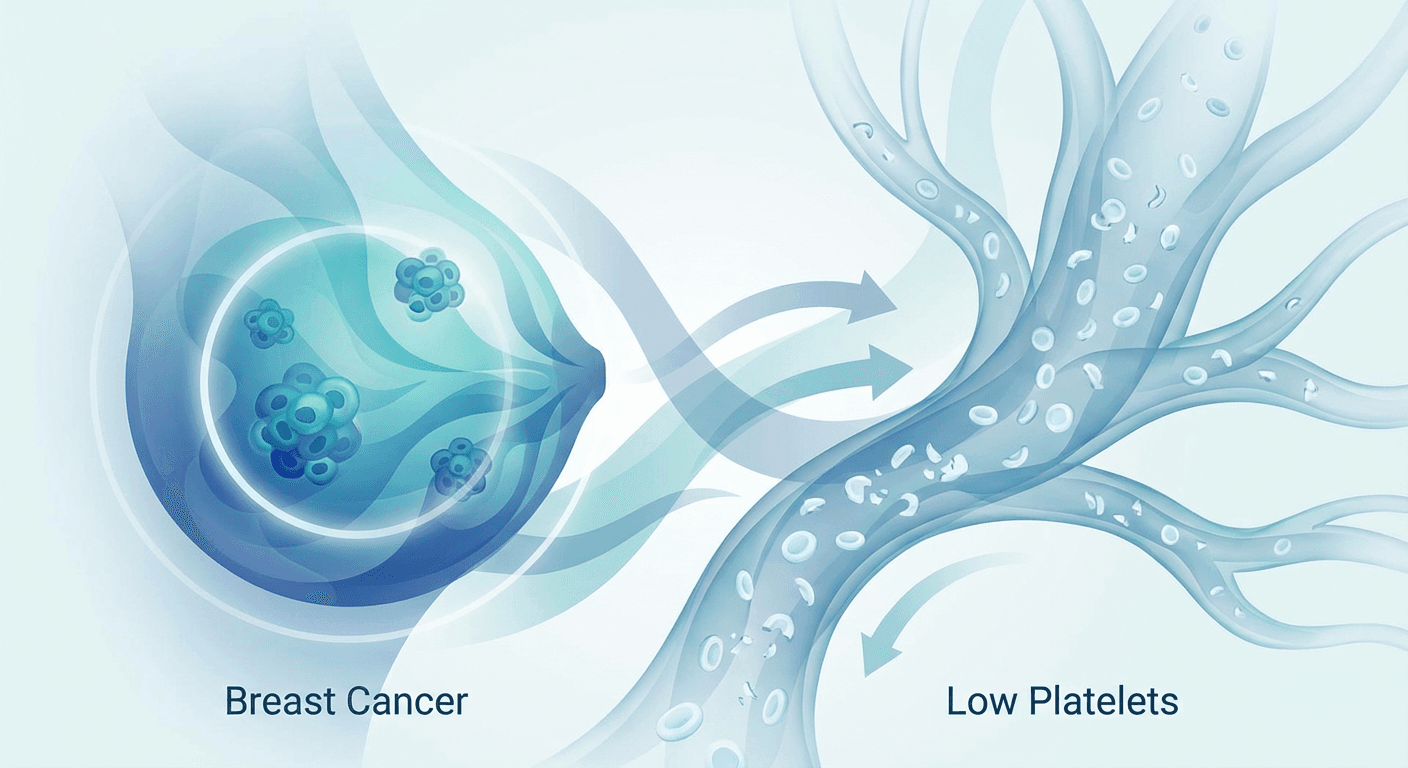
A low platelet count (thrombocytopenia) means your blood has fewer platelets, the cell fragments that help stop bleeding by forming clots. In breast cancer care, this often happens as a side effect of certain treatments, rather than the cancer itself, and the concern level depends on how low the count is and whether you have bleeding symptoms. [1] A platelet drop may appear about 10–14 days after a chemotherapy cycle and is more likely after multiple cycles over months. [1]
Why Platelets Fall in Breast Cancer
- Chemotherapy effects: Many chemo drugs temporarily suppress the bone marrow (where platelets are made), leading to lower counts; this can begin around 10–14 days post‑infusion and is more common after repeated cycles. [1]
- Targeted therapies: Some regimens, such as ado‑trastuzumab emtansine (T‑DM1), have a recognized risk of thrombocytopenia and clinicians may monitor closely or adjust dosing. [2]
- Hormonal therapy (tamoxifen): Rarely, tamoxifen can be associated with decreased platelet counts, sometimes to 50,000–100,000/mm³ or lower, with occasional bleeding episodes reported. This is uncommon but documented. [3] There are also reports of grade 3–4 platelet drops ≤50,000/mm³ in labeling materials. [4]
- Other causes to consider: Infections, immune thrombocytopenia, nutrient deficiencies, or drug reactions can contribute; your team will assess for these if counts are persistently low. [5]
How Low Is “Concerning”?
- Normal range: Typically around 150,000–450,000 per microliter (150–450 × 10⁹/L). Below 150,000 is considered low. [6]
- Higher bleeding risk: When platelets fall below ~50,000 (50 × 10⁹/L), everyday activities may pose a higher bleeding risk, and procedures usually require caution or delay. Spontaneous internal bleeding is rare but can occur when counts are very low. [6] [7]
- Treatment planning: Low platelets can lead clinicians to delay chemotherapy or surgery until counts recover; in some cases, platelet transfusions are used. [8]
Common Signs and Safety Precautions
- Warning signs of bleeding: Easy bruising, tiny red/purple spots that don’t fade with pressure (petechiae), nose or gum bleeding, heavier menstrual bleeding, or blood in urine/stool. Report these promptly. [9]
- Daily safety tips:
- Avoid sharp tools and use an electric razor for shaving. [9]
- Avoid rectal thermometers/suppositories and non‑urgent dental procedures until cleared. [9]
- Check with your doctor before using anti‑inflammatory pain relievers like ibuprofen or naproxen, as they can increase bleeding risk with low platelets. [10] [1]
- Follow your care team’s activity guidance; with very low counts, they may advise avoiding contact sports or high‑fall‑risk activities. [11]
How Clinicians Manage It
- Monitor and adjust treatment: If pre‑treatment platelets are low, clinicians may delay a chemo cycle or reduce doses depending on thresholds set for the specific regimen. For example, some breast cancer protocols delay or modify dosing when platelets drop below 75–100 × 10⁹/L. [12] [13]
- Platelet transfusion: Used to temporarily raise counts and reduce bleeding risk, particularly for procedures or severe thrombocytopenia. [8]
- Thrombopoietin receptor agonists (TPO‑RAs): In selected cases of chemotherapy‑induced thrombocytopenia, agents like romiplostim or eltrombopag may help raise counts, though evidence for reducing bleeding or avoiding treatment delays is still evolving, and use is individualized. [14] Research programs have shown many solid tumor patients can resume chemotherapy after romiplostim if they had prolonged low counts. [15]
- Address other causes: If immune or other non‑chemo causes are suspected, management may include specific therapies guided by hematology. [5]
Practical Takeaways
- You may not need to be alarmed if your count is only mildly low and you have no bleeding this is a common and often temporary effect of treatment that your team watches closely. [1]
- Be concerned and seek advice urgently if you have bleeding symptoms or if you’re told your platelets are below ~50,000, as the bleeding risk rises and activity or medication changes may be needed. [6]
- Partner with your team on medications: Before taking over‑the‑counter pain relievers or starting new supplements, ask your clinicians, since some increase bleeding risk when platelets are low. [10] [1]
When to Call Your Doctor
- New or worsening bruising, petechiae, nose/gum bleeding, blood in urine/stool, severe headaches, or vision changes. These can signal bleeding and should be assessed promptly. [9]
- If you are scheduled for a procedure and have a known low platelet count, discuss timing and precautions ahead of time. Procedures that involve bleeding are usually delayed or modified until counts are safer. [7]
Summary
Low platelets in breast cancer most often reflect treatment effects on the bone marrow, appearing days to weeks after chemotherapy and more often after multiple cycles. Risk depends on how low the count is and whether bleeding signs are present; below ~50,000, bleeding risk is meaningfully higher and care plans may change. [1] [6] Your team may delay or modify treatment, use transfusions, and in selected cases consider medications that stimulate platelet production, all while guiding you on safe daily practices. Staying alert to bleeding symptoms and checking in before taking certain pain relievers are simple steps that meaningfully reduce risk. [9] [10] [1] [8]
궁금한 점 있으면 언제든 퍼슬리에 물어보세요.
Related Questions
Related Articles


Sources
- 1.^abcdefghTreatment for Advanced Breast Cancer(mskcc.org)
- 2.^↑Predicting Thrombocytopenia in Patients With Breast Cancer Treated With Ado-trastuzumab Emtansine.(pubmed.ncbi.nlm.nih.gov)
- 3.^↑Tamoxifen Citrate(dailymed.nlm.nih.gov)
- 4.^↑(dailymed.nlm.nih.gov)
- 5.^abManaging thrombocytopenia associated with cancer chemotherapy.(pubmed.ncbi.nlm.nih.gov)
- 6.^abcdPlatelet count: MedlinePlus Medical Encyclopedia(medlineplus.gov)
- 7.^abThrombocytopenia (low platelet count) - Symptoms and causes(mayoclinic.org)
- 8.^abcLow blood cell counts: Side effects of cancer treatment(mayoclinic.org)
- 9.^abcdeAdjuvant Therapy for Breast Cancer: What It Is, How To Manage Side Effects, and Answers to Common Questions(mskcc.org)
- 10.^abcNeoadjuvant Therapy for Breast Cancer: What It Is, How To Manage Side Effects, and Answers to Common Questions(mskcc.org)
- 11.^↑About Your Low Platelet Count(mskcc.org)
- 12.^↑3736-Breast neoadjuvant TCHP (DOCEtaxel cARBOplatin trastuzumab and pERTUZumab)(eviq.org.au)
- 13.^↑3643-Breast neoadjuvant PACLitaxel weekly pERTUZumab and trastuzumab three weekly(eviq.org.au)
- 14.^↑Management of chemotherapy-induced thrombocytopenia: guidance from the ISTH Subcommittee on Hemostasis and Malignancy.(pubmed.ncbi.nlm.nih.gov)
- 15.^↑Managing Chemotherapy-Induced Thrombocytopenia: Romiplostim Research(mskcc.org)
Important Notice: This information is provided for educational purposes only and is not intended to replace professional medical advice, diagnosis, or treatment. Always consult with a qualified healthcare provider before making any medical decisions.