
 Persly Medical Team
Is blood in stool linked to prostate cancer?
Is Blood in Stool a Common Symptom of Prostate Cancer?
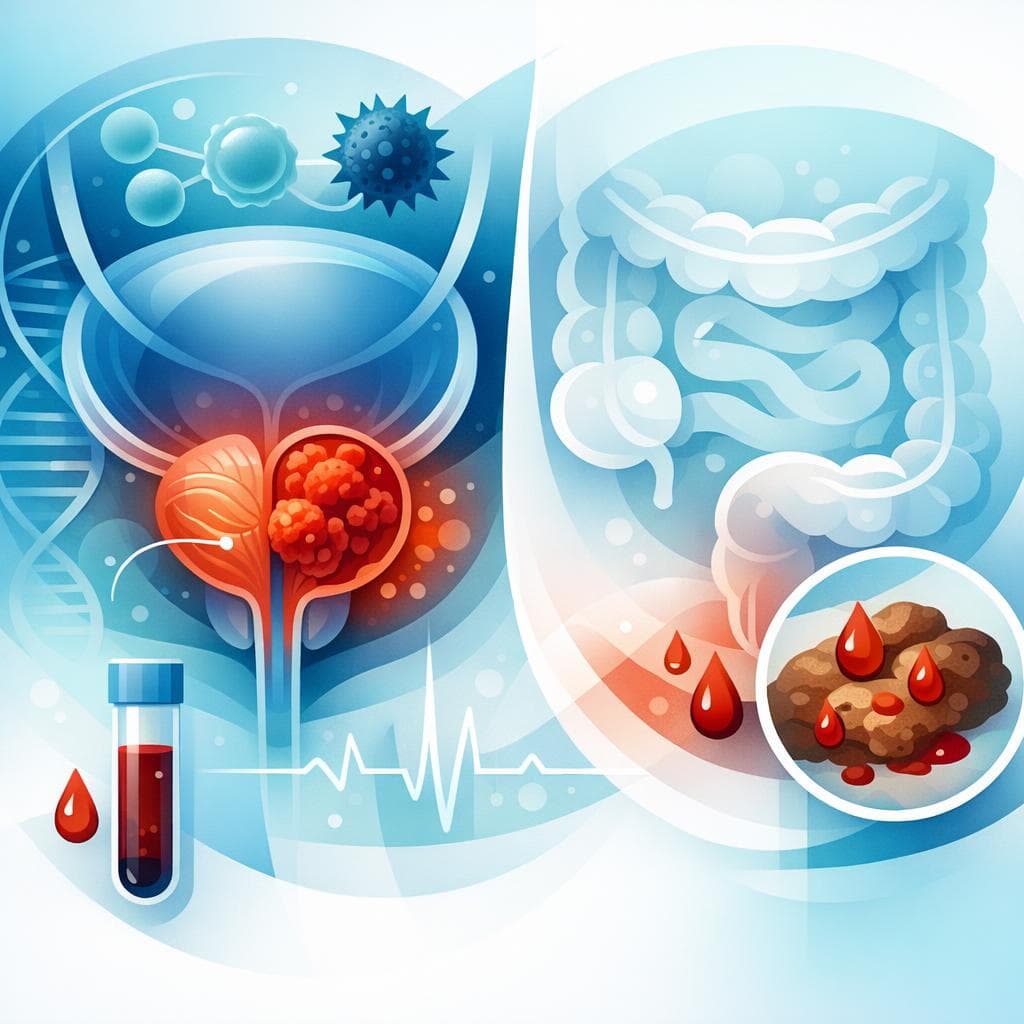
Blood in the stool (rectal bleeding) is not a common symptom of prostate cancer itself, especially in early stages. Most early prostate cancers cause no symptoms, and when symptoms do occur they more often involve urinary changes or blood in urine/semen rather than rectal bleeding. [1] [2] [3] In advanced cases where the cancer directly invades the rectum, rectal bleeding can occur, but this is uncommon and suggests locally advanced disease. [4]
What Prostate Cancer Typically Causes
- Common urinary symptoms: needing to urinate more often, weak stream, trouble starting or emptying, and burning with urination. [1] [3]
- Blood in urine or semen: hematuria or hematospermia can appear in some cases. [1] [2]
- Pelvic or back pain and painful ejaculation: can happen, but are not specific to prostate cancer. [2] [3]
These features highlight that rectal bleeding is generally not among the usual symptoms of prostate cancer. [1] [3]
When Blood in Stool May Be Related to Prostate Cancer
Rare direct rectal invasion
In later stages, the tumor can invade the rectum, leading to constipation, abdominal pain, intermittent diarrhea, and rectal bleeding. This pattern indicates locally advanced disease rather than early cancer. [4]
After radiation treatment (radiation proctitis)
Men treated with prostate radiation especially brachytherapy may develop radiation proctitis, where fragile rectal tissue bleeds, usually in the first 1–2 years after treatment. [5] The long‑term risk of rectal bleeding after low‑dose‑rate brachytherapy is about 5–7%, with severe ulcers or fistula being rare (~0.6%). [6] Risk relates to how much rectum received the radiation dose, prior biopsies, and individual sensitivity. [6] Managing post‑radiation bleeding is often conservative and endoscopic therapies are effective; importantly, rectal biopsy after brachytherapy is discouraged because it can cause serious complications like fistula. [5]
Survivorship guidance
For those previously treated for prostate cancer, any rectal bleeding should be thoroughly evaluated as part of survivorship care. [7]
More Likely Non‑Prostate Causes of Blood in Stool
In everyday practice, blood in the stool is more commonly due to colorectal or anal conditions:
- Hemorrhoids: swollen veins that can bleed bright red; other diseases can mimic this, so evaluation is important. [8]
- Anal fissures: small tears causing pain and bright red bleeding. [9]
- Diverticulosis: can cause sudden, painless, heavy bright red bleeding. [10]
- Colorectal polyps and cancers, colitis (inflammation), infections, and prolapse: all can lead to rectal bleeding. [11] [9]
Because these are common and potentially serious, medical assessment is recommended whenever you notice blood in your stool. [11]
Red Flags and When to Seek Care
- Go to urgent care or the emergency department if you have large amounts of blood, feel lightheaded, have fainting, fast heart rate, or severe abdominal pain. These can indicate significant gastrointestinal bleeding requiring rapid evaluation. [12]
- Prompt outpatient evaluation is advised for persistent or recurrent bleeding, changes in bowel habits, unintentional weight loss, or fatigue. [13]
How Blood in Stool Is Evaluated
- History and exam: character of bleeding (bright red vs. dark), pain, bowel habit changes, medications (e.g., blood thinners), prior radiation or surgeries. This helps distinguish likely sources. [9]
- Stool testing and labs: to confirm blood and check for anemia. [9]
- Endoscopy (colonoscopy): cornerstone test to locate and treat bleeding in many cases, including cancer patients. [12]
- Imaging: when needed for ongoing or unclear bleeding. [12]
For men with prior prostate brachytherapy and new rectal bleeding, clinicians often favor conservative and endoscopic approaches and avoid rectal biopsy to reduce fistula risk. [5]
Management Options
If related to hemorrhoids or fissures
- Dietary fiber and fluids, stool softeners, topical treatments, sitz baths, and avoiding straining are typical first steps. [9]
- Procedures (rubber band ligation, cautery) if bleeding persists. [9]
If due to diverticulosis or colitis
- Endoscopic treatment to control bleeding; supportive care, antibiotics or anti‑inflammatory therapy as indicated. [10] [12]
If due to radiation proctitis after prostate therapy
- Conservative measures initially for bleeding within the first 2 years after brachytherapy. [5]
- Endoscopic therapies (e.g., argon plasma coagulation) are commonly effective for persistent bleeding. [6]
- Avoid rectal biopsy post‑brachytherapy unless absolutely necessary due to fistula risk. [5]
If due to colorectal cancer
- Colonoscopy with biopsy, staging, and treatment (surgery, chemotherapy, radiation) guided by oncology and colorectal teams. [13]
Practical Takeaways
- Blood in stool is uncommon with early prostate cancer, and more typical symptoms involve the urinary tract or blood in urine/semen. [1] [2] [3]
- Rectal bleeding can occur in uncommon scenarios: advanced prostate cancer with rectal invasion or after prostate radiation due to radiation proctitis. [4] [5] [6]
- Because rectal bleeding is frequently caused by conditions in the colon, rectum, or anus, it deserves timely evaluation to identify and treat the true cause. [11] [9] [12]
Summary Table: Blood in Stool and Prostate Cancer
| Scenario | How common? | Mechanism | Typical timing | Key management notes |
|---|---|---|---|---|
| Early prostate cancer | Rare | Not a typical symptom | N/A | Focus on urinary symptoms; evaluate bleeding for other causes. [1] [3] |
| Advanced local invasion | Uncommon | Tumor invades rectum causing bleeding | Later-stage disease | Multidisciplinary oncology care. [4] |
| Post-radiation proctitis | Not rare in treated patients (bleeding ~5–7% after LDR brachytherapy) | Radiation injury to rectal wall | Often within first 1–2 years | Conservative measures; endoscopic treatment; avoid rectal biopsy post‑brachytherapy. [5] [6] |
What You Can Do Now
- If you see blood in your stool, seek medical evaluation to determine the source and receive appropriate treatment. [11] [12]
- If you previously had radiation for prostate cancer, inform your clinician; this guides safe management and avoidance of high‑risk procedures like rectal biopsy. [5] [6]
- Maintain healthy bowel habits (fiber, hydration, avoiding straining) to reduce bleeding from benign causes like hemorrhoids. [9]
If you need help finding appropriate care or have questions about your situation, more details about your symptoms and treatment history can guide more tailored advice.
Related Questions
Related Articles


Sources
- 1.^abcdefProstate cancer - Symptoms and causes(mayoclinic.org)
- 2.^abcdProstate Cancer(medlineplus.gov)
- 3.^abcdefSymptoms of Prostate Cancer(cdc.gov)
- 4.^abcd국가암정보센터(cancer.go.kr)
- 5.^abcdefghLate rectal complications after prostate brachytherapy for localized prostate cancer: incidence and management.(pubmed.ncbi.nlm.nih.gov)
- 6.^abcdefLate rectal toxicity after low-dose-rate brachytherapy: incidence, predictors, and management of side effects.(pubmed.ncbi.nlm.nih.gov)
- 7.^↑Primary Care of the Prostate Cancer Survivor.(pubmed.ncbi.nlm.nih.gov)
- 8.^↑Hemorrhoids(medlineplus.gov)
- 9.^abcdefghRectal bleeding: MedlinePlus Medical Encyclopedia(medlineplus.gov)
- 10.^abDIVERTICULOSIS DEL COLON - American College of Gastroenterology(gi.org)
- 11.^abcdRectal bleeding: MedlinePlus Medical Encyclopedia(medlineplus.gov)
- 12.^abcdefGastrointestinal bleeding in the cancer patient.(pubmed.ncbi.nlm.nih.gov)
- 13.^abRectal cancer - Symptoms and causes(mayoclinic.org)
Important Notice: This information is provided for educational purposes only and is not intended to replace professional medical advice, diagnosis, or treatment. Always consult with a qualified healthcare provider before making any medical decisions.