
 Persly Medical Team
Anxiety in Prostate Cancer: How common, causes, and care
Is Anxiety a Common Symptom of Prostate Cancer? Causes and Management
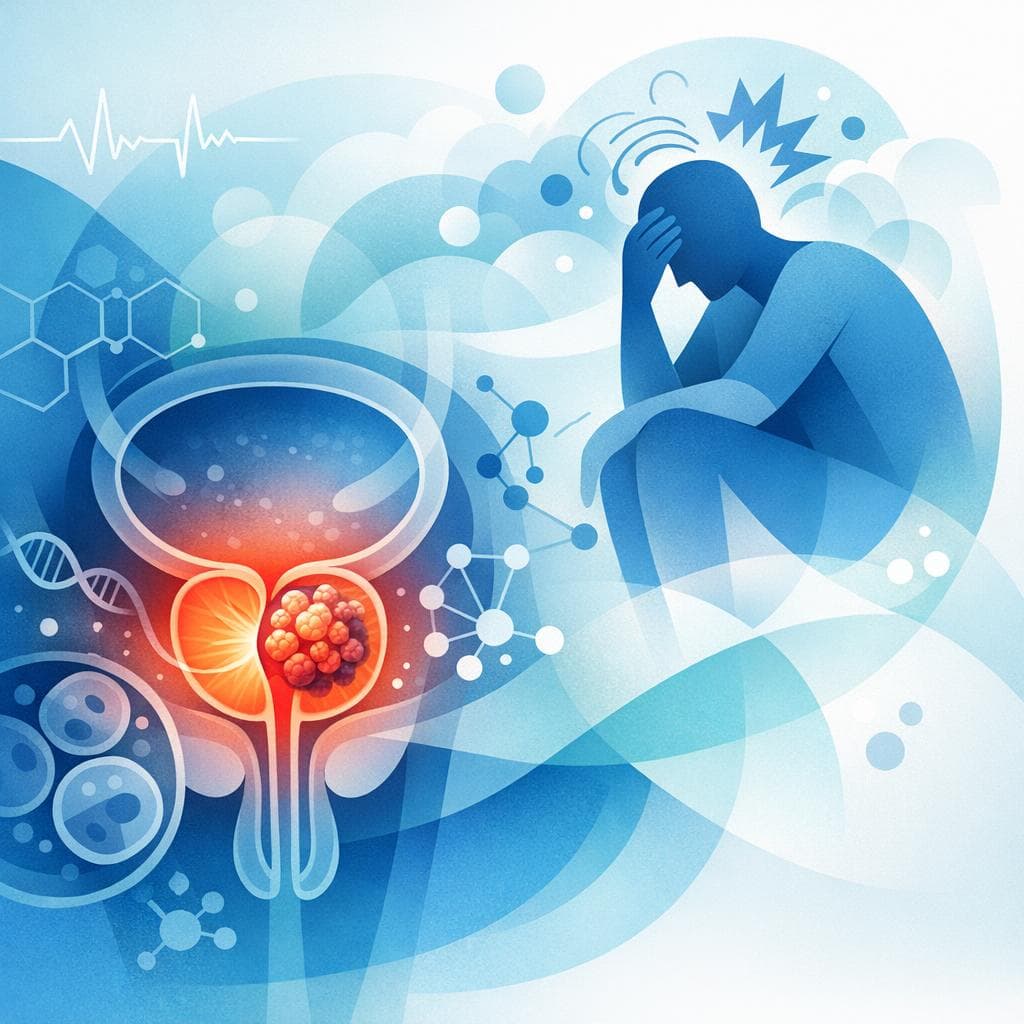
Anxiety is not a physical symptom caused by prostate cancer itself, but it is very common around screening, diagnosis, and treatment decisions for prostate cancer. Elevated PSA tests, the uncertainty of biopsies, living with a diagnosis, and treatment side effects can all trigger worry or distress. [1] Anxiety can also arise from false-positive PSA results or from knowing a slow-growing cancer is present, even when it may not cause illness. [2] Many people with cancer experience distress such as sadness, fear, or anxiety, and this is considered a normal reaction that can be treated and supported. [3] [4]
How Anxiety Shows Up
- Screening and testing anxiety: High PSA levels can prompt fear and worry even when cancer is not present. [1] False positives and waiting for biopsy results often lead to distress. [2]
- Diagnosis-related distress: On learning of prostate cancer, people commonly feel disbelief, fear, anger, sadness, and persistent anxiety. [4]
- Treatment-phase anxiety: Radiation or other treatments can be stressful and overwhelming, bringing feelings of nervousness, fear, and uncertainty. [5]
- Active surveillance worries: Choosing “watchful waiting” can bring periodic anxiety, especially around appointments and test changes, though research shows this tends to lessen over time. [6] [7]
Key point: Anxiety is a normal response to uncertainty and health threats, and it often fluctuates over time with tests, appointments, and treatment phases. [3] [8]
Why Anxiety Happens in Prostate Cancer
- Uncertainty of PSA and biopsies: Elevated PSA does not always mean cancer, yet it often leads to more testing and fear. [1]
- False positives and “knowing it’s there”: High PSA with no cancer found can still cause distress; slow-growing cancers can provoke ongoing worry simply by their presence. [2]
- Treatment side effects and life changes: Pain, sexual and urinary changes, fatigue, and body-image concerns can fuel frustration and anxiety. [9]
- Active surveillance concerns: Regular monitoring may create a sense of uncertainty about cancer status. [7]
- Scan and appointment cycles: Anxiety often peaks before scans or while waiting for results, then subsides. [8]
Normalizing emotion: Feeling anxious, sad, or overwhelmed during cancer care is common and expected; it is addressable with supportive strategies and, when needed, medical treatment. [3] [4]
Practical Ways to Manage Anxiety
Evidence-based coping strategies
- Talk with your care team and supporters: Open communication with clinicians, social workers, and support groups reduces isolation and helps with practical problem-solving. [3] [10]
- Psychotherapy (counseling): Professional counseling can help process fear, uncertainty, and relationship changes; couples therapy may be helpful. [9]
- Mind-body techniques: Relaxation, meditation, guided imagery, music therapy, and movement/exercise can calm the nervous system and reduce anxiety. [3] [11]
- Targeted support for scan anxiety: Guided relaxation and breathing practices specifically for scans can reduce anticipatory worry. [12]
- Integrative therapies: Acupressure and other integrative approaches may help; discuss safety with your care team first. [13]
When to consider medication
- Medicines can help when anxiety interferes with daily life, sleep, relationships, or treatment adherence; options should be discussed with your clinician for personalized care. [13] [3]
Support services to ask for
- Social Work support: Access counseling, support groups, family communication help, and practical resource referrals. [10]
- Survivorship resources: Structured programs and guided practices for stress and anxiety are available and can be used between visits. [14]
Active Surveillance: Managing Specific Worries
It’s common to feel nervous with active surveillance, especially around appointments or test changes; these feelings generally ease with time, and your team watches for meaningful changes and guides next steps if needed. [6] [15] Anxiety is a known trade-off of active surveillance, alongside the need for frequent visits and the small risk of cancer growth while waiting, which your team monitors carefully. [7]
Research Insights: Programs That Help
Structured lifestyle and empowerment programs that include relaxation, stress management, exercise, pelvic floor training, and relationship support have been shown to reduce psychological distress in men undergoing prostate cancer treatment. [16] Improvements in self-efficacy (confidence in managing health) and illness perceptions appear to mediate much of the benefit, highlighting the value of skill-building and education. [17]
Quick Reference Table: Anxiety in Prostate Cancer
| Topic | What to know | Useful supports |
|---|---|---|
| Screening anxiety | Elevated PSA can cause fear even without cancer; false positives are common | Clear communication with clinicians; counseling; relaxation tools [1] [2] |
| Diagnosis distress | Normal feelings: disbelief, fear, anger, sadness, anxiety | Psychotherapy; social work; support groups; mind-body practices [4] [10] [3] |
| Treatment-phase stress | Radiation and other therapies can be overwhelming | Guided relaxation, meditation, music therapy, exercise, integrative care (with clinician guidance) [5] [11] [13] |
| Active surveillance | Worry often spikes near tests; tends to decrease over time | Education, reassurance, routine monitoring, coping strategies [6] [7] [15] |
| When to use medicine | If anxiety disrupts life or treatment | Discuss medication options with your care team [13] |
Compassionate Takeaway
- Anxiety is common in the prostate cancer journey from screening through treatment and is a normal, treatable reaction. [3] [1]
- You are not alone; there are effective supports, therapies, and programs to help you feel more in control and to lessen distress. [10] [16]
- Ask for help early; combining counseling, mind-body practices, social work, and, if needed, medication can make a meaningful difference. [3] [13] [10]
궁금한 점 있으면 언제든 퍼슬리에 물어보세요.
Related Questions
Related Articles


Sources
- 1.^abcdeProstate cancer screening: MedlinePlus Medical Encyclopedia(medlineplus.gov)
- 2.^abcdPSA test - Mayo Clinic(mayoclinic.org)
- 3.^abcdefghiProstate cancer - Diagnosis and treatment(mayoclinic.org)
- 4.^abcdProstate cancer - Diagnosis and treatment(mayoclinic.org)
- 5.^abSobre a radioterapia de intensidade modulada (IMRT) para a próstata(mskcc.org)
- 6.^abcActive Surveillance for Prostate Cancer(mskcc.org)
- 7.^abcdActive surveillance for prostate cancer(mayoclinic.org)
- 8.^abManaging Anxiety(mskcc.org)
- 9.^abProstate Cancer Recovery & Support(nyulangone.org)
- 10.^abcdeManaging Anxiety(mskcc.org)
- 11.^abProstate cancer - Diagnosis and treatment(mayoclinic.org)
- 12.^↑Support Through Treatment: Scan Anxiety(mskcc.org)
- 13.^abcdeManaging Anxiety(mskcc.org)
- 14.^↑Survivorship: Stress and Anxiety(mskcc.org)
- 15.^abActive Surveillance for Prostate Cancer(mskcc.org)
- 16.^abA Comprehensive 6-mo Prostate Cancer Patient Empowerment Program Decreases Psychological Distress Among Men Undergoing Curative Prostate Cancer Treatment: A Randomized Clinical Trial.(pubmed.ncbi.nlm.nih.gov)
- 17.^↑Mediating Effects of Self-Efficacy and Illness Perceptions on Mental Health in Men with Localized Prostate Cancer: A Secondary Analysis of the Prostate Cancer Patient Empowerment Program (PC-PEP) Randomized Controlled Trial.(pubmed.ncbi.nlm.nih.gov)
Important Notice: This information is provided for educational purposes only and is not intended to replace professional medical advice, diagnosis, or treatment. Always consult with a qualified healthcare provider before making any medical decisions.