
 Persly Medical Team
Based on PubMed | Can pancreatitis cause blurred vision or other vision problems, and what symptoms indicate a serious complication?
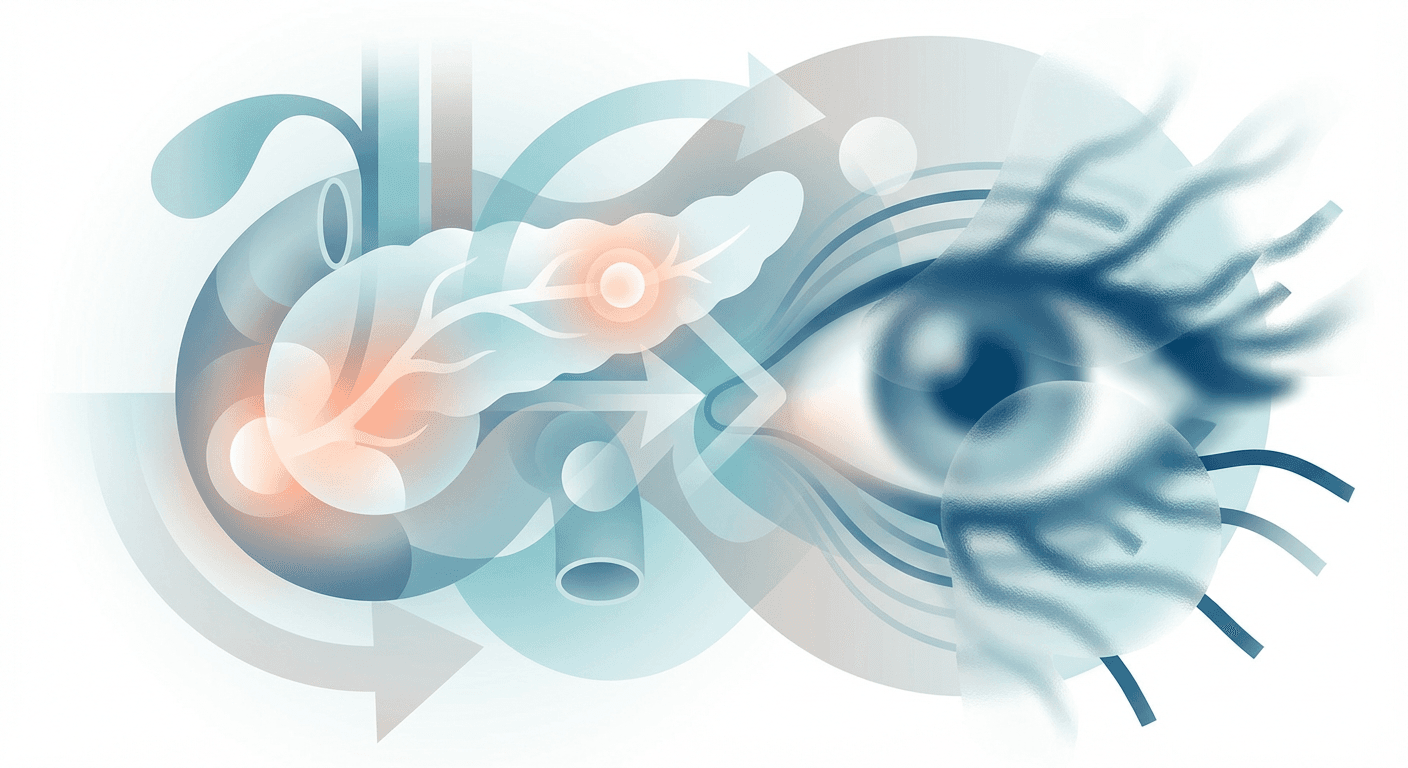
Pancreatitis can rarely cause blurred vision or sudden vision loss via retinal microvascular injury (Purtscher-like retinopathy), usually in severe acute cases. New vision changes are a red flag for serious complications and need urgent care, especially if accompanied by breathing problems, kidney issues, sepsis, shock, or uncontrolled pain and vomiting.
Pancreatitis and vision changes: what to know
Pancreatitis (inflammation of the pancreas) can, in rare cases, be linked to blurred vision or even sudden vision loss, especially during severe acute episodes. While most people with pancreatitis experience abdominal pain, nausea, and vomiting, some develop eye findings caused by problems with the tiny blood vessels of the retina (the light‑sensing layer at the back of the eye). These eye issues are uncommon but important because they can signal a serious, systemic complication. [1] [2]
How pancreatitis can affect vision
- Retinal vessel blockage and microembolization: Severe acute pancreatitis can trigger body‑wide inflammation, complement activation, and tiny clots or fat microemboli that block retinal blood flow, leading to blurred vision, blind spots (scotomas), or sudden vision loss. [3] [4]
- Purtscher‑like retinopathy: A well‑described pattern includes cotton‑wool spots (signs of retinal ischemia), retinal hemorrhages, and retinal swelling near the posterior pole, often with rapid-onset vision changes around the time of severe pancreatitis. Findings may improve over weeks to months but can be a marker of severe disease. [5] [6]
- Predictor of severe outcome: In severe acute pancreatitis with sepsis or multi‑organ failure, early ophthalmoscopy can reveal hemorrhages and exudates; these findings have been associated with worse outcomes. Visual changes in the context of severe pancreatitis deserve urgent evaluation. [7]
Typical vision symptoms reported
- Blurred vision or “misty” vision
- Sudden decrease in visual acuity (difficulty reading or recognizing faces)
- Scotomas (dark or blurred patches in the visual field)
- Photophobia (light sensitivity) is uncommon but can occur in systemic toxic exposures; however, vision complaints in pancreatitis more often reflect retinal circulation problems rather than eye surface irritation. [8] [5]
Who is at risk
- Severe acute pancreatitis (often due to gallstones or alcohol), especially with systemic inflammation, hypotension, or sepsis, is more likely to produce eye complications through microvascular injury. [1] [9]
- Hypertriglyceridemia‑associated pancreatitis can reflect very high blood fats, which may promote fat microemboli; this form accounts for a notable minority of acute cases. Managing triglycerides is important to reduce both pancreatic and vascular risks. [10] [11]
- Existing vascular risk (e.g., uncontrolled diabetes or kidney failure) may make the retina more vulnerable during a severe inflammatory surge. [12]
Symptoms that indicate a serious complication
Seek urgent medical care if any of the following occur alongside pancreatitis:
- New or sudden vision changes (blurred vision, scotomas, abrupt vision loss), because these can reflect retinal ischemia and systemic microvascular events. These changes have been documented during acute pancreatitis and may signal severe disease. [5] [3]
- Breathing problems (shortness of breath, low oxygen levels), which can result from lung involvement or ARDS during acute pancreatitis. [13] [14]
- Kidney problems (reduced urine, swelling, confusion), since acute pancreatitis can precipitate acute kidney failure. [15] [16]
- Signs of infection or sepsis (high fever, chills, confusion, very fast heart rate), because infected pancreatic tissue or systemic infection increases mortality risk. [13] [17]
- Persistent hypotension or shock (dizziness, fainting, cold clammy skin), reflecting circulatory collapse and multi‑organ dysfunction. [18]
- Uncontrolled abdominal pain with vomiting and inability to keep fluids down, which is typical of severe acute pancreatitis requiring hospital care. [19] [2]
What to do if you notice vision changes
- Get urgent ophthalmic and medical evaluation: A dilated eye exam can identify cotton‑wool spots, hemorrhages, and vessel occlusions; parallel medical assessment should look for systemic complications and stabilize pancreatitis. Early detection can guide prognosis and treatment. [6] [7]
- Manage the pancreatitis aggressively: Hospital care often includes IV fluids, pain control, correction of electrolytes, and treatment of underlying causes (e.g., gallstones, alcohol, or extreme triglycerides). This systemic stabilization may help retinal perfusion recover. [1] [9]
- Monitor triglycerides and glucose: In hypertriglyceridemic cases, rapid triglyceride lowering (dietary changes, medications, or procedures) can be necessary; diabetes may develop in chronic pancreatitis, so glucose control also matters for retinal health. [10] [9]
- Plan follow‑up eye testing: Fluorescein angiography and visual field testing can track reperfusion and recovery; improvements have been documented over months, although some thinning or scotomas may persist. [5]
Quick comparison: common vs. serious signs
| Feature | Common in pancreatitis | Indicates serious complication |
|---|---|---|
| Upper abdominal pain radiating to the back | Yes | If pain is severe, persistent, or accompanied by vomiting and dehydration, urgent care is advisable. [19] [2] |
| Nausea and vomiting | Yes | Persistent vomiting with inability to hydrate can lead to shock or kidney issues. [1] [15] |
| Blurred vision or sudden vision loss | No (uncommon) | Yes can reflect retinal ischemia (Purtscher‑like retinopathy) and systemic microembolization; requires urgent evaluation. [5] [3] |
| Shortness of breath/low oxygen | Sometimes | Yes may indicate lung involvement or ARDS. [13] [14] |
| Fever and fast heart rate | Sometimes | Yes if signs of sepsis or infected pancreatic tissue. [13] [17] |
| Low urine output or swelling | No | Yes possible acute kidney failure. [15] [16] |
Key takeaways
- Pancreatitis can, in rare but documented cases, cause blurred vision or sudden vision loss due to retinal microvascular injury and embolization. [5] [3]
- Vision changes during pancreatitis are a red flag for severe systemic involvement and should prompt urgent ophthalmic and medical assessment. [7] [6]
- Serious complications include breathing problems, kidney failure, infections/sepsis, shock, and multi‑organ failure; recognizing these early improves outcomes. [15] [13] [18]
Would you like help identifying whether your current symptoms could fit with a severe pancreatitis episode?
Related Questions
Related Articles



Sources
- 1.^abcdPancreatitis(medlineplus.gov)
- 2.^abcPancreatitis(medlineplus.gov)
- 3.^abcdSudden blindness in acute pancreatitis. Possible role of complement-induced retinal leukoembolization.(pubmed.ncbi.nlm.nih.gov)
- 4.^↑Ischaemic optic neuropathy and retinopathy associated with acute pancreatitis.(pubmed.ncbi.nlm.nih.gov)
- 5.^abcdefRetinopathy associated with acute pancreatitis.(pubmed.ncbi.nlm.nih.gov)
- 6.^abc[Retinal changes accompanying acute pancreatitis].(pubmed.ncbi.nlm.nih.gov)
- 7.^abc[Retinopathy in severe acute pancreatitis].(pubmed.ncbi.nlm.nih.gov)
- 8.^↑[Loss of vision as a complication of acute pancreatitis].(pubmed.ncbi.nlm.nih.gov)
- 9.^abcPancreatitis - Symptoms and causes(mayoclinic.org)
- 10.^abHypertriglyceridemic pancreatitis - Mayo Clinic(mayoclinic.org)
- 11.^↑Hypertriglyceridemic pancreatitis - Mayo Clinic(mayoclinic.org)
- 12.^↑Ischaemic optic neuropathy and retinopathy associated with acute pancreatitis.(pubmed.ncbi.nlm.nih.gov)
- 13.^abcdeSymptoms and causes - Mayo Clinic(mayoclinic.org)
- 14.^abSymptoms and causes - Mayo Clinic(mayoclinic.org)
- 15.^abcdSymptoms and causes - Mayo Clinic(mayoclinic.org)
- 16.^abPancreatitis - Symptoms and causes(mayoclinic.org)
- 17.^abSymptoms and causes - Mayo Clinic(mayoclinic.org)
- 18.^ab급성 췌장염(Acute pancreatitis) | 질환백과 | 의료정보 | 건강정보(amc.seoul.kr)
- 19.^abPancreatitis - Symptoms and causes(mayoclinic.org)
Important Notice: This information is provided for educational purposes only and is not intended to replace professional medical advice, diagnosis, or treatment. Always consult with a qualified healthcare provider before making any medical decisions.