
 Persly Medical Team
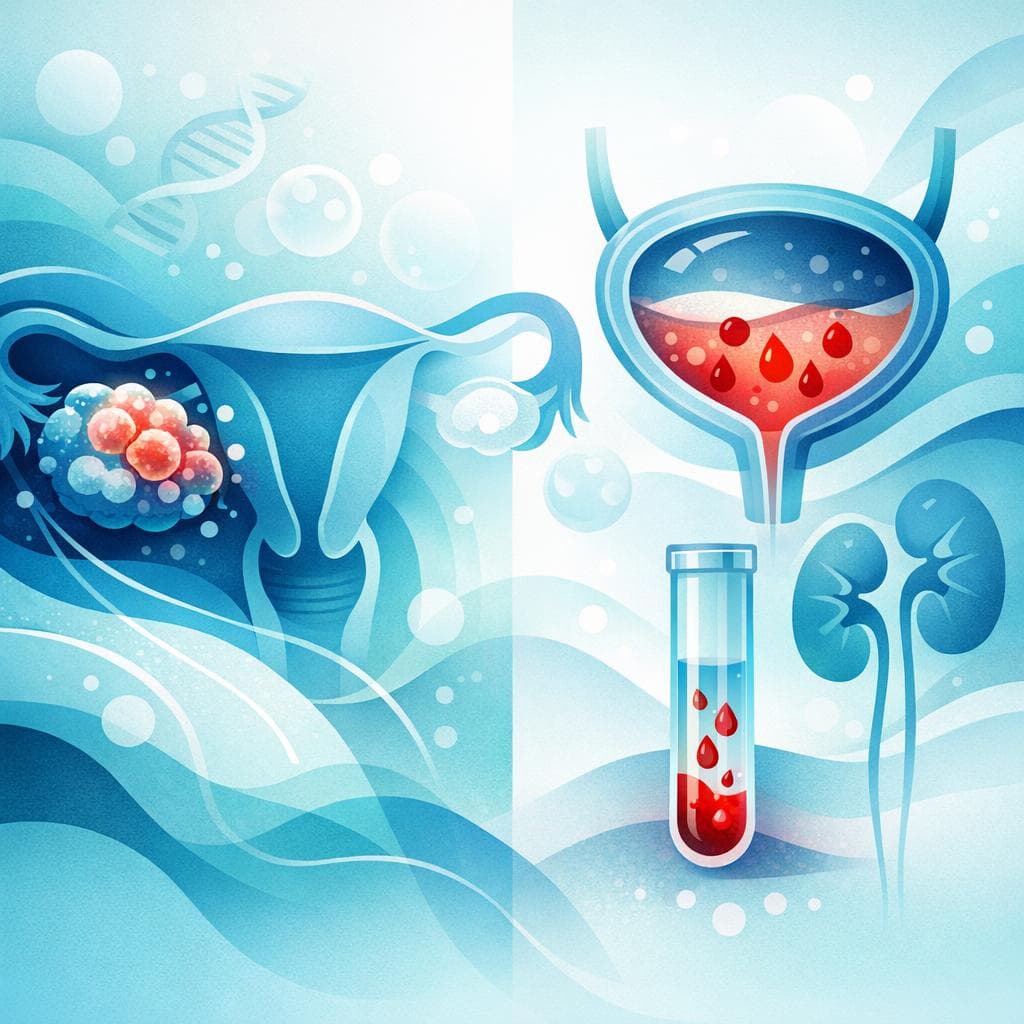
Is blood in urine linked to ovarian cancer?
Is blood in urine a common symptom of ovarian cancer?
Short answer: Blood in urine (hematuria) is not a common symptom of ovarian cancer. Ovarian cancer more often causes abdominal/pelvic pain, bloating, early satiety, and urinary urgency or frequency without visible blood. [1] [2] Visible blood in urine more commonly points to urinary tract conditions such as bladder cancer, kidney stones, infection, or other urologic issues. [3] [4]
Typical symptoms of ovarian cancer
- Abdominal bloating or swelling and pelvic/abdominal pain are common. [2]
- Early fullness with eating and appetite changes occur frequently. [2]
- Urinary urgency or frequent urination can happen due to pelvic pressure, but this usually does not include hematuria. [1] [2]
These symptoms often develop gradually and may be mistaken for more common conditions, especially in early stages. [5] [6]
Is hematuria related to ovarian cancer?
- Hematuria is not listed among classic ovarian cancer symptoms. Ovarian cancer descriptions emphasize pelvic discomfort and urinary frequency/urgency rather than blood in urine. [1] [2]
- When blood in urine occurs in someone with a pelvic malignancy, it is more often due to direct urinary tract causes (e.g., bladder pathology) or treatment-related irritation rather than ovarian cancer itself. [3] [7]
More common causes of blood in urine
- Bladder cancer: Hematuria sometimes painless and intermittent is a very common early sign, especially in women where it can be misattributed to UTI. [3] [8]
- Urinary tract infection (UTI): Can cause burning, frequency, and sometimes blood. [8]
- Kidney or ureteral stones: May cause flank pain and visible blood. [9]
- Glomerular (kidney) diseases: Microscopic or gross hematuria can occur and require nephrologic evaluation. [10] [11]
Overall, a notable proportion of adults with gross hematuria are found to have urologic malignancy, underscoring the need for proper workup. [10]
How could ovarian cancer indirectly lead to urinary blood?
While uncommon, advanced pelvic disease can involve or compress urinary structures, potentially leading to urinary changes; spread within the abdomen (peritoneal carcinomatosis) can affect nearby organs and ureters, changing urination or blocking flow. [12] However, even in such scenarios, hematuria itself is still more characteristic of primary urinary tract conditions rather than ovarian origin. [4] [3]
Recommended evaluation for hematuria
If you notice pink, red, or tea-colored urine or a urine test shows microscopic blood a structured workup is advised:
- Urinalysis and urine culture to assess infection and protein or casts. [13]
- Imaging (e.g., ultrasound or CT urogram) to look for stones or masses. [14]
- Cystoscopy to inspect the bladder if hematuria is unexplained or persistent. [15]
- Nephrology review if signs suggest glomerular causes (proteinuria, RBC casts, dysmorphic RBCs). [11]
Because women’s hematuria is often attributed to UTI and can delay diagnosis, do not ignore intermittent or painless blood in urine. [3] [8]
Management depends on the cause
- UTI: Antibiotics and hydration; symptoms and hematuria typically resolve. [8]
- Stones: Pain control, hydration, medical expulsive therapy; procedures if obstructive or large. [9]
- Bladder cancer: Timely cystoscopy and treatment tailored to stage (e.g., TURBT, intravesical therapy, surgery). Early detection improves outcomes. [4]
- Treatment-related cystitis (during cancer therapy): Hydration, bladder-protective strategies, and symptom control; specific protocols exist to reduce irritation. [7]
- Glomerular disease: Immunologic workup and kidney-directed therapies as indicated. [11]
When to seek care
- Any visible blood in urine warrants prompt medical evaluation, even if it comes and goes. [3]
- New or persistent urinary symptoms (urgency, frequency) alongside pelvic or abdominal discomfort should also be assessed, as these can be part of ovarian cancer symptom clusters albeit without hematuria. [1] [2]
Key takeaways
- Hematuria is not a typical symptom of ovarian cancer, whereas urinary urgency/frequency without blood is more typical. [1] [2]
- Blood in urine more commonly signals a urinary tract cause, including bladder cancer, which benefits from early detection. [3] [4]
- Proper evaluation is important to identify the source and guide effective management. [14] [13]
Related Questions
Related Articles


Sources
- 1.^abcdeOvarian Cancer(mskcc.org)
- 2.^abcdefgOvarian cancer - Symptoms and causes(mayoclinic.org)
- 3.^abcdefgBladder Cancer Signs and Symptoms(mskcc.org)
- 4.^abcdSymptoms(stanfordhealthcare.org)
- 5.^↑Ovarian cancer - Symptoms and causes(mayoclinic.org)
- 6.^↑Ovarian Cancer(mskcc.org)
- 7.^ab4162-Bladder irritation (cystitis) during cancer treatment(eviq.org.au)
- 8.^abcdBladder Cancer Signs and Symptoms(mskcc.org)
- 9.^ab혈뇨(Hematuria) | 질환백과 | 의료정보 | 건강정보(amc.seoul.kr)
- 10.^ab혈뇨의 진단과 치료(ekjm.org)
- 11.^abc혈뇨의 진단과 치료(ekjm.org)
- 12.^↑Peritoneal carcinomatosis - Symptoms and causes(mayoclinic.org)
- 13.^abBlood in urine (hematuria) - Diagnosis and treatment(mayoclinic.org)
- 14.^abBlood in urine (hematuria) - Diagnosis and treatment(mayoclinic.org)
- 15.^↑Blood in urine (hematuria) - Doctors and departments(mayoclinic.org)
Important Notice: This information is provided for educational purposes only and is not intended to replace professional medical advice, diagnosis, or treatment. Always consult with a qualified healthcare provider before making any medical decisions.