
 Persly Medical Team
Skin rash and lung cancer: causes and care
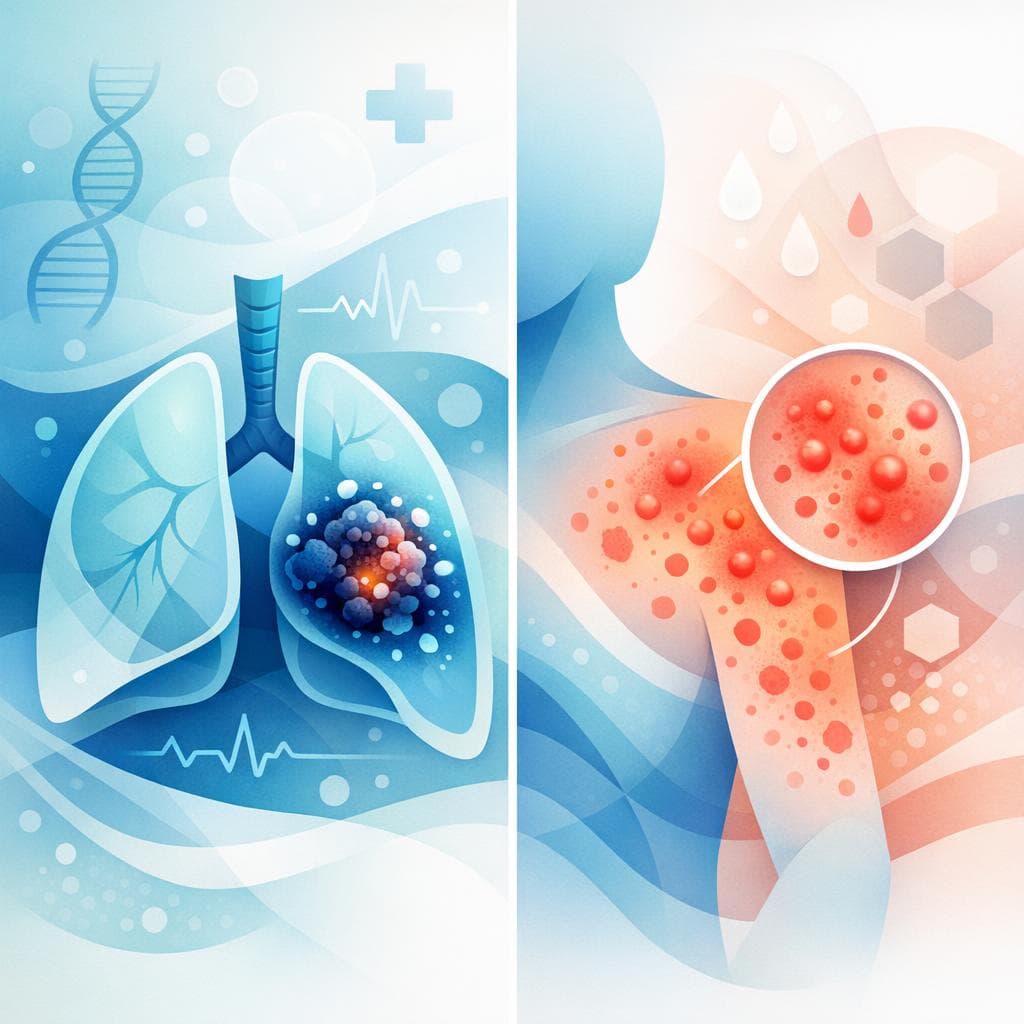
Is skin rash a common symptom of Lung Cancer? What causes it and how can it be managed?
Skin rash is not usually a primary symptom of lung cancer itself, but rashes are common during lung cancer treatment, especially with targeted therapies and immunotherapy. [1] Many chemotherapy agents and newer treatments (like EGFR inhibitors, ALK inhibitors, and immune checkpoint inhibitors) can lead to different types of skin reactions that range from mild dryness and redness to acne-like rashes and blistering. [2] [3]
How rashes relate to lung cancer
- Direct cancer-related skin changes (rare): Lung cancer can rarely spread to the skin (cutaneous metastases), usually appearing as firm, painless nodules or plaques rather than a typical “rash,” and this often signals advanced disease. [4] These skin metastases are uncommon, but when present, they typically indicate a poor prognosis and may require biopsy to confirm. [5]
- Paraneoplastic skin syndromes (uncommon): Certain immune-mediated rashes can occur as indirect effects of a cancer, but these are far less frequent than treatment-related rashes. [6]
Most skin issues in people with lung cancer are treatment-related rather than caused by the cancer itself. [1]
Common treatment-related rashes and triggers
- EGFR inhibitors (e.g., erlotinib, gefitinib, osimertinib): Often cause an “acneiform” (acne-like) rash on the face, scalp, chest, and back, typically starting within the first few weeks. [7] This rash can be managed proactively with specific antibiotics and topical therapies. [7]
- ALK inhibitors (e.g., brigatinib): Can lead to red, dry, acneiform rashes and photosensitivity. [8]
- Immunotherapy (e.g., nivolumab, durvalumab): Can cause immune-related skin changes such as red or bumpy rashes, dryness, itchiness, peeling, or blisters; prior radiation areas may be more affected. [9] [10]
- Chemotherapy: Because chemo targets fast-dividing cells, skin (which renews quickly) is sensitive, leading to rashes, itching, and dryness. [11]
- Taxanes (e.g., docetaxel): May cause hand–foot syndrome and other dermatologic effects. [12]
Warning signs that need urgent attention
- Rapidly spreading rash, blistering, or skin peeling, which can signal severe reactions. [6]
- Painful nodules or plaques that are new or different, possibly indicating skin metastases and warranting biopsy. [4] [5]
- Rash with fever, mucosal involvement, or severe itch/pain, which may require prompt medical assessment and treatment adjustments. [6]
Evidence-based management
General skin care
- Moisturize regularly with gentle, fragrance‑free creams or ointments (e.g., thick emollients), especially on hands and feet, to reduce dryness and itch. [3]
- Sun protection with protective clothing and broad‑spectrum sunscreen, since many therapies increase photosensitivity. [8]
- Avoid scratching and tight clothing to reduce irritation and risk of infection. [10] [9]
Targeted approaches by treatment type
-
EGFR inhibitor acneiform rash:
-
Immunotherapy-related rashes:
-
Chemotherapy-related rash and dryness:
- Routine emollient use, gentle skin hygiene, and monitoring for infection are recommended; some cases benefit from topical steroids or antihistamines for itch. [11]
-
Hand–foot syndrome (with agents like docetaxel):
- Reduce friction/pressure, moisturize, and report pain or blistering early to adjust therapy if needed. [12]
When to adjust cancer therapy
If a rash becomes moderate to severe, treatment pauses, dose adjustments, or medication changes may be considered by the oncology team to balance cancer control with skin safety. [1] Clear communication about timing, severity, and progression helps guide these decisions. [2]
Cutaneous metastases: recognition and care
When lung cancer spreads to the skin, it typically shows up as firm dermal nodules, plaques, or ulcerated lesions, sometimes mimicking infections or benign growths. [5] Diagnosis relies on skin biopsy with histology and immunohistochemistry to confirm the source. [4] Treatment is generally palliative, including local excision, radiation, or skin-directed therapies, with systemic therapy as appropriate. [4] The presence of skin metastases often indicates advanced disease and a poorer prognosis. [4]
Practical tips you can start today
- Use a thick, fragrance‑free moisturizer twice daily; reapply after washing or bathing. [3]
- Protect your skin from the sun; consider UPF clothing and wide‑brimmed hats. [8]
- Track your rash: note onset, areas affected, and any triggers or new medications. [1]
- Report changes quickly, especially blisters, peeling, fever, or painful nodules. [6] [5]
- Coordinate with your oncology team before starting any new creams or medicines to avoid interactions with cancer treatment plans. [1]
Bottom line
- Skin rash is not a typical symptom of lung cancer itself, but it is common during treatment, especially with targeted therapies and immunotherapy. [1] [2]
- Most rashes can be safely managed with moisturizers, sun protection, and targeted treatments like topical or oral medications; severe reactions may require treatment adjustments. [3] [7]
- Rarely, new skin nodules or plaques may represent cutaneous metastases, which need biopsy and tailored care. [4] [5]
If you’re experiencing a skin change during lung cancer care, sharing details with your oncology team helps them choose the safest and most effective management plan for you. [1]
Related Questions
Related Articles


Sources
- 1.^abcdefg393768 | Stanford Health Care(stanfordhealthcare.org)
- 2.^abcLung Cancer Chemotherapy, Immunotherapy & Other Systemic Therapies(mskcc.org)
- 3.^abcdeManaging Your Immunotherapy Side Effects(mskcc.org)
- 4.^abcdefCutaneous Metastasis.(pubmed.ncbi.nlm.nih.gov)
- 5.^abcdeCutaneous metastases: A great imitator.(pubmed.ncbi.nlm.nih.gov)
- 6.^abcd1853-Skin rash | eviQ(eviq.org.au)
- 7.^abcd1241-Acneiform rash associated with EGFR inhibitors(eviq.org.au)
- 8.^abcdPatient information - Lung cancer locally advanced or metastatic - Brigatinib(eviq.org.au)
- 9.^abcPatient information - Lung cancer neoadjuvant - Carboplatin paclitaxel and nivolumab(eviq.org.au)
- 10.^abcPatient information - Lung cancer limited disease - Durvalumab(eviq.org.au)
- 11.^abDermatologic Health(mskcc.org)
- 12.^ab224-NSCLC metastatic DOCEtaxel weekly SUPERSEDED(eviq.org.au)
Important Notice: This information is provided for educational purposes only and is not intended to replace professional medical advice, diagnosis, or treatment. Always consult with a qualified healthcare provider before making any medical decisions.