
 Persly Medical Team
Blood in stool and lung cancer: rarity, causes, care
Is blood in stool a common symptom of Lung Cancer?
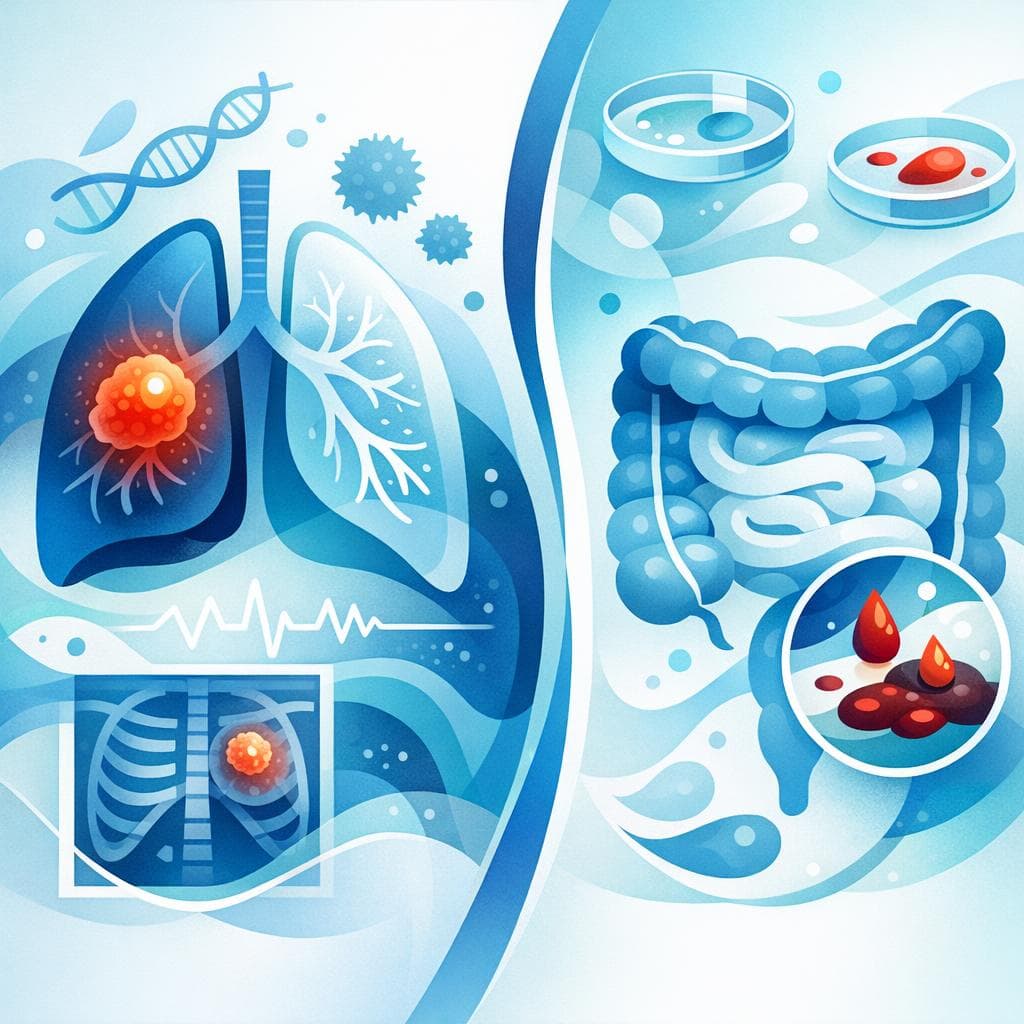
Blood in the stool is not a common symptom of lung cancer. Lung cancer typically causes respiratory symptoms such as a persistent cough, chest pain, shortness of breath, wheezing, fatigue, and sometimes coughing up blood from the airways (hemoptysis). [1] Coughing up blood happens when the tumor bleeds into the airway, but this is different from blood appearing in the stool. [2] [3]
Typical bleeding with lung cancer
- Coughing up blood (hemoptysis): Lung tumors can bleed within the airway, leading to blood in sputum rather than in stool. [2] This airway bleeding can sometimes be heavy and requires targeted treatments to control it. [4]
- Other common symptoms: Persistent or worsening cough, chest discomfort, shortness of breath, wheezing, fatigue, and unexplained weight loss are more typical. [1] [3]
When blood in stool can happen
While unusual, there are a few scenarios where someone with lung cancer could have blood in the stool:
- Gastrointestinal (GI) metastasis: Rarely, lung cancer spreads to the stomach, small intestine, duodenum, or pancreas, and the metastatic lesions can bleed into the GI tract, causing melena (black tarry stools) or hematochezia (bright red blood). Case reports have documented GI bleeding from small intestine, stomach, duodenum, and pancreatic metastases of lung cancer. [5] [6] [7] [8]
- Treatment-related causes: Cancer therapies (including radiation or certain medications) can sometimes lead to GI irritation or bleeding, though this is less typical in lung cancer compared to cancers treated directly in the abdomen. [9]
- Unrelated common GI conditions: Hemorrhoids, anal fissures, stomach or colon ulcers, colon polyps, or primary colorectal cancer are far more common causes of blood in stool in the general population, regardless of lung cancer status. [10] [11]
What the stool color can tell you
- Black, tarry stool (melena): Usually suggests bleeding from the upper GI tract (esophagus, stomach, or first part of the small intestine) because blood is digested as it passes through. [12] [13]
- Bright red blood: Often points to lower GI sources (colon or rectum), commonly hemorrhoids or fissures, though brisk upper GI bleeding can occasionally present this way. [13] [14]
How gastrointestinal bleeding is evaluated
If you notice blood in your stool, it’s important to have it assessed, especially if you also have dizziness, black stools, weakness, or abdominal pain.
- Initial assessment: Medical history, physical exam, vital signs, and blood tests (such as hemoglobin) to check for anemia. This is standard in suspected GI bleeding. [10]
- Endoscopy:
- Imaging: CT scans or CT angiography can localize bleeding or identify metastatic sites when endoscopy is non-diagnostic or bleeding is ongoing. [7]
Management options
Treatment depends on the source and severity of bleeding:
- Endoscopic hemostasis: Injection therapy, mechanical methods (clips), or thermal ablation can stop bleeding from tumors or ulcers, though rebleeding can occur and may need repeat treatment. [15]
- Medications: Acid suppression (proton pump inhibitors) is commonly used for upper GI bleeding and may help reduce rebleeding risk in some contexts. [15]
- Interventional radiology: Transarterial embolization can control arterial bleeding when endoscopic methods fail or bleeding is severe. [7] [15]
- Surgery or stenting: Considered for refractory bleeding, obstruction, or specific structural problems; endoscopic stenting can palliate malignant obstructions along the GI tract when needed. [16]
- Supportive care: Blood transfusions for significant anemia and close monitoring. [15]
Key takeaways
- Blood in stool is uncommon in lung cancer; airway bleeding with coughing up blood is much more typical. [2] [1] [3]
- GI bleeding can occur if lung cancer metastasizes to the gastrointestinal tract, but this is rare and often indicates advanced disease. [5] [6] [7] [8]
- Because blood in stool has many possible causes, prompt medical evaluation is important to identify the source and provide appropriate treatment. [10] [11]
- Color and appearance of stool can hint at where bleeding originates, guiding the next steps in testing. [12] [13] [14]
If you’re experiencing blood in your stool, especially with dizziness, black stools, or weakness, seeking urgent care is sensible while arranging follow-up with your clinician for endoscopic evaluation. [10]
Related Questions
Related Articles


Sources
- 1.^abcSymptoms of Lung Cancer(cdc.gov)
- 2.^abcLung cancer - Symptoms and causes(mayoclinic.org)
- 3.^abcLung Cancer(medlineplus.gov)
- 4.^↑Lung cancer - Symptoms and causes(mayoclinic.org)
- 5.^abLung carcinoma with small intestinal metastases and gastrointestinal bleeding: A rare case report.(pubmed.ncbi.nlm.nih.gov)
- 6.^abGastrointestinal bleeding due to jejunal metastasis of pleomorphic lung carcinoma: a case report.(pubmed.ncbi.nlm.nih.gov)
- 7.^abcdUpper gastrointestinal haemorrhage caused by duodenal metastasis from primary lung cancer: A case report.(pubmed.ncbi.nlm.nih.gov)
- 8.^abcUpper Gastrointestinal Bleed as a Manifestation of Poorly Differentiated Metastatic Squamous Cell Carcinoma of the Lung.(pubmed.ncbi.nlm.nih.gov)
- 9.^↑Argon plasma coagulation therapy for a hemorrhagic radiation-induced gastritis in patient with pancreatic cancer.(pubmed.ncbi.nlm.nih.gov)
- 10.^abcdefGastrointestinal bleeding - Symptoms and causes(mayoclinic.org)
- 11.^abGastrointestinal bleeding: MedlinePlus Medical Encyclopedia(medlineplus.gov)
- 12.^abBlack or tarry stools: MedlinePlus Medical Encyclopedia(medlineplus.gov)
- 13.^abcRectal bleeding: MedlinePlus Medical Encyclopedia(medlineplus.gov)
- 14.^abRectal bleeding: MedlinePlus Medical Encyclopedia(medlineplus.gov)
- 15.^abcdEndoscopic management of tumor bleeding from inoperable gastric cancer.(pubmed.ncbi.nlm.nih.gov)
- 16.^↑Endoscopic luminal stenting: Current applications and future perspectives.(pubmed.ncbi.nlm.nih.gov)
Important Notice: This information is provided for educational purposes only and is not intended to replace professional medical advice, diagnosis, or treatment. Always consult with a qualified healthcare provider before making any medical decisions.