
 Persly Medical Team
Based on NIH | Is sudden blood in stool a symptom of endometrial cancer?
Sudden blood in the stool is not a typical symptom of endometrial (uterine) cancer and is more often linked to gastrointestinal causes like hemorrhoids, fissures, diverticular disease, IBD, polyps, or colorectal cancer. The hallmark of endometrial cancer is abnormal vaginal bleeding; any rectal bleeding warrants prompt medical evaluation, with gynecologic assessment if uterine symptoms are also present.
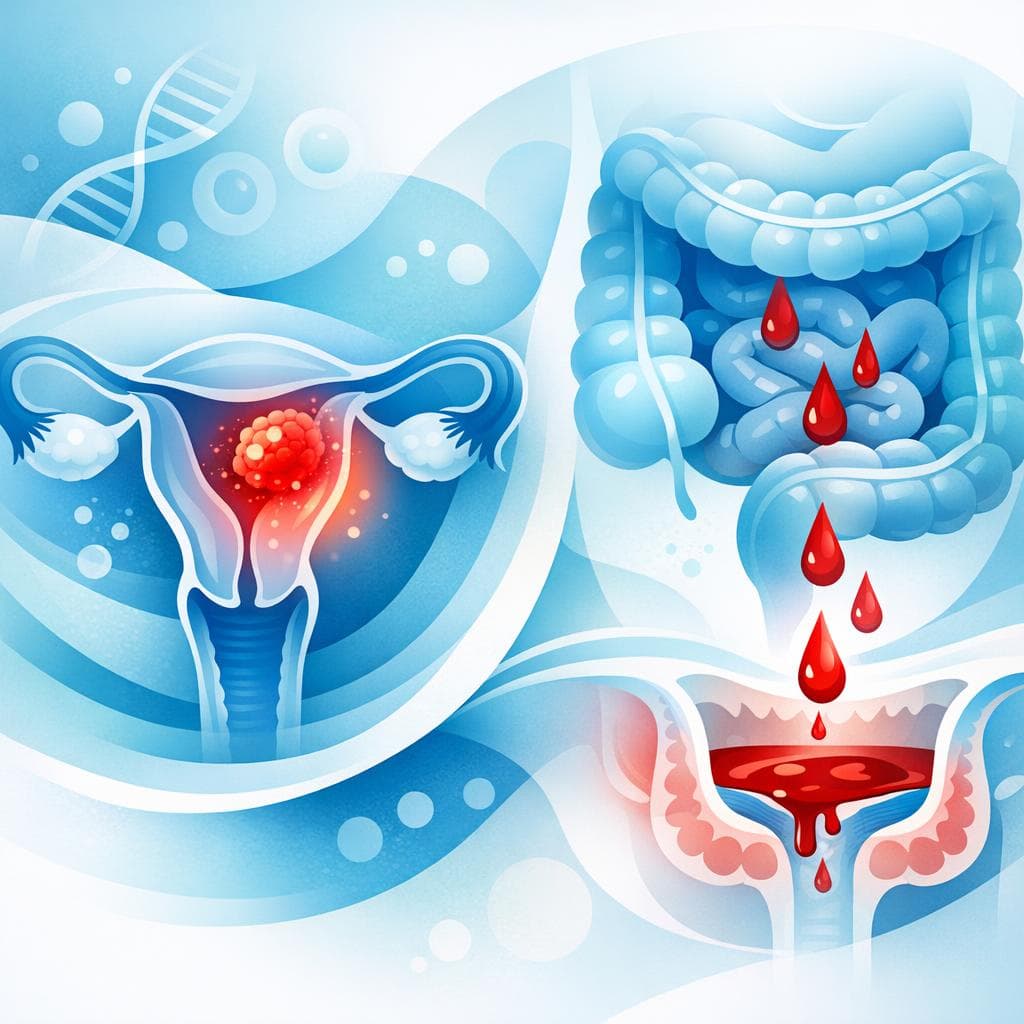
Sudden blood in the stool is not a typical symptom of endometrial (uterine) cancer, and it is more commonly linked to disorders of the gastrointestinal (GI) tract such as hemorrhoids, anal fissures, diverticulosis, inflammatory bowel disease, polyps, or colorectal cancer. [1] [2] The most common early symptom of endometrial cancer is abnormal vaginal bleeding (for example, bleeding after menopause or bleeding between periods), not rectal bleeding. [1] [3] When endometrial cancer spreads to other organs, bleeding can occur from those specific organs (for example, blood in urine if the bladder is involved), but rectal bleeding from bowel involvement is a later or less common presentation. [4]
What endometrial cancer usually looks like
- The hallmark symptom is abnormal uterine or vaginal bleeding, especially postmenopausal bleeding or new bleeding between periods. [1] [3]
- Other possible symptoms can include pelvic pain or pressure and, in more advanced disease, unexplained weight loss, but these are less common early on. [5] [6]
How rectal bleeding is typically evaluated
Rectal bleeding most often comes from the lower GI tract (colon, rectum, anus) and shows up as bright red blood on toilet paper, in the bowl, or mixed with stool. [2] Evaluation generally looks for GI causes first because they are far more common and can range from benign to serious. [2] Severe or ongoing bleeding needs urgent medical care, and signs of shock (dizziness, fainting, rapid breathing, pale clammy skin) are emergencies. [7]
- Common GI causes include hemorrhoids, anal fissures (small tears), diverticular disease, inflammatory bowel disease, colorectal polyps, and colorectal cancer. [2] [8]
- Black or tarry stool (melena) suggests bleeding higher up in the GI tract and also needs prompt evaluation. [9]
When endometrial cancer could be linked to rectal bleeding
Endometrial cancer primarily causes uterine/vaginal bleeding, not rectal bleeding. [1] [3] In advanced cases where the cancer has spread to the rectum or colon, rectal bleeding or constipation may occur, but this is not a typical first sign. [4] Additionally, people who have received pelvic radiation for endometrial cancer can experience late rectal bleeding as a treatment side effect, although significant bleeding is uncommon. [10]
What to do if you notice blood in your stool
- Seek prompt medical attention, especially if bleeding is heavy, recurrent, or accompanied by lightheadedness, fainting, or weakness. [7]
- A healthcare professional will usually examine the anorectal area and may recommend stool tests and, if indicated, a colonoscopy to find the source of bleeding. [11] [9]
- If you are also having abnormal vaginal bleeding, pelvic pain, or you are postmenopausal with any spotting, you should be evaluated for uterine causes at the same time. [1] [3]
Key takeaways
- Sudden blood in the stool is far more likely to be a GI issue than endometrial cancer. [2]
- The most common and earliest warning sign of endometrial cancer is abnormal vaginal bleeding, especially after menopause. [1] [3]
- Rectal bleeding merits timely evaluation to rule out common GI causes and, when appropriate, to coordinate gynecologic assessment if uterine symptoms are present. [2] [11]
Related Questions
Related Articles


Sources
- 1.^abcdefEndometrial cancer - Symptoms and causes(mayoclinic.org)
- 2.^abcdefRectal bleeding Causes - Mayo Clinic(mayoclinic.org)
- 3.^abcdeSymptoms of Uterine Cancer(cdc.gov)
- 4.^ab국가암정보센터(cancer.go.kr)
- 5.^↑Uterine (Endometrial) Cancer Signs & Symptoms(mskcc.org)
- 6.^↑Endometrial cancer - Symptoms and causes(mayoclinic.org)
- 7.^abRectal bleeding Causes - Mayo Clinic(mayoclinic.org)
- 8.^↑Rectal bleeding: MedlinePlus Medical Encyclopedia(medlineplus.gov)
- 9.^abSymptoms and causes - Mayo Clinic(mayoclinic.org)
- 10.^↑Rectal bleeding after radiation therapy for endometrial cancer.(pubmed.ncbi.nlm.nih.gov)
- 11.^abRectal bleeding: MedlinePlus Medical Encyclopedia(medlineplus.gov)
Important Notice: This information is provided for educational purposes only and is not intended to replace professional medical advice, diagnosis, or treatment. Always consult with a qualified healthcare provider before making any medical decisions.